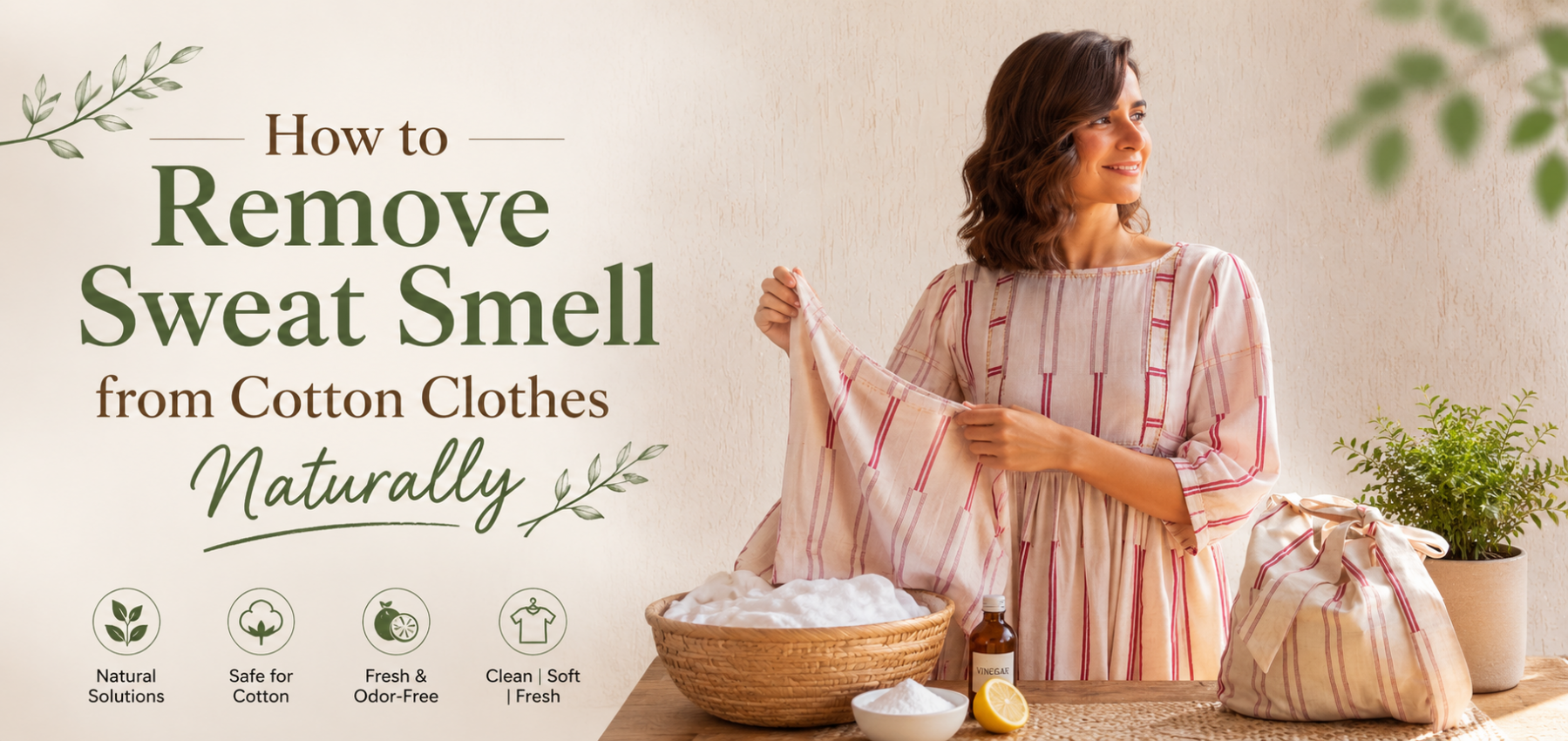
How to Remove Sweat Smell from Cotton Clothes Naturally
You've just had a long, warm day. Your favourite cotton kurta or summer dress did its job beautifully — keeping you cool — but now it carries that stubborn, lingering sweat odour that no quick rinse seems to fix. Sound familiar?
Whether you've worn your hand block-printed kurti to an outdoor market in Jaipur or your everyday cotton dress through a humid Mumbai afternoon, knowing how to remove sweat smell from clothes without harsh chemicals is a skill every Indian woman needs — especially when you love wearing natural, breathable fabrics.
In this guide, we share science-backed, practical, and completely natural methods to banish sweat odour from cotton clothing. These tips are gentle enough for handcrafted and handloom textiles and effective enough for India's demanding climate.
Why Does Sweat Smell Stick to Cotton?
Before we dive into solutions, it helps to understand the problem. Cotton is a naturally absorbent fibre — it pulls moisture away from your skin, which is exactly why it's so comfortable in Indian heat. But that same absorbency means it also traps sweat, body oils, and the bacteria that feed on them deep within its fibres.
The unpleasant smell is not actually from sweat itself — it's produced by bacteria breaking down the proteins and fats in sweat. Over time, if clothes are not washed promptly or properly, these bacteria build up into biofilms inside the fibres, making the odour increasingly stubborn.
Key insight: Standard washing may clean the surface of the fabric but fail to penetrate deeply enough to eliminate odour-causing bacteria. That's why a cotton shirt can smell fine when wet but reek again once it dries — and why natural, odour-targeting treatments are more effective.
Common Mistakes That Make Sweat Odour Worse
Before exploring solutions, let's briefly address what most people do wrong. These habits can worsen the problem:
Leaving Clothes in the Bag: Tossing sweaty clothes into a sealed laundry bag or basket for days allows bacteria to multiply rapidly in the trapped moisture, making odours far harder to remove.
Washing in Hot Water Always: While hot water kills bacteria, it can permanently set sweat stains and odour compounds into cotton fibres, especially in hand block-printed or naturally dyed fabrics.
Drying Indoors in Humid Rooms: Poor airflow drying is one of the biggest reasons clothes retain a musty, sour smell even after washing. Bacteria survive and continue producing odour.
Overusing Detergent: Excess detergent leaves residue in fibres that traps odour-causing particles, essentially worsening the problem over time.
Proven Natural Methods to Remove Sweat Smell from Clothes
The good news is that your kitchen and pantry likely already hold everything you need. These remedies are effective, affordable, and safe for most natural cotton fabrics.
1. White Vinegar Soak — The Most Reliable Method
White vinegar is mildly acidic, which makes it exceptional at neutralising the alkaline compounds in sweat that cause odour. It also acts as a natural antibacterial agent.
Prepare the soak - Mix one part white vinegar with three parts cold water in a basin or bucket.
Soak the garment - Submerge the affected cotton clothing and let it soak for 30 to 60 minutes.
Gently agitate - Swirl or lightly scrub the fabric — no harsh rubbing, especially for printed fabrics.
Rinse and wash - Rinse thoroughly in cold water, then wash normally with a mild detergent.
Dry in the sun - Sunlight is a natural disinfectant. Air-dry outside for best results.
Patch Test Reminder
Always do a patch test on a hidden area of the fabric first, particularly for dark or heavily dyed cotton prints. Diluted vinegar is generally safe, but caution is always wise with artisanal fabrics.
2. Baking Soda — The Odour Absorber
Baking soda (sodium bicarbonate) is a gentle alkaline compound that physically absorbs and neutralises acidic odour molecules. It is one of the most popular natural deodorising agents for fabrics worldwide. For a dry treatment, sprinkle a thin layer of baking soda directly onto the sweaty area, let it sit for 20–30 minutes, then shake it off before washing. For a soak treatment, dissolve 3–4 tablespoons in a bucket of cold water and soak the garment for 1–2 hours before your regular wash. Baking soda also works well in the wash itself — simply add 2 tablespoons directly to your detergent compartment or into the soaking water for an added deodorising boost.
3. Lemon Juice — Nature's Antibacterial Brightener
Fresh lemon juice contains citric acid, which breaks down the bacteria responsible for odour and helps lift discolouration caused by sweat. It works best on white or light-coloured cotton clothing. Dilute the juice of one lemon in two cups of water. Apply directly to the affected area and let it sit for 15–20 minutes in sunlight. The combination of citric acid and UV light is particularly effective at eliminating odour and light stains. Rinse thoroughly before washing as usual.
Note for Coloured Fabrics
Avoid lemon juice on dark or heavily dyed fabrics, as its bleaching properties may cause fading. Stick to white vinegar or baking soda for coloured prints.
4. Salt Water Rinse — The Quick Fix
If you need a fast, temporary solution — perhaps after a day out and before a proper wash — a cold salt water rinse is effective. Salt draws moisture and odour from the fibres through osmosis and has natural antibacterial properties. Dissolve 2 tablespoons of regular table salt in a litre of cold water. Submerge or pour over the affected area, let it sit for 10 minutes, then rinse with plain water. This is ideal as a first-step treatment before a full wash.
5. Neem Leaves — India's Traditional Fabric Deodoriser
Used for centuries in Indian households, neem is a powerful natural antibacterial and antifungal agent. Boil a handful of dried neem leaves in water, allow it to cool completely, and use this water to soak or rinse cotton garments. The azadirachtin compounds in neem actively suppress the bacteria that cause sweat odour. This is particularly popular in traditional Indian laundry care and is gentle even on handloom fabrics.
6. Sun-Drying — The Free, Natural Disinfectant
Never underestimate the power of direct sunlight. UV rays from the sun are a proven natural germicide — they kill odour-causing bacteria and mould spores without any chemical treatment. Whenever possible, dry your cotton clothes outside in direct sunlight rather than indoors. This single habit alone can significantly reduce recurring sweat odour, especially during India's long summer months.
At-a-Glance: Which Natural Remedy Works Best?
Not every remedy suits every fabric or situation. Here is a quick reference to help you choose the right approach.
Remedy | Best For | Safe for Prints? | Time Needed |
White Vinegar | All cotton types, stubborn odour | Yes (diluted) | 30–60 min |
Baking Soda | All cotton, everyday odour | Yes | 20 min – 2 hrs |
Lemon Juice | White / light-coloured cotton | Light fabrics only | 15–20 min |
Salt Water | Quick, temporary fix | Yes | 10 min |
Neem Water | Handloom, delicate ethnic wear | Yes | 30–45 min |
Sun-Drying | All fabrics, maintenance | Yes | Ongoing habit |
If you love wearing handcrafted ethnic clothing — which thousands of women across India do — odour removal requires a little extra sensitivity. Hand block prints, natural dyes, and handloom weaves behave differently from mass-produced synthetic blends.
Always Use Cold Water: Hot water causes natural dyes in handloom cotton to bleed and can permanently set odours. Cold water is gentler on fibres and more effective at removing sweat compounds without damage.
Use Mild, pH-Neutral Detergent: Harsh detergents strip natural fibres and can fade block prints over time. Opt for mild, plant-based detergents or even a diluted solution of gentle shampoo for delicate pieces.
Hand Wash for Delicate Pieces: Machine washing, even on gentle cycle, can pull at the structure of handloom weaves and loosen block-print dyes. For premium ethnic pieces, hand washing is always safer.
Dry in Shade, Then Brief Sun: Direct sun can fade deep dyes in printed fabrics. First dry in a well-ventilated shaded area, then give a brief exposure to sunlight for natural disinfection.
Fabric Care Tip: Do you own Chanderi Tops or shirts in your ethnic wardrobe? Chanderi is one of the most delicate handloom fabrics — always prefer the neem water soak or diluted vinegar method, and hand wash gently.
Explore The Yellow Bow's range of chanderi tops crafted for everyday elegance.
How to Prevent Sweat Odour Before It Starts
Prevention is always easier than treatment. Incorporating a few mindful habits into your daily routine can dramatically reduce how often you need to deep-clean your clothes for odour.
Wash Clothes Promptly After Wearing
The golden rule: never leave sweaty cotton clothes sitting in a laundry hamper for more than 24 hours. Bacteria multiply exponentially in warm, moist conditions. Rinsing or soaking clothes promptly — even if you don't have time for a full wash — significantly reduces odour buildup.
Flip Clothes Inside Out Before Washing
Most sweat accumulates on the inside of fabric, closest to your skin. Washing clothes inside out ensures the detergent and water make direct contact with the most affected surface, improving odour removal effectiveness without requiring extra soaking.
Add Vinegar to the Final Rinse Regularly
Consider making white vinegar a standard part of your laundry routine during Indian summers. Add a quarter cup to your final rinse water once or twice a week. This prevents gradual odour buildup in all your cotton garments without affecting their look or feel.
Store Clothes Only When Completely Dry
Even slightly damp cotton stored in a closed wardrobe will quickly develop a musty, stale odour. Always ensure your clothes are bone-dry before folding and storing. This is especially important for heavier ethnic wear like layered sets and jacket-style outfits.
Storage Tip: Speaking of layered looks — if you wear a dress with jacket Set to events or gatherings, remember to air out both pieces separately before storing.
Layered garments trap moisture between fabrics, which accelerates odour formation.
Browse The Yellow Bow's handcrafted dress with jacket Set collection, made in breathable cotton for comfortable, occasion-ready style.
Use Natural Wardrobe Fresheners
Place small sachets of dried neem leaves, cloves, or cedarwood chips inside your wardrobe. These natural materials absorb excess moisture, repel insects, and leave a subtle, clean scent without synthetic fragrance chemicals.
This is a time-honoured Indian household practice that is remarkably effective.
Deep-Cleaning Methods for Persistent Sweat Smell in Clothes
Sometimes, sweat odour has been embedded in fibres over multiple wears or years of incorrect storage. In these cases, you'll need a more intensive approach.
The Vinegar-Baking Soda Double Treatment
This two-step method combines the strength of both powerhouse ingredients. First, soak the garment in a diluted vinegar solution for 30 minutes, then drain and sprinkle baking soda directly onto the fabric while it's still damp. The fizzing reaction this creates works to lift deeply embedded odour compounds from within the fibres. Let it sit for 15 minutes, then rinse thoroughly and wash as normal.
Overnight Baking Soda Dry Treatment
For very stubborn odours — particularly in underarm areas — lay the garment flat and cover the affected sections generously with dry baking soda. Leave it overnight (or up to 12 hours). The baking soda will absorb a significant amount of the embedded odour. Shake it off thoroughly before washing. This method is particularly effective for cotton ethnic wear that can't be soaked.
Sun + Neem Combination
After a neem water soak, allow the garment to dry directly in morning sunlight for 1–2 hours. The synergy of neem's antibacterial properties and UV disinfection from sunlight is remarkably effective at clearing even long-standing odour in cotton fabrics — without a single drop of chemical.
Odour Care for Different Types of Everyday Indian Cotton Wear
Different garment types accumulate sweat in different areas and require slightly varied care. Here is a practical breakdown for the most common everyday cotton pieces Indian women wear.
Cotton Kurtis and Dresses — Everyday Essentials
These are the most frequently worn cotton pieces and are typically exposed to the most sweat around the underarms, back, and chest. A regular white vinegar soak or baking soda wash cycle once a week during summer keeps these garments consistently fresh. Women who love women cotton dresses for daily wear will find that a consistent care routine means their favourite pieces stay vibrant and odour-free through the entire season.
Tunic Sets — Coordinated Wear That Needs Consistent Care
Tunic sets involve multiple coordinated pieces, and it's important to treat both the top and bottom together to maintain colour and odour consistency. Wash both pieces together in the same treatment to prevent one piece from developing a different odour profile than the other. If you love tunic sets for women for office or casual wear, keeping both pieces of the set uniformly fresh ensures you always look and feel polished.
Slip Dresses — Delicate, Close to Skin
Cotton slip dresses sit very close to the skin and absorb sweat quite intensely. For these pieces, a cold water soak with a few drops of tea tree oil added (a natural antibacterial) works beautifully. Always hand wash women slip dresses to preserve their silhouette and delicate fabric drape.
Festive and Occasion Wear — Handle with Extra Care
Cotton ethnic wear worn to weddings, festivals, or gatherings is often stored for months between uses. Before storing, always treat the garment for odour even if it smells fine immediately after the event — sweat compounds take time to fully develop their odour. A light vinegar rinse and thorough sun-drying before storage can prevent any unpleasant surprises when you next reach for that beautiful piece.
Fabric Care Note: If you own a chanderi handloom saree — one of the most treasured pieces in any Indian woman's wardrobe — take extra care during odour treatment.
Always use the mildest methods (diluted vinegar or neem water) and dry in shade to protect the delicate sheen and weave.
Explore The Yellow Bow's exquisite range of chanderi handloom sarees, crafted with traditional artistry for modern festive elegance.
Managing Sweat Smell During Indian Summers — Seasonal Tips
India's climate, particularly between March and July, creates conditions where sweat odour in clothing can feel like a constant battle. The combination of extreme heat, high humidity (especially in coastal cities), and long outdoor hours means our clothes face significant stress. During peak summer months, consider washing your cotton ethnic wear in two stages — a quick vinegar rinse in the evening after wearing, followed by a full wash the following morning. This two-stage approach is significantly more effective than a single wash and suits the lifestyle of women who wear cotton ethnic wear daily. Carrying a small spray bottle with a diluted vinegar solution (1:5 ratio) in your bag is a practical tip many women find helpful for freshening up a garment mid-day, particularly around collars and underarms. Finally, investing in quality, breathable cotton clothing is itself a preventive measure. Well-woven cotton with good thread count allows for better airflow and sweat evaporation, meaning less moisture is trapped in the fabric in the first place — reducing the frequency and intensity of odour problems significantly.
Final Thoughts — Natural Care for Clothes You Love
Understanding how to effectively remove sweat smell from clothes using natural methods is more than a laundry tip — it's an act of care for garments that matter to you. Whether it's a hand block-printed cotton dress you've had for years or a freshly bought chanderi piece, every fabric deserves thoughtful, gentle maintenance. Natural remedies like white vinegar, baking soda, neem water, and sun-drying are not just effective — they're kinder to your clothes, your skin, and the environment. In a country with such a rich textile heritage, our clothing care practices should honour the craft that went into making them. Start with one or two of the methods above, build a consistent care routine through the summer months, and you'll find that your favourite cotton pieces stay fresher, last longer, and continue to bring the joy they were always meant to bring.
Frequently Asked Questions
Why do cotton clothes retain sweat smell even after washing?
Cotton is highly absorbent, which means it traps sweat, body oils, and bacteria deep within its fibres. Regular detergents may clean the surface but fail to break down the odour-causing bacteria fully, especially if the clothes were air-dried indoors or not washed promptly after use. The key is to target bacteria directly using acidic or alkaline natural agents like vinegar or baking soda.
Is white vinegar safe for hand block-printed cotton clothes?
Yes, diluted white vinegar (1 part vinegar to 3 parts water) is generally safe for hand block-printed cotton. However, always do a patch test on a small hidden area first, particularly for darker or heavily dyed prints, to ensure the colours do not bleed. Avoid using undiluted vinegar directly on printed surfaces.
How often should I wash my cotton ethnic wear in Indian summers?
In Indian summers, it is advisable to wash cotton ethnic wear after every wear. If you perspire heavily, don't leave garments unwashed for more than 24 hours, as bacteria multiply quickly in humid conditions, making odour removal significantly harder. A quick vinegar rinse before a full wash the next morning is a practical daily routine.
Can baking soda damage delicate cotton fabrics like Chanderi?
Baking soda is generally mild and safe for most cotton blends. However, for delicate handloom fabrics like Chanderi, use it sparingly — dissolve a small amount in water and soak briefly, then rinse thoroughly. Avoid scrubbing dry baking soda directly on the fabric surface, as friction can disturb delicate weaves and dyes.
What is the best way to store cotton clothes to prevent odour buildup?
Always ensure cotton garments are completely dry before folding and storing. Use breathable cloth bags or cotton pouches instead of plastic covers, which trap moisture. Add a small sachet of dried neem leaves, dried lavender, or cloves to your wardrobe to naturally repel moisture and odour. Never store cotton ethnic wear that has been worn even once without washing — sweat compounds develop their strongest odour after several hours.
-
 August 26th, 2026
 -

Natural vs Synthetic Fabrics: What Should You Know Before Buying?
August 24th, 2026 -
 August 24th, 2026
 -
 August 13th, 2026