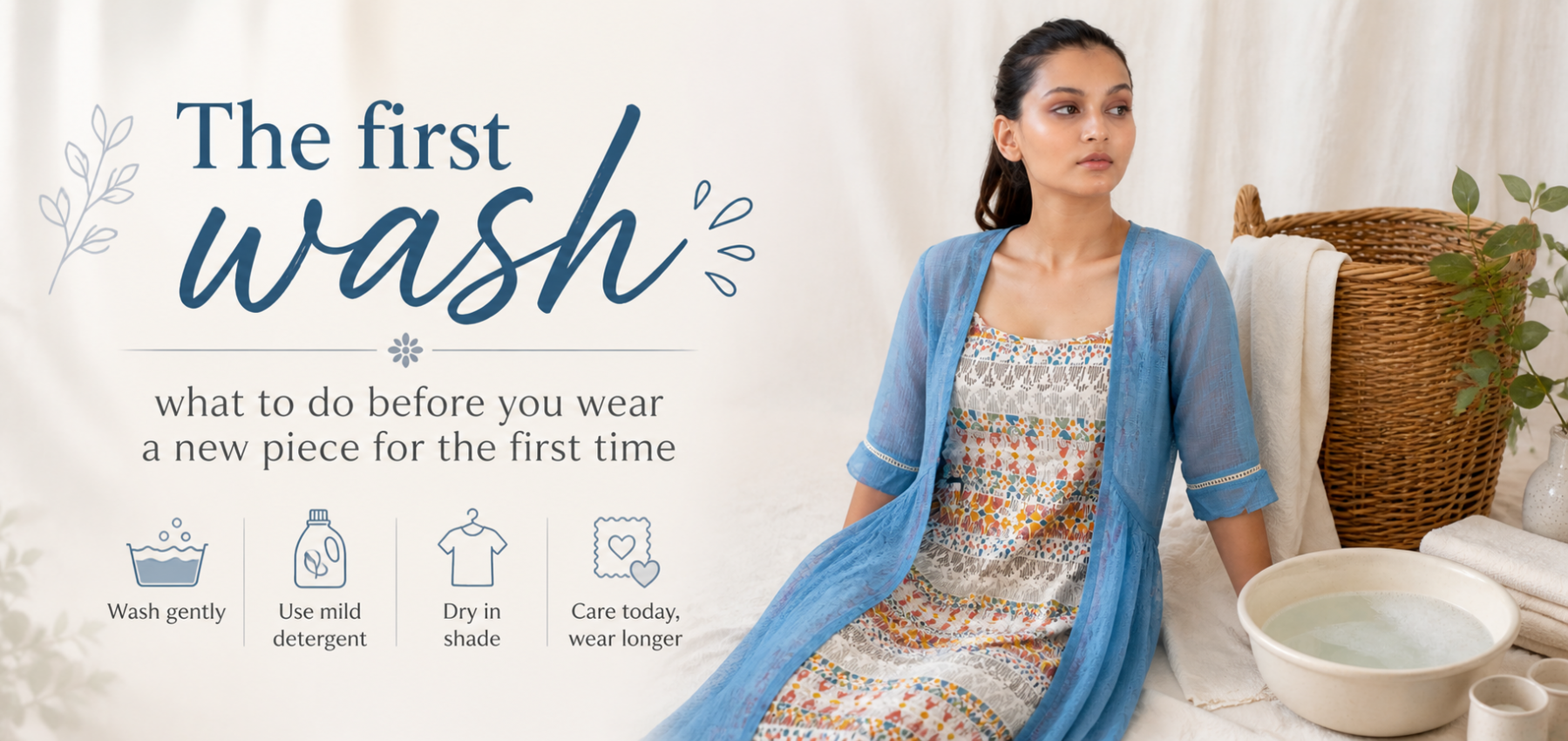
The first wash — what to do before you wear a new piece for the first time
Why Washing New Clothes Before Wearing Them Matters
New garments — whether purchased online or from a store — go through multiple hands, machinery, and storage facilities before reaching you. During manufacturing and transit, fabrics are often treated with chemicals, starch finishes, or sizing agents to give them that crisp, fresh-from-the-factory appearance. These substances are not always skin-friendly, particularly for people with sensitive skin or eczema.
Beyond chemical residues, new clothes may carry dust, allergens, or microscopic particles from warehouse environments. Knowing how to wash new clothes before first wear is not just about hygiene — it is about protecting your skin, preserving the fabric, and ensuring the garment drapes and feels exactly as it was designed to.
Quick fact: Studies have shown that new garments can contain formaldehyde-based resins used to prevent wrinkling and mildew during shipping. A proper pre-wear wash removes most of these residues safely.
Step-by-Step Guide to Washing New Clothes Before First Wear
Learning how to wash new clothes before first wear does not need to be complicated. Follow this simple, fabric-appropriate process:
Read the Care Label: Check washing instructions, water temperature, and whether hand or machine wash is recommended.
Sort by Colour: Wash darks and lights separately. New clothes — especially hand-dyed or block-printed ones — may bleed colour on the first wash.
Use a Mild Detergent: Avoid harsh chemicals or bleach. A gentle, pH-neutral detergent works best for cotton and handloom fabrics.
Wash in Cold Water: Cold water prevents shrinkage and colour fading, especially important for natural fibres like cotton and chanderi.
Turn Garments Inside Out: This protects printed surfaces, embroidery, and embellishments from friction and abrasion during washing.
Dry in Shade: Direct sunlight can fade colours. Flat drying is ideal for delicate items like slip dresses or chanderi fabrics.
Fabric-specific care before the first wear
India's textile tradition is rich and varied. Different fabrics require different first-wash approaches. Here is a quick reference table to guide you:
Fabric | Wash method | Water temp | Dry method |
Cotton | Machine or hand wash | Cold to lukewarm | Shade dry |
Chanderi silk-cotton | Gentle hand wash | Cold only | Flat shade dry |
Hand block print | Hand wash, alone | Cold | Shade dry inside out |
Linen | Hand or delicate cycle | Cold to lukewarm | Shade dry, reshape |
Viscose / Modal | Gentle hand wash | Cold | Flat dry, no wringing |
Silk | Hand wash or dry clean | Cold | Flat shade dry |
Special Care for Hand Block Printed and Handloom Fabrics
If you own a block print dress, you already know how uniquely beautiful these pieces are — each print is an expression of artisanal skill passed down through generations. However, natural dyes used in authentic hand block printing can bleed significantly on the first wash. Here is what you should do:
- Wash separately in cold water with a teaspoon of white vinegar to set the colour.
- Never soak hand block printed fabrics for more than 5 minutes.
- Avoid rubbing or scrubbing the printed areas.
- Air dry in the shade, ideally flat on a clean towel.
Hand block printed cotton is made with vegetable and mineral-based dyes. A slight bleed on the first wash is completely normal — it does not mean the print will fade. After two or three washes, the colour stabilises beautifully.
Should You Dry Clean New Garments Instead of Washing at Home?
Not every piece needs to go to a dry cleaner for its first wash. Most everyday cotton garments, including tunic sets for women, women cotton dresses, and casual separates, can be safely hand washed at home.
Dry cleaning is recommended for:
- Heavily embellished garments with mirror work, zari, or stonework
- Pure silk or very fine chanderi weaves
- Structured occasion wear with inner lining or boning
- Items where the care label explicitly states "dry clean only"
For pieces like chanderi tops or lightweight layering pieces, check the care label first. When in doubt, a gentle cold hand wash is usually safe for most natural fibres.
The Role of Colour Bleeding — What Is Normal and What Is Not
One of the most common concerns when washing new Indian ethnic wear is colour bleeding. A small amount of bleeding — especially from bright reds, indigos, or greens — is expected in the first wash. This is particularly true for natural and low-impact dyes used in artisanal textiles.
How to Manage Colour Bleeding Safely
- Add 2–3 tablespoons of salt to cold water before soaking — this helps lock in the dye.
- Wash deep-coloured garments completely alone the first time.
- Never wring out dyed fabric — press gently between two clean towels to remove excess water.
- Avoid synthetic detergents with brightening agents on the first wash.
Pro tip: Keep a dedicated "first wash" day for newly purchased clothes. Batch all new garments and wash each fabric type separately — dark cottons together, light or printed pieces alone, and delicates by hand.
How to Care for New Occasion Wear and Layered Outfits
Occasion wear often comes with multiple layers, inner lining, or decorative additions. If you have purchased a layered kurta set, a jacket-style ensemble, or a golden shrug for women, the first wash requires extra attention.
- Remove any detachable elements like belts, brooches, or accessories before washing.
- Check whether the inner lining and outer fabric are of the same type — if not, dry cleaning is safer.
- Press jackets and structured pieces while slightly damp to restore shape.
- Store padded or structured garments on hangers to maintain silhouette after the first wash.
Caring for Delicate Silhouettes — Slip Dresses and Lightweight Pieces
Lightweight, fluid garments like women slip dresses need the gentlest treatment. These pieces are often cut on the bias or made from fabrics that easily lose their shape when agitated.
Recommended First Wash Method for Slip-Style Garments
- Fill a clean basin with cold water and add a small amount of mild or baby shampoo.
- Submerge the garment gently and swish — do not scrub or rub.
- Rinse thoroughly by lifting the garment out and refilling the basin with clean water.
- Press — never wring — to remove water, then lay flat on a dry towel.
- Allow to dry naturally away from direct heat or sunlight.
Common Mistakes to Avoid When Washing New Clothes
Even well-intentioned washing can damage a garment if done incorrectly. Here are the most common mistakes to avoid:
- Using hot water — this causes shrinkage in cotton and distorts delicate fibres.
- Machine washing everything — handloom and block-printed fabrics need hand washing for longevity.
- Overloading the wash — friction damages surface prints and embroidery.
- Using fabric softener on the first wash — it can seal in chemical residues instead of removing them.
- Drying in direct sunlight — UV exposure fades natural dyes very quickly.
- Skipping the care label — even experienced launders should check the label on unfamiliar fabrics.
Storing Your Garments After the First Wash
Proper post-wash storage is just as important as the wash itself. After completing the first wash, allow the garment to dry fully before storing — even slight dampness can lead to mildew in India's humid climate.
Storage Tips for Indian Ethnic Wear
- Fold cotton kurtas and dresses along the seam to prevent fold lines on printed areas.
- Hang structured pieces on padded hangers to preserve shoulder shape.
- Store handloom and silk pieces wrapped in muslin cloth to prevent dust and abrasion.
- Keep a few neem leaves or cedar balls in the wardrobe to deter insects naturally — ideal for organic cotton and handloom fabrics.
All garments are made from carefully chosen natural fabrics — hand block printed cottons, handloom weaves, and breathable chanderi. These care practices are designed to help you enjoy your pieces season after season.
Conclusion
Washing new clothes before wearing them is a small but essential step that makes a big difference in both comfort and longevity. From removing chemical residues to preserving colour and fabric texture, the first wash sets the foundation for how your garment will look and feel over time.
By following fabric-specific care methods, handling delicate silhouettes gently, and avoiding common washing mistakes, you ensure that your clothes retain their beauty, structure, and softness. Whether it is everyday cotton wear or handcrafted pieces, a mindful first wash helps protect your investment and enhances your overall wearing experience.
Frequently Asked Questions (FAQs)
1. Is it really necessary to wash new clothes before wearing them?
Yes, washing new clothes helps remove chemicals, dust, and residues accumulated during manufacturing and storage. It also makes the fabric softer and safer for your skin.
2. Can I wear new clothes without washing if they look clean?
Even if new clothes appear clean, they may contain invisible chemicals or allergens. It is always safer to wash them before first use, especially for sensitive skin.
3. What is the best detergent for the first wash?
A mild, pH-neutral detergent is ideal for the first wash. Avoid harsh chemicals, bleach, or strong fragrances that can irritate the skin or damage the fabric.
4. How do I prevent colour bleeding in new clothes?
Wash new garments separately in cold water, add a little salt or vinegar to help set the dye, and avoid soaking them for too long.
5. Should I always dry clean delicate fabrics?
Not always. While fabrics like pure silk or heavily embellished garments benefit from dry cleaning, many delicate natural fabrics can be safely hand washed using gentle techniques.
-
 August 26th, 2026
 -

Natural vs Synthetic Fabrics: What Should You Know Before Buying?
August 24th, 2026 -
 August 24th, 2026
 -
 August 13th, 2026