

Sensitive Skin? Here's Why Cotton Should Be Your Only Fabric This Summer
Indian summers are known for their intensity. Rising temperatures, humidity, dust, and pollution combine to create uncomfortable conditions, especially for people with sensitive skin. Many individuals experience itching, redness, rashes, or excessive sweating during warmer months, and often the real culprit is not just the weather—but the fabric they wear.
If your skin reacts easily to heat, sweat, or friction, choosing the Best Fabric for Sensitive Skin becomes more than a style decision—it becomes a health and comfort priority. The right fabric can reduce irritation, help regulate temperature, and keep your skin calm even during peak summer days.
This comprehensive guide explores why cotton stands out as the most skin-friendly choice, how it supports sensitive skin in Indian conditions, and how you can build a wardrobe that keeps you cool, comfortable, and stylish all summer long.
Why Sensitive Skin Needs Special Attention in Indian Summers
Sensitive skin is not a rare concern. In fact, many people in India experience skin sensitivity due to climate conditions, environmental exposure, and lifestyle factors. Summer heat intensifies these challenges, making fabric selection especially important.
How Heat and Humidity Affect Skin
High temperatures cause the body to sweat more. When sweat gets trapped under synthetic or non-breathable fabrics, it creates a moist environment that encourages bacterial growth. This often leads to:
- Heat rashes
- Skin irritation
- Redness and itching
- Body acne
- Allergic reactions
Humidity worsens this situation by slowing down sweat evaporation. When moisture cannot escape easily, skin pores become blocked, increasing the chances of irritation.
Common Fabric-Related Skin Issues
Many skin problems during summer are directly linked to fabric choices. Synthetic materials like polyester and nylon trap heat and moisture, making them uncomfortable for prolonged wear. Rough fabrics may cause friction, especially in areas like underarms and necklines.
This is why dermatologists often recommend breathable and natural textiles as the Best Fabric for Sensitive Skin, especially during hot weather.
What Makes Cotton Ideal for Sensitive Skin?
Cotton has been a staple in Indian wardrobes for centuries, and for good reason. It offers a unique combination of comfort, breathability, and skin-friendly properties that synthetic materials cannot match.
1. Exceptional Breathability
Cotton fibers allow air to circulate freely through the fabric. This airflow helps regulate body temperature and reduces sweating. When air moves easily across your skin, it prevents overheating and keeps irritation at bay.
Breathable fabrics are especially beneficial for people who spend long hours outdoors or commute daily in warm weather.
2. Moisture Absorption
Cotton absorbs moisture efficiently. Instead of trapping sweat against the skin, it pulls moisture away, allowing it to evaporate naturally. This helps prevent sticky discomfort and reduces the risk of fungal infections.
This moisture management ability makes cotton suitable for both humid and dry climates.
3. Soft and Gentle Texture
People with sensitive skin often struggle with fabrics that feel rough or abrasive. Cotton’s natural softness minimizes friction and reduces the likelihood of redness or irritation.
Soft cotton fabrics are especially beneficial for individuals prone to eczema or skin allergies.
4. Hypoallergenic Properties
Cotton is less likely to trigger allergic reactions compared to synthetic fabrics. It contains fewer chemical residues when processed responsibly, making it safer for delicate skin types.
These properties collectively make cotton widely regarded as the Best Fabric for Sensitive Skin across different age groups.
Understanding Skin Sensitivity: What Causes Reactions?
Before selecting clothing materials, it helps to understand what triggers sensitivity. Skin reactions are not always caused by weather alone—fabric texture, dyes, and chemicals also play a significant role.
Fabric Friction and Skin Damage: When clothing rubs repeatedly against the skin, it causes micro-irritations. Over time, these minor irritations can lead to inflammation or visible rashes. Fabrics with rough textures or tight weaves tend to create more friction.
Chemical Dyes and Finishes: Many synthetic garments contain chemical finishes designed to improve durability or wrinkle resistance. These chemicals may irritate sensitive skin, especially when combined with heat and sweat. Choosing natural, breathable textiles with minimal processing reduces exposure to harsh substances.
Why Natural Fibers Outperform Synthetic Fabrics in Summer
Modern fashion often includes synthetic materials due to their durability and affordability. However, when it comes to summer comfort and skin health, natural fibers consistently outperform synthetic ones.
Temperature Regulation: Natural fibers like cotton allow better heat dissipation. This helps maintain stable body temperature even during peak summer heat.
Reduced Skin Irritation: Synthetic fabrics often trap heat, leading to sweat accumulation. This environment increases the likelihood of rashes and bacterial growth. Natural materials, on the other hand, support skin health by allowing moisture to escape and air to circulate.
How to Choose Skin-Friendly Clothing for Daily Wear
Selecting comfortable summer clothing involves more than choosing cotton alone. Fabric weight, weave type, and garment design also influence comfort levels.
Look for Lightweight Weaves: Lightweight cotton fabrics such as voile, mulmul, and cambric offer excellent airflow. These materials feel airy and reduce the burden of heavy clothing in warm climates.
Prefer Loose-Fitting Silhouettes: Loose clothing improves ventilation and reduces friction. Flowy silhouettes allow your skin to breathe, preventing sweat buildup. Popular summer-friendly wardrobe options include Tunic Sets for women, which provide a balance of structure and comfort while allowing easy movement.
Choose Minimal Layers: Layering may look stylish but can increase body heat during summer. If layering is necessary, opt for breathable additions like Shrug Tops For Women that add style without trapping excessive heat.
Best Outfit Choices for Sensitive Skin in Summer
When building a summer wardrobe, the focus should remain on comfort, airflow, and skin safety. The right clothing styles can enhance both confidence and well-being.
Breathable Dresses for Everyday Comfort: Flowy dresses are among the most practical summer outfits. They allow unrestricted airflow and minimize fabric contact with the skin.
For example, Cotton Wrap Dresses provide adjustable fits and allow better ventilation around the body.
Layering Without Discomfort: Some occasions require additional styling layers. Choosing breathable outerwear such as a short shrug for ladies ensures you stay comfortable while maintaining a polished look.
Coordinated Summer Wear: Matching sets simplify dressing while maintaining comfort. Women Cotton Co Ord Sets are especially popular during summer due to their cohesive design and breathable fabric structure.
Flowy Styles for Warm Evenings: During social gatherings or relaxed outings, lightweight silhouettes such as a Floral Maxi Dress offer comfort without compromising elegance.
How Cotton Supports Skin Health Beyond Comfort
Cotton does more than keep you cool—it actively supports skin health in several ways.
Prevents Heat Rash Formation: Heat rash occurs when sweat glands become blocked. Breathable cotton reduces this risk by allowing sweat to evaporate quickly.
Reduces Risk of Infections: Moist environments promote bacterial growth. Cotton minimizes moisture retention, reducing the likelihood of fungal or bacterial infections.
Supports Healing of Irritated Skin: Soft fabrics reduce friction against inflamed areas, allowing skin to recover faster.
Common Mistakes to Avoid When Dressing for Sensitive Skin
Even when selecting cotton clothing, certain habits can reduce comfort levels.
Wearing Tight Clothing: Tight garments increase friction and restrict airflow, leading to sweat accumulation.
Ignoring Fabric Quality: Low-quality cotton blends may include synthetic fibers that reduce breathability.
Overlooking Washing Practices: Harsh detergents leave chemical residues on fabrics, which may irritate sensitive skin.
How to Care for Cotton Garments to Maintain Skin Safety
Proper care extends the life of cotton garments and maintains their skin-friendly qualities.
Use Mild Detergents: Gentle, fragrance-free detergents reduce chemical exposure and maintain fabric softness.
Dry Clothes Naturally: Air drying preserves fabric structure and prevents shrinkage.
Avoid Fabric Softeners: Many softeners contain chemicals that may trigger skin reactions.
Why Cotton Remains a Sustainable and Ethical Choice
Beyond personal comfort, cotton supports environmental sustainability when responsibly sourced.
Biodegradable Nature: Cotton decomposes naturally, reducing environmental waste.
Supports Traditional Textile Crafts: India has a rich heritage of handloom and block-printing techniques. Choosing cotton-based garments supports local artisans and preserves cultural craftsmanship.
Final Thoughts: Choose Comfort, Choose Skin Health
Summer dressing should never compromise skin comfort. For individuals dealing with irritation, allergies, or sensitivity, fabric selection plays a crucial role in maintaining overall well-being.
Cotton remains the most reliable choice due to its breathability, softness, and natural properties. By selecting thoughtfully designed garments, prioritizing comfort-driven silhouettes, and maintaining proper fabric care, you can create a wardrobe that protects your skin while keeping you stylish.
Ultimately, understanding the importance of choosing the Best Fabric for Sensitive Skin empowers you to make smarter clothing decisions—ensuring comfort, confidence, and healthier skin throughout the summer season.
Frequently Asked Questions (FAQs)
1. Why is cotton considered safer for sensitive skin than synthetic fabrics?
Cotton is breathable, moisture-absorbing, and hypoallergenic. These qualities reduce irritation, prevent sweat buildup, and support healthy skin during hot weather.
2. Can cotton help prevent heat rashes during summer?
Yes, cotton allows air circulation and promotes sweat evaporation, reducing the risk of blocked sweat glands that cause heat rashes.
3. How often should cotton clothing be washed during summer?
Cotton garments should be washed regularly, especially after heavy sweating, to prevent bacteria buildup and maintain freshness.
4. Are cotton blends safe for sensitive skin?
Some cotton blends may contain synthetic fibers that reduce breathability. Pure cotton fabrics are generally safer for highly sensitive skin types.
5. What types of cotton fabrics are best for hot climates?
Lightweight cotton varieties such as mulmul, voile, and cambric are ideal for warm climates because they allow better airflow and feel comfortable on the skin.
-
 August 26th, 2026
 -
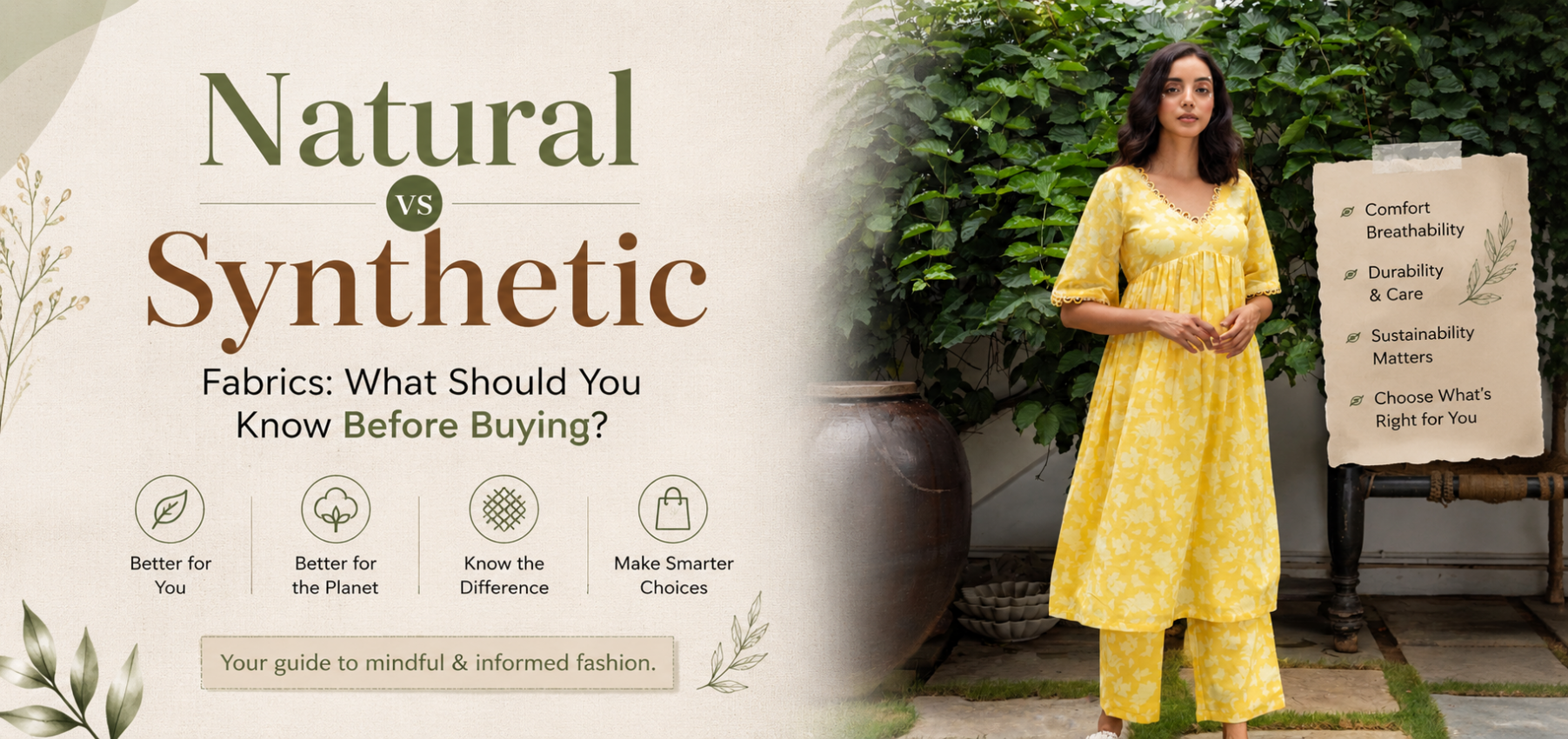
Natural vs Synthetic Fabrics: What Should You Know Before Buying?
August 24th, 2026 -
 August 24th, 2026
 -
 August 13th, 2026