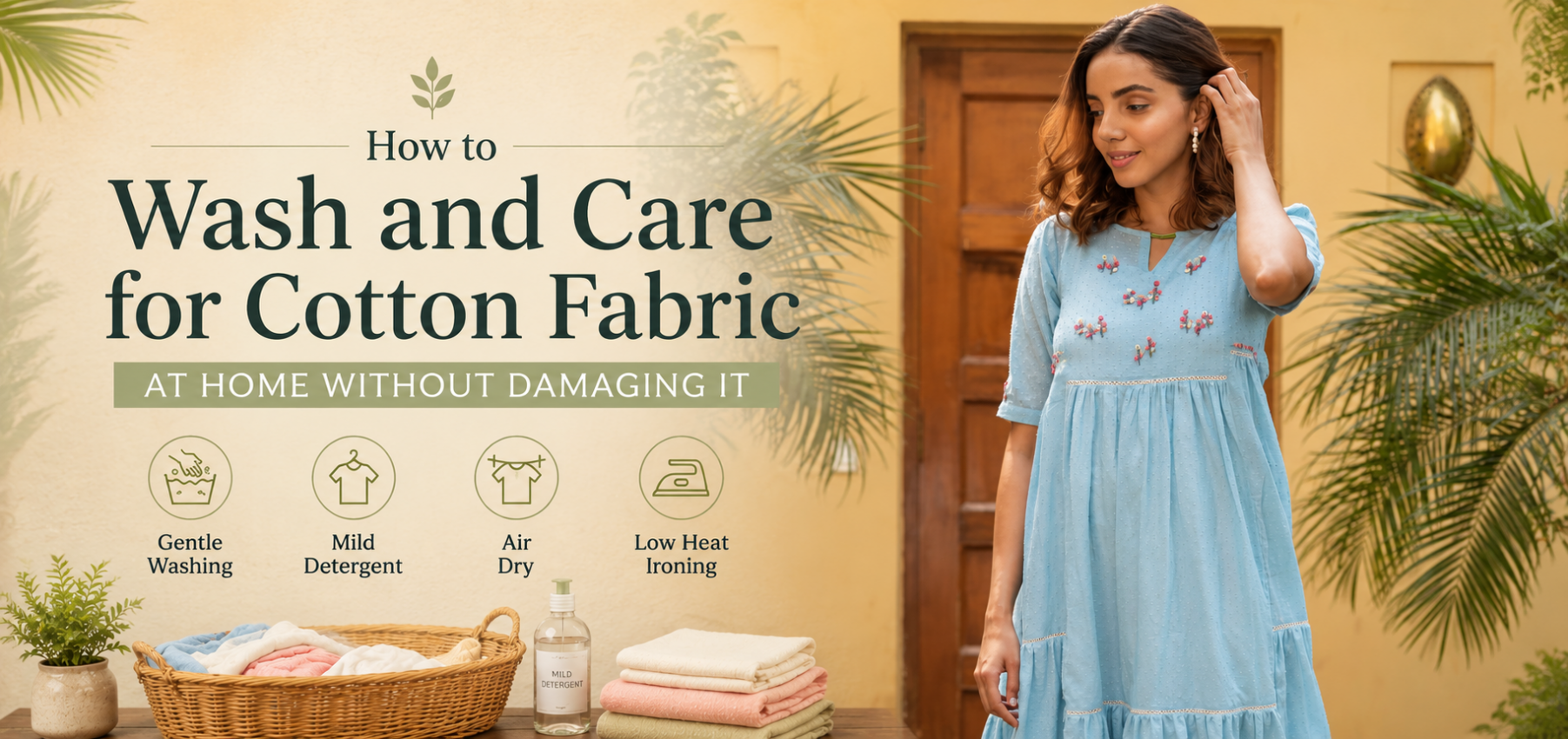
How to Wash and Care for Cotton Fabric at Home Without Damaging It
Cotton is one of the most loved fabrics in Indian wardrobes — and for good reason. It breathes well in the heat, feels gentle on the skin, and suits everything from casual daily wear to festive occasions. But as comfortable and versatile as cotton is, it does need a little extra attention when it comes to washing and maintenance. Many people unknowingly shrink their favourite kurtas, fade their block prints, or ruin the drape of a well-fitted dress simply by following incorrect washing methods.
If you own cotton clothing — whether it is a breezy everyday dress, a hand-crafted ethnic set, or a carefully picked wardrobe staple — this guide is for you. Here, we break down everything you need to know about proper cotton fabric care so your clothes stay fresh, vibrant, and long-lasting for years to come.
Why Cotton Needs Special Attention During Washing
Cotton is a natural fibre, which means it behaves differently from synthetic materials. It absorbs water quickly, is prone to shrinking when exposed to high heat, and can lose its colour if washed with harsh chemicals or in hot water. Printed cotton — especially hand block printed varieties — is even more delicate because the natural dyes used in traditional printing can bleed or fade if not handled with care.
Understanding the nature of the fabric before you wash it is the first step in extending its life. Not all cotton garments are the same — lightweight mulmul cotton needs gentler handling than a heavier weave, and a dress with embroidery or mirror work needs different care than a plain cotton co-ord set.
Reading the Care Label — The First Step You Should Never Skip
Before washing any garment, always check the care label stitched inside. This small tag carries important information about the recommended wash temperature, whether machine washing is safe, and if the garment needs dry cleaning. Indian clothing brands, including handcraft-focused labels, often include specific instructions because their fabrics may involve natural dyes, hand printing, or delicate weaves that require extra care.
If the label says "hand wash only," follow it strictly. If it mentions "cold wash," do not assume warm water will do the same job. These instructions are tested specifically for that fabric and construction.
Step-by-Step Guide to Washing Cotton Clothes at Home
Sorting Your Laundry the Right Way
Before you begin washing, sort your clothes by colour. Always wash dark colours — navy, black, deep red, indigo — separately from light or white cottons. New garments, especially those with hand block prints or natural dyes, tend to bleed colour in the first few washes. Washing them separately protects your other clothes from staining.
Also separate heavily soiled items from lightly worn ones. Mixing them can transfer dirt and bacteria even after washing.
Choosing the Right Water Temperature
This is one of the most important aspects of cotton fabric care. Hot water is the enemy of cotton — it causes fibres to contract, leading to shrinkage and distortion of the garment's shape. For most cotton clothing, cold or lukewarm water (not exceeding 30°C) is ideal.
Cold water is especially important for printed cotton, coloured garments, and hand-woven pieces. It helps colours stay vibrant and prevents the weave from loosening.
Hand Washing vs. Machine Washing — Which Is Better for Cotton?
For delicate cotton garments such as hand block printed pieces, lightweight mulmul, or cotton wrap dresses with intricate detailing, hand washing is always the safer choice. Fill a basin with cold water, add a small amount of mild liquid detergent, and gently swirl the garment. Avoid scrubbing or twisting the fabric forcefully as this can stretch or damage the weave.
If you prefer machine washing, use the gentle or delicate cycle with cold water. Turn the garment inside out before placing it in the machine — this protects the outer surface, especially for printed fabrics. Use a mesh laundry bag for added protection.
Selecting the Right Detergent
Always use a mild, pH-neutral detergent for cotton clothes. Harsh detergents with bleaching agents or strong chemicals can strip colour and weaken the fibres over time. There are several gentle detergents available in India specifically formulated for delicate fabrics and hand-wash use.
For natural-dye or hand-printed cotton, you can also try using a small amount of gentle shampoo or baby wash in the absence of mild detergent — both are gentle enough to clean without damaging the print or colour.
Avoid fabric softeners on printed cotton or embroidered pieces as they can interfere with the texture and affect the longevity of the design.
Rinsing Properly to Remove All Soap Residue
After washing, rinse the garment thoroughly with clean cold water until no soap remains. Leftover detergent residue can make the fabric feel stiff, cause skin irritation, and even lead to discolouration over time. For hand-washed items, gently press the water out — never wring the fabric by twisting it, as this distorts the shape of the garment.
How to Dry Cotton Clothes Without Damaging Them
Drying in Shade vs. Direct Sunlight
One of the most common mistakes people make with cotton clothing is drying it under direct sunlight. While the sun is a natural disinfectant, prolonged exposure to harsh sunlight fades colours — especially in printed and dyed garments. If you own women cotton dresses in deep or jewel tones, direct sunlight is one of the fastest ways to dull their colours.
Always dry cotton garments in shade or diffused light. A well-ventilated indoor space or a shaded outdoor area works best. Cotton dries fairly quickly even in shade, especially in the warm Indian climate.
Drying Flat vs. Hanging
For lightweight or delicate cotton pieces, drying flat on a clean surface prevents them from stretching out of shape due to gravity. Heavier cotton garments can be hung, but use a wide-shouldered hanger to prevent shoulder marks or distortion of the neckline.
Avoid folding cotton clothes while still damp as this can lead to mildew or unpleasant odours, especially during the monsoon season in India.
Ironing Cotton Clothes the Correct Way
Temperature Settings for Ironing
Cotton can handle a medium-to-high iron temperature, but always check the garment's care label first. For plain cotton kurtas, shirts, or trousers, a medium-hot iron with steam works well to remove stubborn wrinkles.
For hand block printed dress garments or those with embroidery, always iron from the reverse side. Place a thin cotton cloth between the iron and the garment if you must iron on the right side. This prevents the print or embroidery from flattening or getting damaged by direct heat.
Using Steam for Stubborn Creases
A steam iron or handheld garment steamer is a gentler alternative to dry ironing, especially for delicate cotton pieces. Steam relaxes the fibres naturally without the need for excessive pressure, which is ideal for lightweight or printed fabrics. In India, where cotton clothing is a daily staple, investing in a good steam iron is worthwhile.
Storing Cotton Clothes Properly to Extend Their Life
Folding vs. Hanging — What Works Best?
Cotton clothes can be stored both folded and hung, depending on the type of garment. Structured pieces like a golden shrug for women or a jacket should be hung to maintain their shape. Casual everyday pieces like kurtas, palazzos, and lighter cotton sets can be neatly folded and stored in drawers or shelves.
Avoid storing cotton garments when they are even slightly damp. Dampness leads to mildew growth, which is especially common in humid Indian cities during the monsoon months.
Protecting Cotton Clothes from Insects and Moisture
Natural fabrics, including cotton, can attract insects such as silverfish in humid storage conditions. Use natural repellents like neem leaves, dried lavender sachets, or cedar balls in your wardrobe. Avoid using mothballs directly in contact with clothing as they can leave chemical odours and residue on the fabric.
For long-term storage of special occasion wear or handcrafted pieces, wrap them in a clean muslin cloth before placing them in a storage box. This protects against dust while allowing the fabric to breathe.
Special Care Tips for Different Types of Cotton Garments
Caring for Hand Block Printed Cotton
Hand block printing is a traditional Indian craft that uses natural or reactive dyes applied manually through carved wooden blocks. These garments carry the art and effort of skilled artisans and deserve careful handling. For the first three to four washes, always wash hand-printed cotton separately in cold water to allow any excess dye to rinse off without affecting other clothes.
Adding a tablespoon of white vinegar to the rinse water during the first few washes helps set the colour and prevents future bleeding. Avoid soaking hand-printed cotton for extended periods as prolonged water exposure can loosen the print over time.
Caring for Lightweight Cotton Like Mulmul or Voile
Mulmul and voile are extremely lightweight cotton varieties often used for women cotton co-ord sets and layered styles. They are delicate and can tear or stretch easily if handled roughly. Always hand wash these fabrics gently, support the entire garment while handling it wet, and dry flat rather than hanging.
Avoid using stiff brushes or hard scrubbing on any part of the garment. The fabric is best maintained through gentle care consistently applied over time.
Caring for Cotton with Embroidery or Mirror Work
Cotton garments with additional embellishments like thread embroidery, mirror work, or sequins need extra attention. Always hand wash these pieces in cold water, and avoid scrubbing embellished areas directly. When ironing, always turn the garment inside out and use a pressing cloth.
Store embellished pieces folded with the embroidery side inward to prevent snagging or scratching against other garments in the wardrobe.
Maintaining Block Print Dress Garments Over Time
A well-maintained block print dress can last for years and only become more characterful with age. The key is consistency in care — always cold wash, always shade dry, always iron from the reverse. With each careful wash, the print softens slightly and blends beautifully with the fabric texture, giving it a lived-in artisanal quality that makes hand-printed clothing so special.
Common Cotton Care Mistakes to Avoid
Overwashing Cotton Clothes
Many people wash their cotton clothes after every single wear, which is unnecessary for lightly worn garments. Overwashing leads to faster fading, weakening of fibres, and shrinkage over time. If a garment has not been physically soiled or stained, airing it out between wears is sufficient. This is particularly true for festive or occasion wear that is worn briefly and kept clean.
Using Too Much Detergent
More detergent does not mean cleaner clothes. Using excessive detergent leaves residue in the fabric that is difficult to rinse out completely. This residue makes cotton feel stiff, dulls its colour, and can irritate sensitive skin. Use only the recommended amount as indicated on the detergent packaging.
Ignoring Stains and Hoping They Disappear
Stains on cotton should be treated as soon as possible. The longer a stain sits on the fabric, the harder it becomes to remove. For most food or beverage stains, blotting immediately with cold water and a small amount of mild soap is effective. Avoid rubbing the stain vigorously as this pushes it deeper into the fabric fibres.
Final Thoughts on Caring for Your Cotton Wardrobe
Cotton is one of the most rewarding fabrics to own when it is cared for well. The effort you put into washing, drying, and storing it correctly directly translates into clothes that look better and last longer. Whether you reach for cotton every single day or reserve it for special moments, a consistent and gentle care routine ensures that each piece retains its beauty through countless wears and washes.
At The Yellow Bow, every piece of clothing is crafted with intention — from the choice of breathable cotton to the artisanal prints and thoughtful silhouettes. Understanding how to care for these garments at home helps you get the most out of every piece you invest in, while also supporting the longevity of traditional Indian textiles and the craftsmanship they embody.
Treat your cotton clothes with care, and they will reward you with comfort, style, and beauty — season after season.
Frequently Asked Questions About Washing and Caring for Cotton
FAQ 1: Does cotton shrink every time it is washed?
Cotton can shrink during the first few washes, especially if it has not been pre-shrunk during manufacturing. After the initial shrinkage, it generally stabilises. To minimise shrinkage, always wash in cold water and avoid machine drying with high heat. Air drying in shade is the best way to preserve the original size and fit of your cotton garments.
FAQ 2: How do I prevent cotton clothes from fading?
To prevent fading, always wash cotton in cold water and avoid prolonged exposure to direct sunlight during drying. Turn garments inside out before washing and drying. For printed or dyed cotton, adding a teaspoon of white vinegar to the rinse water helps lock in colour and slow down fading significantly.
FAQ 3: Can I use a dryer for cotton clothes?
While cotton can technically be dried in a machine dryer, it is not recommended for printed, hand-crafted, or embellished garments. Machine drying with heat accelerates shrinkage and can damage prints and embroidery. Air drying in shade is always the preferred method for maintaining the quality and longevity of your cotton wardrobe.
FAQ 4: How many times should I wash a new cotton garment before wearing it?
It is advisable to wash a new cotton garment at least once before the first wear. New garments may carry sizing agents, excess dye, or finishing chemicals applied during manufacturing. A gentle cold wash removes these residues and makes the fabric softer and more comfortable against the skin. For printed cotton, washing once before wearing also allows excess dye to rinse off safely.
FAQ 5: What is the best way to remove yellow sweat stains from white cotton clothes?
Yellow sweat stains on white cotton can be treated effectively with a paste made from baking soda and water. Apply the paste directly to the stain, leave it for 30 minutes, then wash as usual with cold water. Alternatively, soaking the stained area in diluted white vinegar for 15–20 minutes before washing also works well. Avoid using bleach regularly as it weakens cotton fibres over time and can cause yellowing of the surrounding fabric with repeated use.
-
 August 26th, 2026
 -

Natural vs Synthetic Fabrics: What Should You Know Before Buying?
August 24th, 2026 -
 August 24th, 2026
 -
 August 13th, 2026