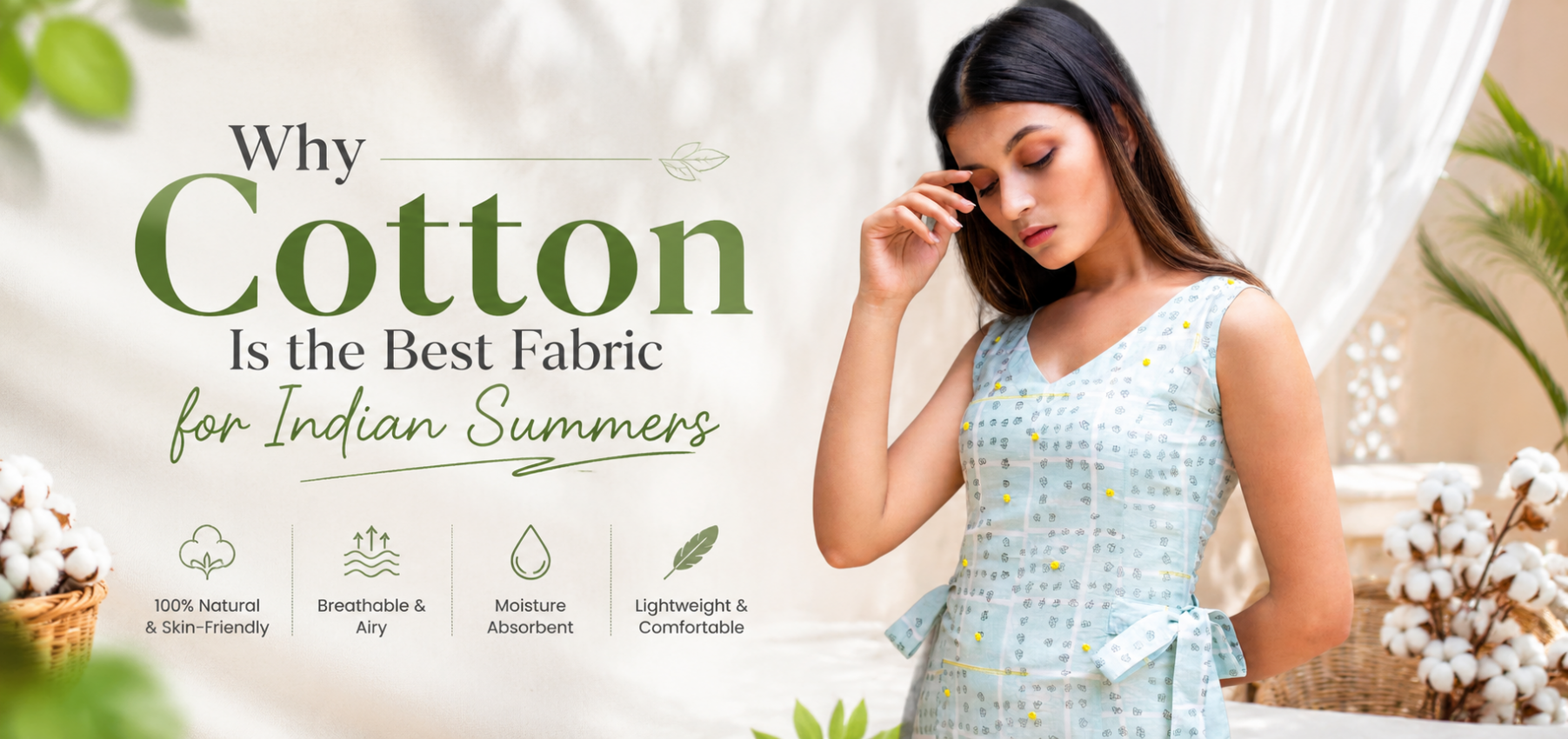
Why Cotton Is the Best Fabric for Indian Summers
When temperatures climb past 40°C and the air carries the thick weight of humidity, what you wear becomes as important as where you go. For generations, Indian women have reached for one fabric above all others — and the science, the tradition, and the sheer lived experience all point in the same direction: cotton.
India's summer is unlike any other. Across the plains of Rajasthan, the coastal stretches of Kerala, and the dense urban sprawl of Delhi, the season brings a particular kind of intensity — relentless sun, heavy humidity, and heat that seeps into every hour of the day. Choosing the wrong fabric in these conditions is not just a style misstep; it affects how you feel, how your skin responds, and how comfortably you can move through your day.
This guide explores exactly why cotton holds its place as the best fabric for Indian summers — from its natural science and skin benefits to its rich cultural history and modern styling potential. Whether you are building a seasonal wardrobe from scratch or simply trying to understand why certain outfits feel so much better than others, this is the complete, no-fluff answer.
What Actually Happens to Your Body in Indian Summer Heat
Before fabric choices make sense, it helps to understand what your body is doing when temperatures soar. As external heat rises, your body works continuously to cool itself through perspiration. Sweat is released onto the surface of the skin, where it evaporates and carries heat away from the body. This natural cooling mechanism is extremely effective — but only when air can circulate freely around the skin.
The problem begins when clothing traps heat and moisture instead of allowing evaporation. Synthetic fabrics such as polyester, nylon, and heavy rayon blends often create a barrier between the skin and surrounding air. Rather than drying quickly, sweat becomes trapped against the body, causing discomfort, stickiness, and a constant feeling of overheating throughout the day.
In Indian summers, where humidity levels can already slow down evaporation, this effect becomes even more intense. The combination of trapped sweat, friction, and rising body temperature encourages bacterial growth and increases the likelihood of common summer skin concerns like rashes, itching, body odour, and irritation around high-friction areas such as underarms, waistbands, inner thighs, and necklines.
Natural fibres behave very differently. Instead of resisting airflow, they support the body's own cooling process. Cotton, in particular, absorbs moisture while still allowing air circulation, helping sweat evaporate more efficiently and reducing the sensation of trapped heat against the skin.
This is one of the biggest reasons cotton has remained the preferred fabric across India for centuries. Long before modern textile science explained breathability and moisture management, Indian communities already understood through lived experience that cotton simply felt better in extreme heat. Its widespread use across diverse climates — from dry desert regions to humid coastal cities — is not accidental. It is the result of generations adapting clothing to one of the world's harshest summer environments.
The Science Behind Cotton's Breathability
Cotton fibres are naturally hollow and hydrophilic — meaning they are structurally designed to absorb and transport moisture efficiently. A single cotton fibre can hold up to 27 times its weight in water before it begins to feel damp against the skin. This unique property is what gives cotton its signature feeling of freshness during extreme summer heat.
Instead of trapping sweat against the body, cotton absorbs moisture quickly, pulls it away from the skin, and allows it to evaporate through the fabric's breathable weave. This constant cycle of absorption and evaporation supports the body's natural cooling process and prevents the heavy, sticky feeling commonly associated with synthetic fabrics.
The weave structure of cotton fabrics also plays a major role in summer comfort. Lightweight, loosely woven varieties such as mulmul (muslin) and voile allow exceptional airflow, almost acting like a breathable layer of circulating air between your skin and the outside environment. These fabrics feel feather-light even during intense humidity and prolonged outdoor exposure.
Slightly tighter cotton weaves like cambric provide more structure and opacity while still maintaining strong breathability. Even medium-weight handloom cottons, which may feel denser to the touch, generally allow significantly better airflow than synthetic fabrics of similar thickness.
This balance between airflow, moisture absorption, and softness is what makes cotton uniquely suited to Indian summers. Rather than forcing the body to adapt to the fabric, cotton adapts to the body's natural cooling needs.
Breathability: Open-weave cotton fabrics allow continuous airflow across the skin, helping prevent heat buildup during long hours of wear.
Moisture Absorption: Cotton absorbs sweat efficiently and releases it through evaporation, helping the skin stay drier and more comfortable.
Hypoallergenic: Natural cotton fibres are gentle on sensitive skin and reduce the likelihood of rashes, prickly heat, and irritation.
Thermal Regulation: Cotton supports the body's natural temperature regulation by encouraging airflow and evaporative cooling throughout the day.
How Cotton Compares to Other Popular Summer Fabrics
Indian summers attract a wide range of fabric marketing claims — every season, brands position linen, rayon, viscose, and chiffon as summer essentials. Some of these have genuine merit. Many do not. Here is an honest comparison of how cotton stacks up against its main alternatives.
Fabric | Breathable? | Moisture Absorption | Skin-Friendly? | Durability | Easy to Maintain? |
Easy to Maintain? | ✔ Excellent | ✔ Very High | ✔ Yes | ✔ High | ✔ Yes |
Linen | ✔ Excellent | ✔ High | Moderate (can feel coarse) | ✔ High | Wrinkles easily |
Rayon / Viscose | Moderate | Moderate | Moderate | ✗ Lower | Needs special care |
Polyester | ✗ Poor | ✗ Minimal | ✗ Can cause irritation | ✔ High | ✔ Easy |
Chiffon | Moderate | ✗ Low | Moderate | Delicate | Delicate wash needed |
Linen comes closest to cotton in terms of summer performance — it is highly breathable and slightly more absorbent than cotton per gram. However, linen's coarser texture can cause friction on sensitive skin, and the wrinkling makes it less practical for long wear days. For most Indian women seeking all-day comfort across work, travel, and social commitments, cotton remains the more versatile and reliable choice.
Not All Cotton Is the Same — Know Your Varieties
One of the most important things to understand about cotton is that it is not a single fabric — it is an entire family of textiles, each with its own weave, texture, weight, and purpose. Choosing the right variety for the right setting can dramatically change how comfortable you feel during Indian summers.
Some cotton fabrics are designed for peak heat and humidity, while others balance breathability with structure and elegance. Understanding these differences helps you build a summer wardrobe that works for real life — from long commutes and office hours to travel, festive occasions, and relaxed weekends.
Mulmul (Muslin) — For Peak Heat Days
Mulmul is among the lightest and airiest cotton weaves available. At its finest quality, it is almost translucent and feels exceptionally soft against the skin. The fabric drapes naturally, allows maximum airflow, and creates almost no heaviness even during extreme summer temperatures.
This makes mulmul especially suitable for relaxed silhouettes, layered styles, kaftans, loose kurtas, scarves, and travel clothing during the hottest months of the year — particularly across northern and central India between April and June.
Voile and Cambric — Refined Everyday Cotton
Voile is a lightweight plain-weave cotton known for its smooth finish and slightly polished appearance. It combines breathability with elegance, making it ideal for both casual dressing and semi-formal occasions.
Cambric, on the other hand, is woven more tightly and holds structure better, which makes it a preferred choice for tailored silhouettes, shirts, tunics, and coordinated sets. Despite its refined appearance, cambric still maintains excellent airflow and remains comfortable during long summer days.
Both voile and cambric offer a polished look without sacrificing the comfort that cotton is known for — which is why they are widely used for office wear, daytime events, and smart everyday dressing.
Handloom Cotton — Crafted for the Indian Climate
Handloom cotton occupies a special place in Indian textile heritage. For centuries, artisans across different regions of India have woven cotton fabrics specifically suited to tropical heat and humidity.
Compared to many factory-produced fabrics, handloom cotton usually features a more open and breathable weave, which improves air circulation and keeps the fabric cooler against the skin. Another defining quality is durability — authentic handloom cotton softens beautifully with repeated washing rather than losing strength over time.
Beyond comfort, handloom cotton also carries the legacy of India's regional weaving traditions. Each weave reflects generations of craft knowledge, making every garment not just functional but culturally meaningful.
Hand Block Printed Cotton — Where Art Meets Function
Hand block printing is one of India's most celebrated textile traditions. In this process, artisans use hand-carved wooden blocks to apply natural or low-impact dyes directly onto cotton fabric, creating intricate patterns without compromising the fabric's breathability.
Unlike heavy synthetic printing methods that can coat and stiffen fibres, traditional block printing allows cotton to retain its natural softness and airflow. This means the fabric remains cool, lightweight, and comfortable even after detailed printing and dyeing.
Many hand block printed garments also use gentler dye formulations that are kinder to sensitive skin and more environmentally responsible compared to heavily chemical-based synthetic prints.
Worth Knowing: When a garment is described as “hand block printed cotton,” the printing technique itself can actually improve the overall wearing experience. Because natural dyes do not seal the surface of the fibres, air continues to circulate freely through the weave — making these garments significantly more breathable and comfortable than many printed synthetic alternatives.
Why Cotton Is the Dermatologist's Choice for Summer Skin
Indian summers bring more than just discomfort — they also create ideal conditions for a wide range of skin problems. Heat rashes, prickly heat, folliculitis, fungal irritation, and contact dermatitis become significantly more common during periods of prolonged heat and humidity.
While weather is naturally a major factor, fabric choice often plays an equally important role. Clothing that traps sweat, restricts airflow, or creates constant friction against the skin can intensify irritation and worsen existing sensitivities throughout the summer months.
This is one of the reasons cotton is consistently recommended for hot-weather clothing. Cotton is naturally hypoallergenic and free from many of the petroleum-derived fibres, synthetic coatings, and chemical-heavy finishes commonly found in artificial fabrics. Its soft fibre structure feels gentler against the skin and creates less friction during movement, reducing the likelihood of inflammation and discomfort.
For women with sensitive skin, eczema-prone skin, or recurring summer irritation, switching to breathable cotton clothing often makes a noticeable difference in day-to-day comfort. Loose cotton garments reduce heat buildup around the skin and minimise the constant rubbing that frequently triggers redness and irritation in humid conditions.
Moisture control is another major advantage. Cotton absorbs perspiration efficiently while still allowing airflow through the weave, helping sweat evaporate instead of remaining trapped against the body. This matters enormously because warm, damp environments encourage the growth of bacteria and fungal organisms — especially during monsoon season, when humidity levels across many Indian cities rise above 80%.
By helping the skin stay cooler and drier, cotton creates conditions that are far less likely to trigger itching, odour, clogged pores, or heat-related skin flare-ups. This makes it particularly valuable for long workdays, travel, outdoor activity, and daily commuting during peak summer months.
“The Indian subcontinent did not develop its cotton textile traditions by accident. It developed them because cotton works — in this heat, in this humidity, on Indian skin.”
Cotton Silhouettes That Work Particularly Well in Indian Summers
Choosing cotton is only the first step. The way a garment is cut and constructed plays an equally important role in determining how comfortable it feels through long, hot summer days. Even the most breathable fabric can feel restrictive if the silhouette traps heat, limits airflow, or clings too closely to the body.
In Indian summers, the most effective clothing silhouettes are those that create space between fabric and skin, allowing air to circulate naturally while reducing friction and sweat accumulation. Certain cotton styles consistently perform better in high-heat and high-humidity conditions because they work with the climate rather than against it.
Relaxed Dresses and Wrap Styles
A loosely cut cotton dress is one of the smartest garments for Indian summers. It reduces the number of fabric layers sitting against the body while allowing continuous airflow through the silhouette. Relaxed A-line cuts, tiered dresses, and softly gathered styles create movement and comfort without sacrificing elegance.
Women cotton dresses in breathable fabrics are particularly effective for everyday wear because they combine ease, mobility, and minimal styling effort. Among these, cotton wrap dresses stand out for their adaptability. The wrap construction naturally adjusts to body movement and changing temperatures throughout the day, avoiding the tightness and restriction that often becomes uncomfortable in extreme heat.
Co-ord Sets — Structure Without Restriction
Coordinated cotton sets have become one of the most practical wardrobe solutions for women navigating long summer workdays. A thoughtfully designed women cotton co ord set provides the visual polish of a complete outfit without relying on heavy layering or structured tailoring.
Because the top and bottom are separate pieces, airflow remains more balanced across the body compared to fitted one-piece outfits or synthetic layered clothing. Co-ord sets also reduce decision fatigue during rushed mornings — an underrated advantage when temperatures are already climbing early in the day.
Slip Dresses — Minimal Layers, Maximum Airflow
For genuinely hot evenings, holidays, resort wear, or relaxed days at home, cotton slip dresses offer one of the coolest possible dressing options. With minimal seams, lightweight construction, and almost no excess layering, they allow the body to stay significantly cooler compared to more structured silhouettes.
Women slip dresses in soft cotton or hand block printed fabrics feel effortless while still appearing refined and intentional. Styled with flat sandals, silver jewellery, or a lightweight shrug, they create an elegant summer look that requires very little effort to wear comfortably.
Layering Thoughtfully — When the Occasion Calls for It
Some situations naturally require more coverage — whether for sun protection, travel, work environments, or social settings. The key is not avoiding layers entirely, but choosing layers that continue to breathe.
A cotton short shrug for women, especially in handloom cotton or lightweight chanderi blends, adds coverage without trapping excessive heat. Open-front shrugs allow airflow to continue through the outfit while softening the silhouette and creating a more finished appearance.
For festive dressing during summer months, a breathable dress with jacket set in cotton offers occasion-ready elegance without the discomfort associated with heavier embroidered fabrics or synthetic overlays. Thoughtful cotton layering allows women to dress beautifully for gatherings and celebrations without spending hours feeling overheated.
Region-by-Region: What Summer Looks Like Across India
India does not experience summer in a single uniform way. The intensity of heat, the level of humidity, and the duration of the season vary dramatically from one region to another. As a result, the cotton fabrics and silhouettes that feel most comfortable also differ across the country.
Understanding regional climate patterns helps explain why certain cotton traditions developed where they did — and why specific styles continue to dominate local wardrobes even today.
North India (Delhi, Jaipur, Lucknow)
Summers across North India are defined by intense dry heat, particularly between April and June. Temperatures frequently cross 40°C, and hot winds make heavy or synthetic fabrics deeply uncomfortable.
- Mulmul and voile cotton perform exceptionally well in dry heat.
- Hand block printed dresses remain popular for breathability and comfort.
- Lightweight co-ord sets offer practicality for office and city wear.
- Loose silhouettes help maintain airflow during peak afternoon temperatures.
Coastal West (Mumbai, Pune, Goa)
Coastal regions experience high humidity for much of the year, making moisture management more important than heat alone. Fabrics that dry quickly and prevent sweat accumulation become essential.
- Soft breathable cotton helps reduce stickiness and discomfort.
- Loose silhouettes minimise friction and help prevent chafing.
- Slip dresses and relaxed cotton layers work especially well for casual wear.
- Lightweight cotton separates remain practical for long humid days.
South India (Chennai, Bengaluru, Hyderabad)
South Indian summers combine prolonged heat with heavy humidity, particularly between March and June. Traditional textile choices in this region have long prioritised breathable handwoven cottons.
- Handloom cotton continues to be one of the preferred summer fabrics.
- Cotton sarees remain an everyday staple across generations.
- Lightweight cotton kurtas are widely used for office dressing.
- Natural fibres help maintain comfort during extended humid conditions.
East India (Kolkata, Bhubaneswar)
Eastern India experiences a combination of pre-monsoon heat and extremely high humidity levels. In these conditions, breathable fabrics become critical for both comfort and skin health.
- Lightweight cotton fabrics help reduce heat retention.
- Loose fits minimise skin irritation caused by humidity and sweat.
- Cotton dupattas provide breathable layering and versatility.
- Airy silhouettes help improve comfort during long humid days.
Cotton and Conscious Fashion — A Choice That Goes Beyond Comfort
Cotton's appeal today extends beyond comfort and climate suitability. Increasingly, it is also valued as part of a more conscious and sustainable approach to fashion. As conversations around textile waste, synthetic pollution, and fast fashion continue to grow, natural fabrics like cotton offer meaningful advantages that reach far beyond the wardrobe itself.
Unlike petroleum-based synthetic fabrics, natural cotton is biodegradable. At the end of its lifecycle, cotton can break down naturally without releasing persistent synthetic microplastics into soil and water systems. Synthetic materials such as polyester and nylon, by contrast, shed microscopic plastic fibres during every wash cycle and may take decades — sometimes centuries — to fully decompose.
Handloom cotton strengthens this sustainability story even further. Traditional handloom weaving requires dramatically less industrial energy compared to large-scale factory production, reducing the environmental footprint of the finished textile. Every handwoven garment also supports artisan communities whose weaving knowledge has been preserved and passed down across generations.
Choosing handloom cotton therefore becomes more than a style decision. It is also a quiet investment in cultural continuity, skilled craftsmanship, and local textile economies that continue to shape India's design heritage.
Hand block printing adds another layer of conscious craftsmanship. Traditional block printing techniques often rely on natural or low-impact dyes derived from minerals, vegetables, flowers, and plant-based sources. These dyeing methods are gentler for artisans, safer for waterways, and far less chemically aggressive than many synthetic industrial printing processes.
Importantly, traditional block printing also preserves the natural breathability of cotton fabric. Because the dyes do not heavily coat or seal the fibres, air continues to move freely through the weave — maintaining the comfort that makes cotton so valuable in Indian summers.
A hand block printed cotton dress is not simply fashionable — it is craftsmanship, climate intelligence, and everyday practicality woven together into a single garment.
How to Care for Cotton So It Stays Beautiful All Season
One of cotton's greatest strengths is durability. High-quality cotton garments can remain beautiful for years when cared for thoughtfully. Simple maintenance habits help preserve softness, colour, shape, and breathability across repeated summer wear.
Gentle Washing: Wash cotton garments in cold or lukewarm water using a mild detergent. Excessive heat can shrink fibres and gradually weaken the fabric structure over time.
Preserve Natural Dyes: For hand block printed pieces, adding a small amount of white vinegar during the rinse cycle can help stabilise colour naturally without harsh chemical fixatives.
Dry in Shade: Avoid prolonged drying under harsh direct sunlight. Shade drying helps preserve natural dyes and prevents yellowing or fading in lighter cotton fabrics.
Iron Carefully: Iron cotton while it is still slightly damp using medium heat. This creates a cleaner finish with less effort and reduces the risk of overheating delicate prints.
Store Properly: Store cotton garments folded in a cool, dry space. Breathable muslin or fabric covers are preferable to plastic storage, which can trap moisture over time.
Rotate Regularly: Rotating garments throughout the season helps reduce repeated stress on fibres and extends the overall lifespan of your summer wardrobe.
Building a Practical Summer Cotton Wardrobe
The question of which pieces to invest in is, ultimately, a deeply personal one — shaped by your lifestyle, your daily schedule, and the occasions you dress for. That said, certain categories consistently deliver the best return on investment for Indian summers. A core summer wardrobe built around cotton might include two or three relaxed cotton dresses in versatile prints, a co-ord set that handles both work and casual contexts, a slip dress for easy at-home or leisure days, and one or two lightweight layering pieces — a shrug or a simple cotton jacket set for occasions that demand coverage or ceremony. This is not a large wardrobe. It is a considered one — where each piece earns its place through comfort, versatility, and longevity. The best fabric for Indian summers is ultimately the one that works with your body, your climate, and your life — not against it. Cotton, in its many forms, has been doing exactly that for the women of this subcontinent for centuries. That continuity is not sentiment. It is evidence.
Frequently Asked Questions
Why is cotton considered the best fabric for Indian summers?
Cotton is breathable, moisture-absorbent, and soft on the skin — qualities that make it exceptionally well-suited for India’s intense heat and humidity. It allows air to circulate freely, absorbs sweat quickly, and dries relatively fast, helping the body stay cooler and more comfortable throughout the day.
In addition, cotton is naturally hypoallergenic, which means it is less likely to trigger rashes, itching, or irritation — common concerns during peak summer months when heat and sweat exposure are constant.
Which type of cotton fabric is best suited for peak Indian summer?
For the hottest months (April to June), lightweight weaves such as mulmul (muslin), voile, and cambric are ideal because they maximise airflow and feel extremely light on the skin.
If you prefer a balance between structure and comfort, handloom cotton and chanderi cotton are excellent choices. Hand block printed cotton is also highly suitable, as traditional printing methods typically preserve the fabric’s natural breathability while adding artistic detail.
Is cotton better than linen for Indian summers?
Both cotton and linen are excellent natural summer fabrics, but they serve slightly different needs. Linen is highly breathable and performs well in heat, but it can feel coarse on sensitive skin and tends to wrinkle easily.
Cotton, on the other hand, is softer, more versatile, and available in a wider range of silhouettes suited to Indian dressing — from kurtas and sarees to dresses and co-ord sets. For everyday wear across varied Indian conditions, cotton is generally the more practical and adaptable choice.
How do I care for cotton clothing to make it last longer?
To maintain cotton garments, wash them in cold or lukewarm water using a mild detergent. Avoid harsh chemicals or bleach, especially for hand block printed fabrics.
Dry clothes in shade rather than direct sunlight to preserve colour and fabric strength. Iron on medium heat while slightly damp for best results, and store garments folded in a cool, dry space using breathable fabric covers instead of plastic.
Can cotton outfits be worn for festive occasions, or are they only for casual wear?
Cotton is no longer limited to casual wear. In Indian fashion today, it plays a significant role in festive and semi-formal dressing as well.
Hand block printed cotton dresses, chanderi cotton sarees, and thoughtfully layered dress-with-jacket sets can all work beautifully for festive occasions and family celebrations. The elegance comes from craftsmanship, silhouette, and styling — allowing cotton to deliver both comfort and occasion-ready sophistication.
-
 August 26th, 2026
 -
Natural vs Synthetic Fabrics: What Should You Know Before Buying?
August 24th, 2026 -
 August 24th, 2026
 -
 August 13th, 2026