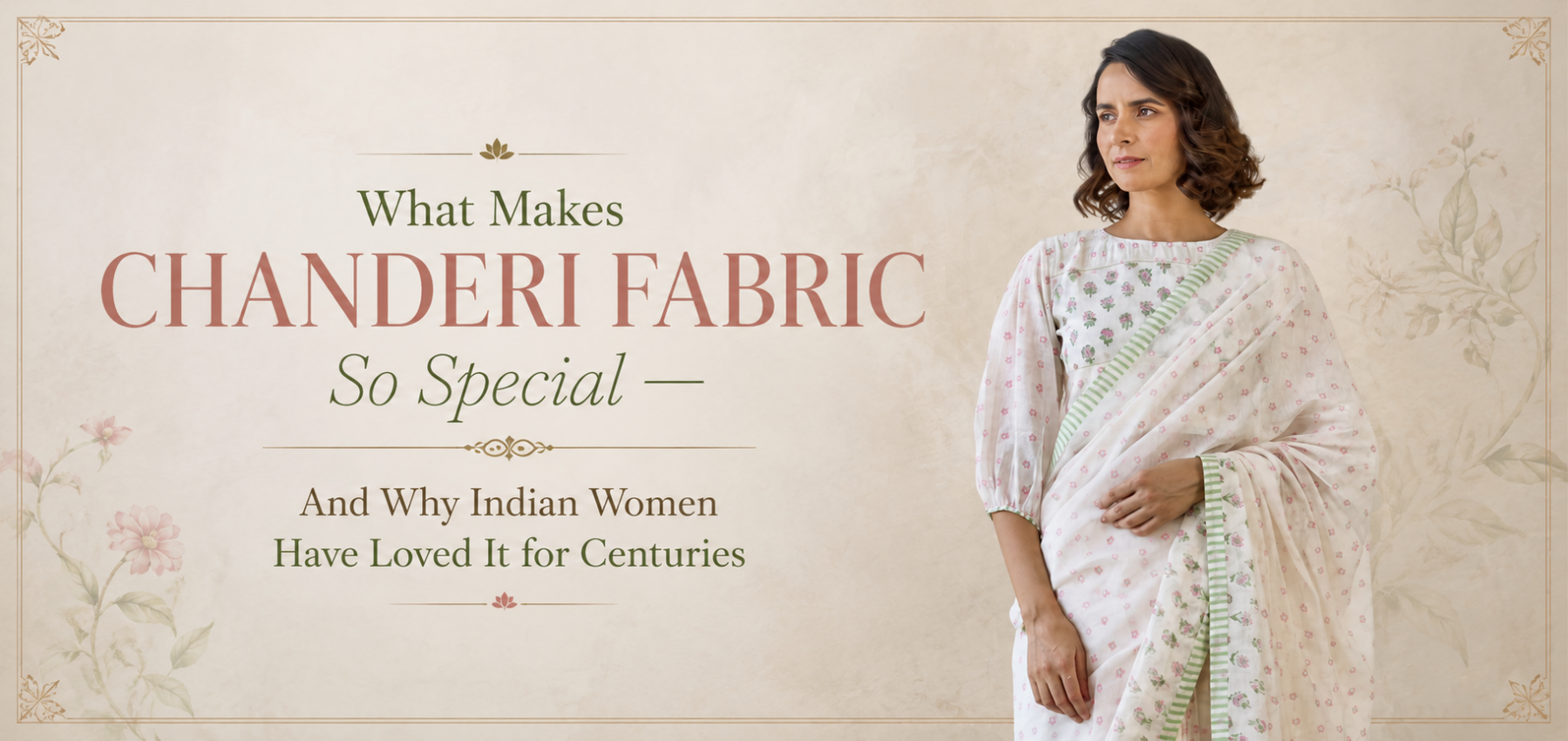
What Makes Chanderi Fabric So Special — And Why Indian Women Have Loved It for Centuries
In a country as rich with textile traditions as India, one fabric has quietly endured the test of time, royal patronage, changing fashion seasons, and even the rise of synthetic alternatives — Chanderi. Lightweight, luminous, and steeped in centuries of craftsmanship, Chanderi fabric is not just a material. It is a story woven thread by thread from the looms of Madhya Pradesh.
The Ancient Town Behind the Fabric
Chanderi is a small town in the Ashoknagar district of Madhya Pradesh, nestled between the Vindhyachal hills and the Betwa river. The town's weaving tradition is believed to date back to the 11th century, with references to fine fabrics being woven here as far back as the Vedic era. However, it was during the Mughal period — particularly under Akbar's reign — that Chanderi weaving truly flourished and gained prominence across royal courts.
Weavers from the Koshthi community settled in Chanderi and refined techniques passed down through generations. Over centuries, this craft absorbed influences from both Mughal aesthetics and indigenous folk traditions — giving birth to a fabric that is unmistakably Indian, yet carries a timeless cosmopolitan elegance.
Today, the Chanderi weaving community continues this tradition, and the fabric holds a coveted Geographical Indication (GI) tag — a mark of authenticity that confirms its origin and heritage. When you purchase a genuine Chanderi garment, you are not just buying a piece of clothing; you are supporting a living craft tradition that has survived empires, colonisation, and industrialisation.
How Is Chanderi Fabric Woven?
To truly appreciate Chanderi fabric, one must understand how it is made. The weaving process is entirely hand-powered on traditional fly-shuttle pit looms, a technique that requires immense skill and patience. A skilled weaver can produce barely one to two sarees per week — sometimes even less for intricately designed pieces.
The Three Classic Varieties
Chanderi fabric is traditionally woven in three distinct varieties, each with its own character:
- Pure Silk Chanderi: Woven entirely from mulberry silk, this variety has the finest sheen and is considered the most luxurious. It is often used for festive and bridal occasions.
- Silk-Cotton Chanderi: A blend where the warp is silk and the weft is cotton. This is the most popular variety — it combines the luminosity of silk with the breathability of cotton.
- Pure Cotton Chanderi: Woven entirely in cotton, this variety is the most accessible and comfortable for daily wear. It retains the fabric's signature lightness and drape without the higher price point.
The Signature Motifs
What makes Chanderi visually distinctive is its traditional motif vocabulary. Weavers incorporate Asharfi (coin-shaped), Dandidar (striped), Buti (tiny scattered patterns), peacock, lotus, and geometric motifs into the fabric during the weaving process itself — not printed on top afterwards.
These motifs are either woven using extra-weft techniques or created using fine zari (gold or silver metallic thread), producing a texture that catches the light beautifully and gives Chanderi its unmistakable elegance.
Why Chanderi Fabric Benefits Go Beyond Just Aesthetics
The popularity of Chanderi is not merely about how the fabric looks. The Chanderi fabric benefits are deeply practical, rooted in its material composition and weaving structure. For women across India — whether in the humid coastal cities or the dry northern plains — these qualities make Chanderi a genuinely thoughtful choice of clothing.
Exceptional Breathability: The open weave structure allows air to circulate freely, making Chanderi one of the most comfortable fabrics to wear during India's long, warm months.
Feather-Light Weight: Despite its rich appearance, Chanderi is remarkably light. A full six-metre saree weighs significantly less than most comparable silk varieties.
Natural Lustre: The silk content gives Chanderi a soft, natural sheen that catches the light subtly — elegant without feeling overdressed for any occasion.
Skin-Friendly: Natural fibre content means Chanderi is gentle on skin, free of synthetic irritants, and ideal for those who prefer natural, chemical-minimal clothing.
Vibrant Colour Absorption: Whether hand block printed or yarn-dyed, Chanderi absorbs colour with extraordinary depth and richness, resulting in vibrant hues that do not fade quickly.
Good Drape and Fall: The silk-cotton structure gives Chanderi a beautiful, fluid drape — ideal for sarees, dupattas, and kurtas that need to flow gracefully with movement.
These combined chanderi fabric benefits explain why it has remained relevant across generations. It is one of those rare textiles where heritage and utility genuinely coexist.
The Handloom Tradition — Why It Matters Now More Than Ever
In a world where fast fashion dominates, understanding the value of handloom becomes more important than ever. A handloom chanderi saree is not simply a product manufactured to meet demand — it is the result of a skilled weaver dedicating hours, sometimes days, to creating something entirely by hand.
The differences between handloom and power loom Chanderi are visible if you know what to look for. Handloom pieces have a slight irregularity to their weave — a natural variation that is the hallmark of authentic hand-crafted work. The motifs sit more richly within the fabric. The texture has depth. And the entire piece carries an almost intangible quality: the sense that a human being made it, for another human being to wear.
"Wearing a handloom saree is an act of cultural memory. Each thread carries the knowledge of generations."
When you choose handloom Chanderi, you also participate in a system that directly supports artisan livelihoods. Most Chanderi weavers are home-based or work within small cooperatives. Your purchase contributes to an ecosystem that has been sustained for centuries — and must continue to be sustained if the craft is to survive for future generations.
Block Printing on Chanderi — Where Two Crafts Meet
Chanderi fabric’s naturally fine texture makes it an exceptional base for hand block printing — another centuries-old Indian art form. When these two traditions come together, the result is extraordinary: intricate motifs in natural dyes pressed onto a fabric that already carries its own woven elegance.
Block printing on Chanderi requires remarkable precision because the fabric’s lightweight and translucent quality demand careful handling. Too much pressure and the dye spreads unevenly. Too little and the motif does not transfer clearly. The finest printed chanderi saree pieces display crisp-edged patterns, balanced colour distribution, and pigments that appear absorbed into the fabric rather than merely resting on its surface.
At The Yellow Bow, this meeting point between Chanderi weaving and Jaipur’s rich block printing heritage lies at the heart of our craft philosophy. Every piece is created not only to look beautiful, but to preserve and celebrate the cultural authenticity of both traditions together.
Chanderi in the Modern Indian Wardrobe
The beauty of Chanderi lies in its versatility. While it is deeply rooted in traditional Indian dress culture, the fabric adapts remarkably well to contemporary silhouettes and styling sensibilities. Today, Chanderi is not just worn as a saree — it appears in kurtas, salwar sets, dupattas, dress fabrics, blouses, and even indo-western separates.
For Indian women who want to stay connected to their cultural roots without compromising on comfort or modern aesthetics, Chanderi offers a natural answer. A cotton-silk Chanderi kurta with simple block-printed motifs can transition easily from a morning office meeting to an evening gathering — without requiring a change of outfit or a second thought about appropriateness.
Similarly, a well-draped Chanderi saree is one of the least physically demanding sarees to wear for extended hours. Its lightness means the pleats stay crisp longer, the pallu falls gracefully without tugging at the shoulder, and the wearer feels significantly cooler than in heavier fabrics.
Chanderi for Every Season
While Chanderi is particularly beloved in India's spring and summer months, the cotton-silk blend also works well in transitional weather. Layering a Chanderi saree with a well-fitted full-sleeve blouse makes it perfectly appropriate for cooler evenings and mild winter celebrations. Its adaptability across climates is one reason the fabric has never fallen out of favour.
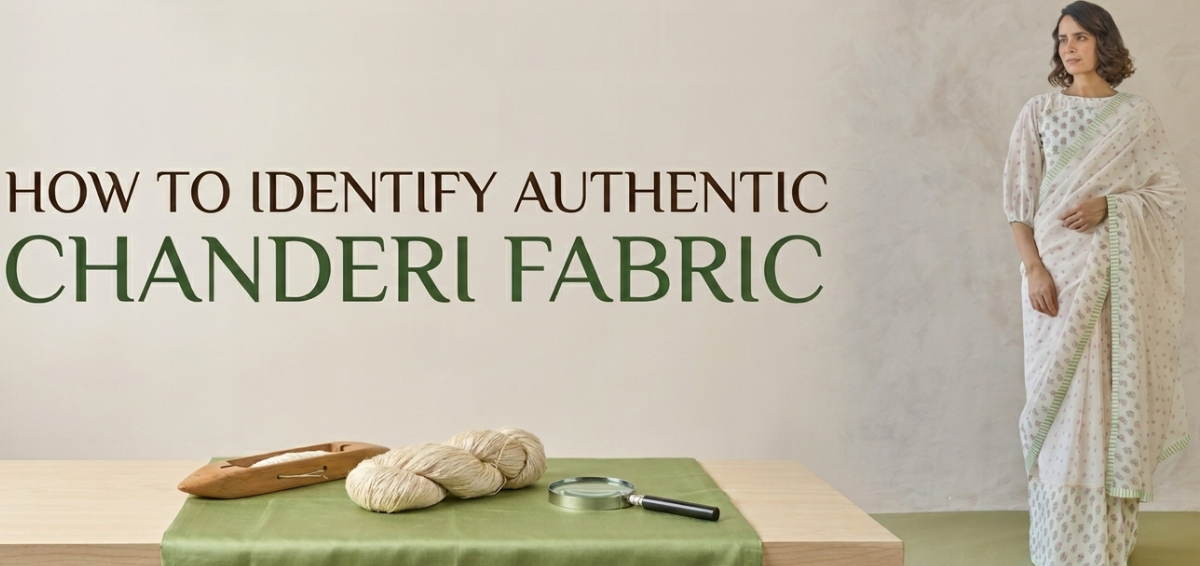
How to Identify Authentic Chanderi Fabric
With the growing demand for Chanderi garments, the market also has its share of machine-made imitations. Knowing how to identify authentic Chanderi helps you make an informed purchase — especially when buying chanderi sarees online.
- Hold it to light: Authentic Chanderi has a characteristic translucency — when held against natural light, you should be able to see the weave structure clearly.
- Check the selvedge: The selvedge (edge) of a handwoven Chanderi saree tends to be slightly irregular, a natural outcome of the hand-weaving process.
- Feel the weight: Real Chanderi feels almost impossibly light. If the fabric feels heavy or stiff, it is likely a blend or a power-loom imitation.
- Look at the motifs: On a handloom Chanderi, the woven motifs — whether zari or silk — appear as part of the fabric itself, not applied onto the surface.
- Ask for GI-tagged products: Genuine Chanderi fabric carries a GI (Geographical Indication) tag. Reputable sellers should be able to confirm the origin of their fabric.
Caring for Your Chanderi Garment — A Practical Guide
Chanderi is a delicate fabric and deserves thoughtful care. Unlike synthetic textiles, natural fibres respond to how they are washed, stored, and ironed — and a little care goes a long way in preserving both the fabric’s sheen and the integrity of its woven or printed motifs.
Washing
Dry cleaning is the safest option for pure silk Chanderi, especially pieces with zari work. For cotton or cotton-silk Chanderi without heavy embellishments, gentle hand washing in cool water with a mild fabric wash is acceptable. Never wring or twist the fabric — instead, press the water out gently by rolling it in a clean, dry towel.
Drying and Ironing
Dry Chanderi garments in shade rather than direct sunlight, as prolonged sun exposure can dull the natural lustre and fade dyed or printed colours. When ironing, use a cool-to-medium iron setting. For sarees with zari borders, iron on the reverse side or use a pressing cloth to avoid damaging the metallic thread.
Storage
Fold Chanderi garments along the weave rather than against it, and store them wrapped in a soft muslin cloth. Avoid plastic bags or airtight containers — natural fabrics need to breathe. Placing a small packet of dried neem leaves or silica gel near stored garments helps protect against moisture and insects.
Why Chanderi Continues to Resonate With Indian Women Today
In an era defined by fast fashion, global trends, and disposable clothing, the continued relevance of Chanderi is genuinely remarkable. It speaks to something deeper than fashion — a desire among Indian women to stay connected to their cultural identity while dressing with intelligence and intention.
Chanderi does not ask you to choose between comfort and elegance. It does not demand that you sacrifice breathability for occasion-appropriateness. It does not age poorly or go out of style. A Chanderi saree bought today will look just as relevant in a decade, because its beauty is rooted in craft and materiality — not in passing trends.
There is also a growing consciousness among urban Indian women about what their clothing choices represent. Choosing a chanderi handloom saree is a choice that supports a weaver’s livelihood, preserves a GI-tagged craft tradition, reduces dependence on synthetic materials, and adds a piece of genuine cultural heritage to your wardrobe. These values resonate particularly deeply with women who are thoughtful about how they consume fashion.
At The Yellow Bow, this is the philosophy we build from: contemporary silhouettes, thoughtfully crafted in fabrics that carry history, integrity, and purpose. Chanderi sits at the very heart of that vision.
Frequently Asked Questions About Chanderi Fabric
1. What is Chanderi fabric made of?
Chanderi fabric is traditionally woven using three types of yarn — pure silk, silk-cotton blend, and pure cotton. The most prized variety uses a silk warp with cotton weft, which gives the fabric its signature lightweight texture and natural sheen.
2. Why is Chanderi fabric considered special compared to other Indian textiles?
Chanderi fabric stands apart because of its rare combination of lightness, sheen, and durability. Unlike heavier silk or synthetic fabrics, Chanderi offers a translucent, almost airy quality while still holding intricate handwoven motifs and zari work. Its craftsmanship dates back over 600 years, making it both a cultural heritage and a fashion choice.
3. Is Chanderi fabric suitable for everyday wear or only for special occasions?
Chanderi fabric is versatile enough for both. Cotton-blend Chanderi is comfortable for daily or office wear, especially in warmer months. Pure silk Chanderi sarees and dress fabrics are popular choices for festivals, weddings, and formal occasions. The fabric’s breathability makes it wearable throughout India’s warm climate.
4. How should I care for a Chanderi saree or garment?
Chanderi garments are best dry-cleaned or hand-washed in cold water using a mild detergent. Avoid wringing the fabric as it can damage the delicate weave. Store it folded in a soft muslin cloth to prevent creasing and protect the zari borders from tarnishing.
5. What is the difference between a handloom Chanderi saree and a power loom Chanderi saree?
A handloom Chanderi saree is woven entirely by hand on a traditional loom, which gives it organic textures, unique motifs, and a depth of craftsmanship that cannot be replicated mechanically. Power loom Chanderi sarees are machine-made and more uniform in texture but lack the artisanal quality and cultural value of a handwoven piece. Handloom varieties are generally considered more premium and authentic.
-
 August 26th, 2026
 -
Natural vs Synthetic Fabrics: What Should You Know Before Buying?
August 24th, 2026 -
 August 24th, 2026
 -
 August 13th, 2026