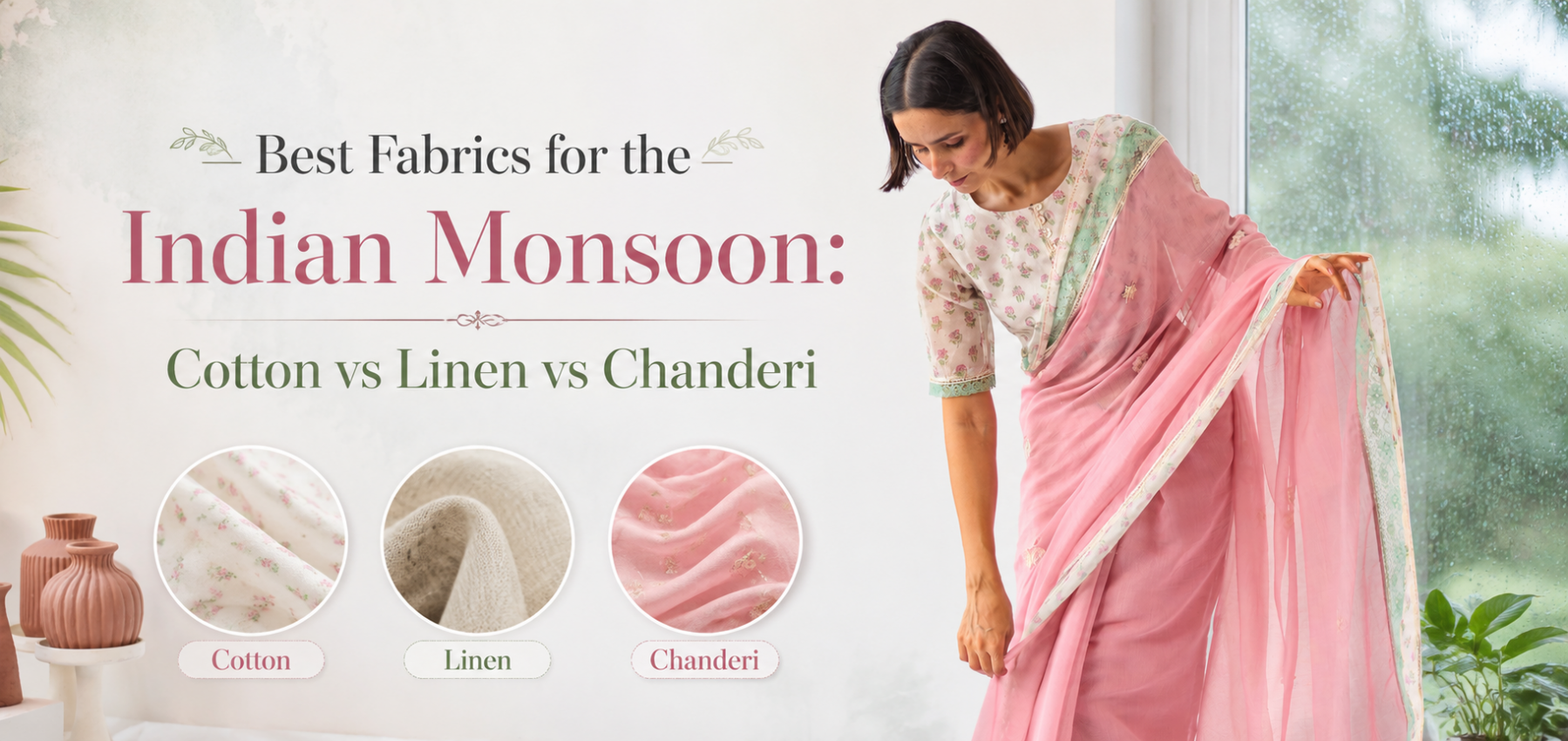
Best Fabrics for the Indian Monsoon: Cotton vs Linen vs Chanderi
The Indian monsoon is not just a weather event — it is a wardrobe problem that millions of women solve wrong every single year. The right monsoon fabrics can mean the difference between stepping out feeling fresh and returning home looking (and feeling) like you lost a battle with a cloud. This guide breaks down everything you need to know about cotton, linen, and Chanderi — three of the most beloved natural fabrics in Indian fashion — and how each one actually performs when the skies open up.
Why Your Fabric Choice Matters More in Monsoon Than in Any Other Season
India's monsoon season, which typically runs from June through September, brings with it a unique combination of factors that make clothing choices genuinely complex: persistent humidity (often above 80%), sudden heavy rain, temperatures that hover between warm and hot, and the constant risk of getting wet. A fabric that feels fine in a dry summer can become unbearable when combined with 90% humidity.
What your clothes need to do during monsoon is very specific. They need to allow your body to breathe and release heat in high humidity. They need to dry quickly when they get wet — whether from rain or from perspiration. They should not cling uncomfortably to the skin when damp. And ideally, they should not show every water mark or splash as a conspicuous stain.
Synthetic fabrics like polyester are immediately disqualified: they dry fast, but they trap body heat in a way that makes high-humidity conditions deeply uncomfortable. Rayon and viscose drape beautifully but cling when wet. Heavy silk holds moisture for hours and can develop water spots that are difficult to remove. The fabrics that survive — and actually shine — during monsoon are natural, lightweight, and breathable. Cotton, linen, and Chanderi sit at the top of that list for Indian women's wear.
Cotton in the Monsoon: The Trusted Everyday Companion
Cotton has clothed India through centuries of monsoons, and for very good reason. It absorbs moisture and wicks it away from the skin, allows air to circulate naturally, and sits softly against skin that is already dealing with heat and humidity. It is also one of the most forgiving fabrics — easy to care for, widely available, and comfortable across the entire price spectrum.
That said, not all cotton is equal during the rainy season. This is a distinction that most fabric guides skip over, and it matters enormously. Dense cotton — the kind used in thick salwar kameez fabrics, denim-weight kurtas, or heavy drill — takes a very long time to dry and can feel oppressive when damp. It holds heat close to the body rather than releasing it.
What you want is a fine, plain-weave cotton: the kind of fabric you can hold up to the light and see a faint transparency through. Jaipuri cotton, kora cotton, mulmul cotton, and fine block-printed cottons all fall into this category. These weaves allow air to pass through the fabric and dry relatively quickly after getting wet.
Why Hand Block Printed Cotton Specifically Excels
A hand block printed dress in fine cotton is one of the most practical monsoon wardrobe choices you can make. The fine cotton base dries quickly. The hand block print — particularly in mid-tones or deep tones like indigo, forest green, terracotta, or rust — naturally conceals the kind of light water splashes and damp patches that are unavoidable during monsoon. The print also gives the fabric a visual character that looks intentional even if you have been caught in a light drizzle.
Hand block printing on cotton is also done with natural dyes in many traditional Jaipur workshops, which means the colours tend to be rich, earthy, and deep — exactly the tones that photograph beautifully in overcast monsoon light and hold up well through the season.
Best Cotton Silhouettes for Rainy Season
Loose, flowing silhouettes in fine cotton work best during monsoon. A-line dresses, straight kurtas with wide sleeves, and tiered skirts allow the fabric to move away from the body and dry faster. Fitted sleeves and tight waistbands hold damp fabric against the skin, which is uncomfortable. Opt for breathable cuts that allow air circulation — and consider hemlines carefully. Ankle-length garments will drag through puddles; a mid-calf or knee-length cut is far more practical.
Linen in the Monsoon: The Fastest-Drying Natural Fabric You Own
Linen is made from flax fibers, and it is, objectively, the fastest-drying natural fabric in Indian wardrobes. It dries even faster than fine cotton. It breathes exceptionally well in humidity. And — this is the part that surprises most people — linen actually gets softer when it is damp, rather than stiff or clammy.
The primary concern people raise about linen is wrinkling. This concern is real but overblown, particularly for monsoon dressing. The relaxed, slightly uneven texture of linen — the characteristic drape and the natural wrinkle — does not read as careless or unkempt during the rainy season. It reads as a considered, comfortable aesthetic choice. A crisp linen kurta at 9 AM may have some character by noon; in the context of a humid July day in any Indian city, this is entirely appropriate.
When to Choose Linen Over Cotton in Monsoon
If you spend a significant amount of time outdoors during monsoon — commuting in autos, walking between buildings, or working in environments where air conditioning is limited — linen is actually the stronger choice. Its faster drying time means you will recover from light rain or perspiration more quickly than in cotton. It also has a natural texture that makes it look intentional even when slightly crumpled from a day of humidity.
For those who need to move between a wet commute and a professional meeting without changing, a cotton-linen blend is the most practical choice of all. The linen component wicks moisture and dries fast; the cotton component reduces the aggressive wrinkling of pure linen and gives the fabric a slightly smoother feel.
Chanderi in the Monsoon: When Elegance Cannot Be Compromised
Chanderi is a traditional handwoven textile from the town of Chanderi in Madhya Pradesh, and it has been part of India's textile heritage for over 700 years. It is typically a blend of silk and cotton (or silk and viscose), and this combination creates something quite unusual: a fabric that looks luxurious and has a subtle, light-catching sheen, but wears as cool and airy as a fine cotton.
The silk component of Chanderi gives it a gentle lustre and a structured drape. The cotton component — present in the weft, or horizontal threads — brings breathability, moisture management, and an everyday wearability that pure silk cannot match. In humid conditions, the cotton weft prevents the kind of clammy, oppressive feeling that heavy silk develops. The result is a fabric that genuinely straddles the line between festive and functional.
Chanderi's Specific Strengths During Monsoon
A handloom chanderi saree is one of the most sophisticated ways to dress during a monsoon festive occasion. Chanderi is lightweight enough that it does not become heavy or waterlogged at the first sign of humidity. The fine weave allows air to circulate. And unlike heavier silks — Banarasi, Kanjeevaram, or heavily zari-embroidered pieces — Chanderi does not trap heat or hold moisture against the skin in a way that becomes uncomfortable over several hours.
Chanderi also has the significant advantage of looking elevated without requiring heavy accessories or embellishment. The natural sheen of the silk warp catches light in a way that makes even a simple Chanderi piece look intentional and polished. For festive lunches, family gatherings, pujas, and indoor celebrations during monsoon — where you want to look dressed without sweating through a heavy outfit — Chanderi is a near-perfect answer.
When to Exercise Caution with Chanderi in Rain
Chanderi is not the fabric to wear on a day when the sky looks uncertain and you will be outdoors for extended periods. Pure silk Chanderi can develop water spots from heavy rain, and while the cotton weft helps it breathe, it does not make the fabric rain-proof. Reserve your Chanderi pieces for days when you have transport-to-door convenience, or for indoor gatherings where heavy exposure is unlikely. On rainy-season days that involve significant walking or outdoor time, fine cotton is the safer and more practical choice.
Side-by-Side: How Cotton, Linen, and Chanderi Perform in Indian Monsoon
Property | Fine Cotton | Linen | Chanderi |
Breathability | Excellent | Excellent | Very Good |
Drying Speed | Good (fine weave dries faster) | Excellent (fastest natural fabric) | Good (cotton weft helps) |
Feel When Damp | Comfortable, non-clingy | Softens; non-clingy | Comfortable for light moisture |
Wrinkling | Minimal to moderate | High (but looks intentional) | Low — holds shape well |
Rain Exposure | Handles well | Handles well | Best for light/no rain exposure |
Best Occasion | Everyday, work, travel | Commuting, outdoor outings | Festive, indoor gatherings |
Care Ease | Easy — machine wash | Easy — cold water, shade dry | Moderate — gentle hand wash |
Price Range | Accessible | Moderate to premium | Moderate to premium |
Fabrics That Do Not Work in Indian Monsoon (And Why)
Understanding what to avoid is just as important as knowing what works. Here is a clear breakdown:
Heavy Silk: Pure silk becomes genuinely heavy when wet. It takes hours to dry properly, and water exposure can leave visible spots on the surface that are difficult to remove at home. Damp silk against the skin in humid weather is deeply uncomfortable.
Rayon and Viscose: These fabrics are lightweight and drape beautifully in dry conditions, but they cling when wet. If your day involves any walking outdoors or uncertainty about rain, rayon is a risk. On dry indoor days or days when you are fully protected from rain, it is acceptable.
Heavily Embroidered Fabrics: Thick embroidery, dense zari work, and mirror work hold moisture in the threads long after the base fabric dries. This creates a wet, heavy feeling against the skin that is uncomfortable and slow to resolve.
Dense Cotton Drill and Denim-Weight Fabrics: These feel oppressive in 80-90% humidity and take far too long to dry. The confusion here is that people assume "cotton = monsoon safe," but only fine-weave cotton qualifies for that description.
Polyester: Dries fast but traps body heat completely. In Indian monsoon humidity, polyester creates a greenhouse effect against the skin that no amount of air conditioning fully resolves during commutes and outdoor moments.
How to Style Monsoon-Ready Outfits Without Sacrificing Elegance
Knowing the right fabric is step one. Putting it together into a complete, practical, and stylish monsoon wardrobe is step two. Here are the principles that work consistently for Indian women during the rainy season.
Layer With Purpose, Not Weight
Monsoon evenings can turn cool unexpectedly, particularly after heavy rain. A golden shrug for women in a fine cotton or Chanderi blend is the most elegant monsoon layering solution available — it adds warmth and structure without adding bulk or trapping heat. Look for shrugs in breathable fabrics that match or complement your base outfit rather than heavier knit or synthetic layering pieces.
A dress with jacket set in cotton — where the jacket is unlined and made from the same breathable fabric as the dress — is another excellent option for festive monsoon occasions. The jacket can be removed when indoors and added when moving between venues or in cooler evening air.
Coordinates and Sets Simplify Everything
Monsoon mornings often involve less time for outfit planning — and a coordinated set eliminates that decision entirely. A well-designed set of tunic sets for women in fine cotton or a cotton-blend is one of the most practical investments for the season. The pieces are designed to work together, the fabric is chosen for comfort, and the visual coherence means you look put-together even on a rushed morning when the rain is already falling.
Colour and Print Strategy for the Rainy Season
Pastels and whites, while beautiful in dry weather, show every water splash and damp patch immediately in monsoon. Deep tones — indigo, forest green, rust, terracotta, burgundy, deep mustard — are far more practical. Hand block prints are particularly smart because the print itself camouflages light rain marks and damp spots on the fabric surface. A rich floral block print in a deep ground colour looks beautiful, photographs well in grey monsoon light, and hides the reality of navigating a wet city.
Hemlines, Footwear, and Fit: The Practical Details
Ankle-length and floor-length outfits, however beautiful, collect water, mud, and road grime during monsoon. A mid-calf hemline — or a gathered tier dress that falls just below the knee — is far more practical for daily wear. Pair your breathable natural fabrics with flat sandals or waterproof footwear rather than suede or fabric shoes. And choose fits that are relaxed but not excessively billowy — you want air to circulate, not fabric to catch rain.
The Honest Verdict: Which Fabric Should You Choose?
Choose Fine Cotton When…
You need an everyday monsoon fabric for work, travel, or outdoor use. It is the most versatile, most forgiving, and most widely available option for Indian women during the rainy season.
Choose Linen When…
You commute in humid conditions, spend time outdoors, or need the fastest-drying option available in natural fabrics. Embrace the wrinkle — it suits the season.
Choose Chanderi When…
You have a festive occasion, indoor gathering, or semi-formal event during monsoon. It offers elegance and breathability together — just keep it away from heavy rain exposure.
There is no single winner in the monsoon fabrics debate, because the best choice depends on your day, your destination, and the occasion. A practical monsoon wardrobe uses all three: fine cotton for daily wear and travel, linen or cotton-linen blends for humid commuting days, and Chanderi for festive and celebratory occasions. These three fabrics cover the full spectrum of what Indian women need from June through September.
At The Yellow Bow, our collections are designed with exactly this understanding. Every fabric we choose — fine Jaipuri cotton for our hand block printed dresses, handloom Chanderi for our sarees, breathable blends for our layering pieces — is selected with Indian climates, Indian lifestyles, and the specific demands of each season in mind. Craftsmanship and comfort are not a trade-off here; they are the starting point.
Frequently Asked Questions
Which fabric is best for the Indian monsoon season?
Fine cotton is widely considered the best fabric for the Indian monsoon. It absorbs moisture, allows air circulation, and dries relatively quickly. Linen is a close second — it dries even faster and actually softens when damp. Chanderi (a cotton-silk blend) is ideal for festive or semi-formal monsoon occasions as it is lightweight, breathable, and carries a subtle sheen without the heaviness of pure silk.
Does linen shrink or get damaged in the rain?
Linen does not get damaged by rain and actually performs very well in monsoon conditions. It dries faster than most natural fabrics and softens when damp rather than becoming stiff or clammy. However, linen will wrinkle — this is expected and looks relaxed rather than unkempt, particularly during the rainy season. Wash linen in cold water and dry in the shade to maintain its quality over time.
Can I wear a Chanderi saree during the monsoon?
Yes — a Chanderi saree is one of the better choices for festive occasions during monsoon. Its lightweight, airy weave and the presence of cotton in the blend make it breathable and manageable in humidity. However, Chanderi is best reserved for indoor gatherings or events where heavy rain exposure is unlikely. On uncertain-weather days with significant outdoor time, fine cotton is the more practical choice.
What fabrics should I avoid wearing in the Indian monsoon?
During monsoon, avoid heavy silk (takes hours to dry, develops water spots), dense polyester (traps heat and moisture), heavily embroidered or zari-work fabrics (thread holds moisture against skin), rayon and viscose on wet days (cling when damp), and heavy cotton drill or denim-weight cotton (too slow to dry in high humidity).
What colours and prints work best for monsoon outfits?
Deep tones — indigo, forest green, terracotta, burgundy, mustard, and jewel hues — are far more practical in monsoon than pastels or whites, which show every splash and damp patch immediately. Hand block printed fabrics in mid-to-dark grounds are a particularly smart choice: the print camouflages light rain marks naturally, while the fine cotton base dries quickly. These tones also photograph beautifully in the grey-green light of the rainy season.
-
 August 26th, 2026
 -
Natural vs Synthetic Fabrics: What Should You Know Before Buying?
August 24th, 2026 -
 August 24th, 2026
 -
 August 13th, 2026