
Breathable Cotton Dresses for Office Wear This Monsoon
Humidity, sudden showers, and sticky commutes make monsoon dressing one of the toughest calls of the Indian work calendar. Cotton Dresses for Monsoon solve this problem at the fabric level, offering breathability and quick drying that synthetic blends simply cannot match. For women who spend eight to ten hours in an office, the right dress isn't about trend — it's about staying dry, comfortable, and presentable through unpredictable weather. Coastal and northern Indian cities alike see relative humidity climb above 80% between June and September, which is exactly when fabric choice starts to matter more than fit or colour.
What makes a dress monsoon-friendly? A monsoon-friendly dress is typically woven from pure or high-percentage cotton, uses a loose or semi-fitted silhouette, and avoids heavy linings that trap moisture. It dries fast after light rain exposure, resists clinging in humidity, and holds its shape without ironing for hours — qualities that matter more during July and August than any print or colour trend.
Why Cotton Handles Humid Office Days Better Than Other Fabrics
Cotton's natural fibre structure absorbs sweat and releases it into the air rather than trapping it against the skin. This single property is why cotton remains the most recommended fabric for Indian monsoon office wear, even as newer synthetic "quick-dry" fabrics enter the market.
Breathability and Moisture Management
Cotton fibres are hollow and porous, allowing air to circulate close to the body. In a humid office with intermittent air conditioning, this keeps body temperature more stable than polyester or viscose, which tend to trap heat and moisture against the skin.
Quick-Drying Behaviour in Rain
Lightweight cotton, particularly mulmul and voile-weight fabric, sheds surface moisture quickly when caught in light drizzle. A cotton dress that gets splashed during a commute will typically air-dry at a desk within an hour, without the damp, heavy feel synthetic fabrics hold onto.
How Monsoon Humidity Changes What You Should Wear to Work
Monsoon humidity slows sweat evaporation, which is why the same outfit that feels fine in dry heat can feel damp and heavy in June rain. Fabric choice, not layering, is what actually solves this problem indoors and out.
Cities like Mumbai and Kolkata regularly record monsoon humidity between 85% and 95%, conditions under which synthetic and semi-synthetic fabrics trap heat close to the skin. Natural fibres such as cotton perform measurably better in these months, since their open weave structure lets air pass through instead of pooling moisture against the body.
This is also why monsoon dressing advice differs from summer dressing advice. Peak summer calls for the lightest possible fabric; monsoon calls for a fabric that's light but also resilient enough to handle occasional dampness without losing shape or colour.
What to Look for When Choosing Cotton Dresses for Monsoon
The right choice comes down to weave, colour, and cut. Look for a mid-weight weave (not too sheer, not too stiff), monsoon-safe colours that don't show water spots, and a silhouette that allows movement without excess fabric brushing against wet surfaces.
Weave and Fabric Weight
A slightly denser weave than pure mulmul works best for daily office wear — sheer enough to breathe, sturdy enough to survive a splash without becoming see-through. Hand block printed cotton in a medium weight strikes this balance well.
Colour and Print Choices
Darker grounds with hand block prints hide water spots better than plain pastels. Indigo, rust, and deep mustard bases with white or contrast block prints are popular monsoon choices because they photograph well in office settings and mask minor splashes.
Silhouette for Movement and Comfort
A-line and straight-cut dresses that stop at or below the knee reduce fabric contact with wet floors and umbrellas. Dresses with three-quarter or full sleeves also limit skin exposure to rain without adding warmth, since cotton itself remains breathable regardless of sleeve length.
The Craft Behind Hand Block Printed Cotton
Hand block printing is a wood-block technique practised across Rajasthan for generations, and it remains central to how many Indian cotton dresses are made today. Each block is hand-carved from teak or sheesham wood, dipped in natural or pigment dye, and stamped onto fabric one section at a time — a process that can take a skilled printer several hours to complete a single dress length.
This manual process means no two dress pieces are ever perfectly identical, and slight variations in print alignment are a mark of handwork rather than a flaw. Brands working directly with block-printing clusters in Jaipur and surrounding towns are able to trace fabric from loom to print table, which matters for anyone asking where their clothing actually comes from.
Expert insight: Printers working with natural indigo and madder-root dyes typically need a full day just for dye preparation before a single block touches fabric, since natural pigments require repeated soaking and fixing to hold colour through washing. Pigment-dyed prints are faster to produce but rely on synthetic binders, which is why natural-dyed block prints are generally considered the more durable choice for garments that will be washed frequently through a humid season.
Quality control at this stage also affects how a dress performs later. Fabric that isn't fully dried and cured between printing stages tends to bleed colour in the first two or three washes — a detail worth checking for before a dress goes into regular monsoon rotation.
Styling Cotton Dresses for the Workplace This Rainy Season
Layering is the easiest way to make a cotton dress office-appropriate across a day that swings from air-conditioned indoors to humid outdoors. A structured layer adds polish without compromising the dress's breathability.
A golden shrug for women works particularly well over a plain or lightly printed cotton dress for post-work events or client meetings, adding a formal edge in seconds without needing a full outfit change.
Footwear matters as much as the dress itself in monsoon styling. Block heels or closed flats in water-resistant materials pair better with knee-length cotton dresses than open sandals, which tend to let in street water on flooded roads.
Cotton vs Other Monsoon Fabrics: A Quick Comparison
Choosing between fabric types becomes easier when compared side by side on the factors that actually matter during monsoon wear.
- Cotton: High breathability, dries fast, occasional ironing needed, ideal for daily office wear.
- Linen: Breathable but wrinkles heavily and holds moisture longer than cotton, less practical for a full workday.
- Polyester blends: Water-resistant but traps heat and sweat, often unsuitable for humid Indian offices.
- Chanderi silk-cotton: Elegant and lightweight, better suited to evening or festive wear than daily monsoon commutes.
Weighed against these alternatives, cotton is rarely the most glamorous option on paper, but it consistently performs best against the two factors that matter most in an eight-hour workday during monsoon: how the fabric feels by 4 p.m., and how quickly it recovers from an unexpected downpour.
Building a Versatile Monsoon Workwear Wardrobe
Relying on one dress category for every occasion rarely works across a season this unpredictable. Most working women end up mixing everyday pieces with a couple of dressier options for the days that call for something more — a client dinner, a felicitation, an evening that runs straight from the office into a celebration.
For those evenings, a handloom Chanderi saree offers a lighter alternative to heavier silk, since its sheer weave doesn't trap heat the way brocade or georgette does — and the same block-print sensibility that runs through daywear translates well into printed Chanderi sarees for a more traditional look. Sarees like these hold up better through a humid evening precisely because the weave is built to breathe, not just to shine.
On days when a dress doesn't suit the occasion, Chanderi tops paired with tailored trousers offer the same breathable comfort in a more structured, meeting-ready format. This kind of separate is useful for anyone who wants the fabric benefits of Chanderi without committing to a full saree drape on a working day.
Matching separates solve a different problem — less about drape, more about ease of movement through a long, humid day. Women's cotton co-ord sets allow more room to move than a fitted dress while still reading as a complete, put-together outfit, which is why they've become a common desk-to-dinner choice through the monsoon months.
Detail-heavy pieces still have a place in this rotation, just a narrower one. For special occasions within the work calendar, hand embroidered dresses bring in texture and craft without moving away from breathable, natural fabric — reserved for the one or two days a month that actually call for it, rather than daily wear.
Caring for Cotton Dresses During Monsoon
Humidity affects how cotton behaves even after it leaves the wardrobe. A few care habits extend the life of hand block printed cotton dresses through the wettest months of the year.
- Air-dry indoors rather than in direct sun, which fades hand-printed colours faster than shade-drying.
- Avoid storing damp cotton in closed cupboards, since trapped moisture encourages mildew on natural fibres.
- Hand wash or use a gentle machine cycle with mild detergent to protect block-printed pigment from early fading.
- Iron on a medium setting while the fabric is slightly damp for a crisp finish without heat damage.
Frequently Asked Questions
Are cotton dresses good for monsoon weather?
Yes. Cotton absorbs and releases moisture faster than synthetic fabrics, keeping the body cooler in humidity and drying quickly if caught in light rain, which makes it one of the more practical fabric choices for monsoon office wear.
What colour cotton dress is best for the rainy season?
Darker grounds such as indigo, rust, or deep mustard with hand block prints are ideal, since they hide water spots and mud splashes better than plain pastel or white fabrics during a rainy commute.
Can hand block printed cotton dresses be worn to formal offices?
Yes, when paired with a structured cut and minimal accessories. A-line or straight-cut hand block printed dresses in mid-weight cotton read as smart-casual to formal, especially when styled with a shrug or blazer.
How do I stop cotton dresses from wrinkling during humid weather?
Choose a slightly heavier cotton weave rather than sheer voile, hang dresses immediately after washing, and iron while faintly damp. Storing dresses on hangers instead of folded in a drawer also reduces monsoon wrinkling.
Is cotton better than linen for monsoon office wear?
For daily office use, cotton is generally more practical than linen, since linen wrinkles heavily and retains moisture longer. Cotton dries faster and needs less ironing across a full humid workday.
Breathable cotton remains a dependable choice for Indian office wear because the fabric itself is built for humidity — quick-drying, low-maintenance, and comfortable across a demanding season. Hand block printed cotton, in particular, pairs this practicality with craftsmanship that's traceable to specific printing clusters in Rajasthan. For anyone rethinking their monsoon workwear, starting with fabric and weave matters more than chasing print trends — the right cotton dress should outlast the season, not just survive one commute.
-
 August 26th, 2026
 -
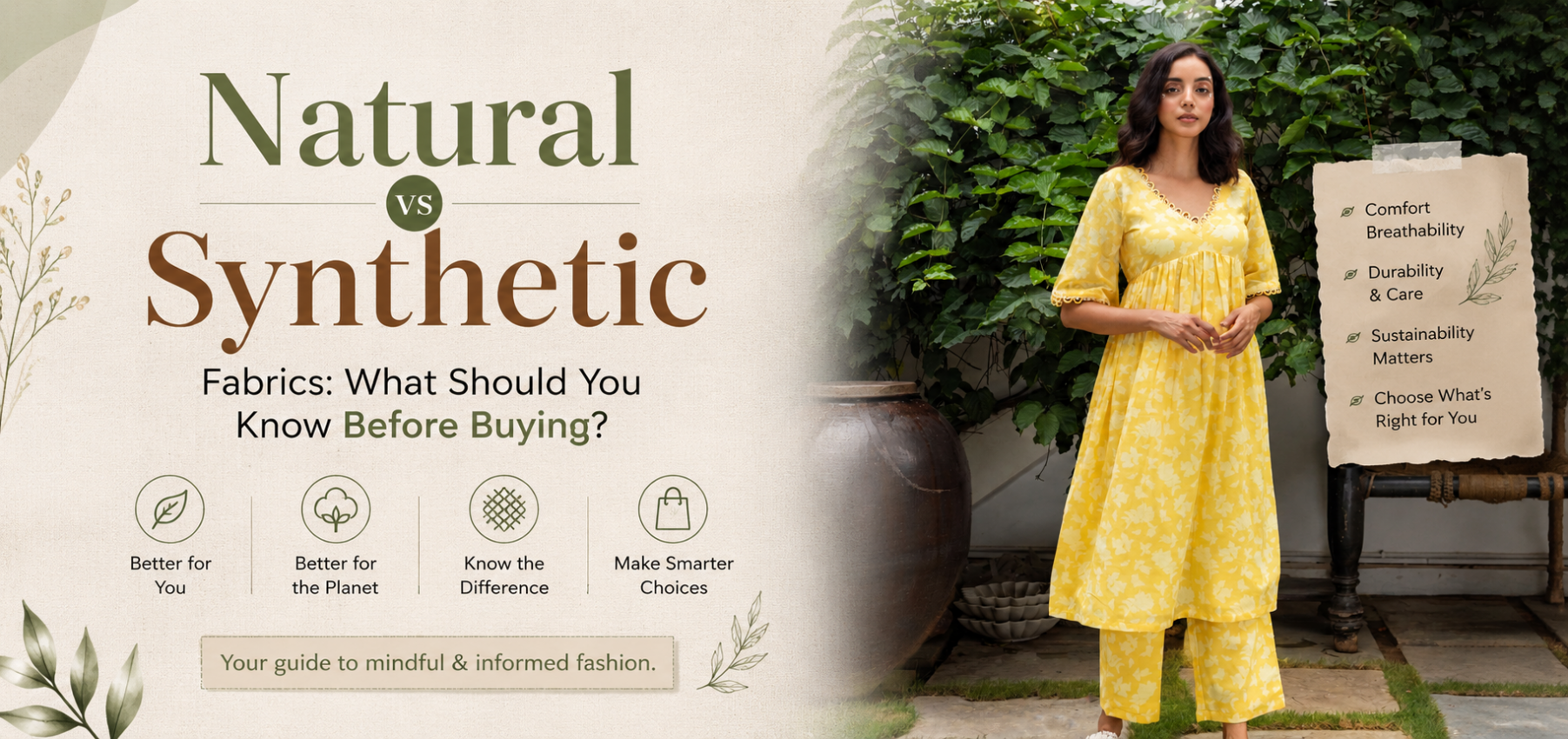
Natural vs Synthetic Fabrics: What Should You Know Before Buying?
August 24th, 2026 -
 August 24th, 2026
 -
 August 13th, 2026
