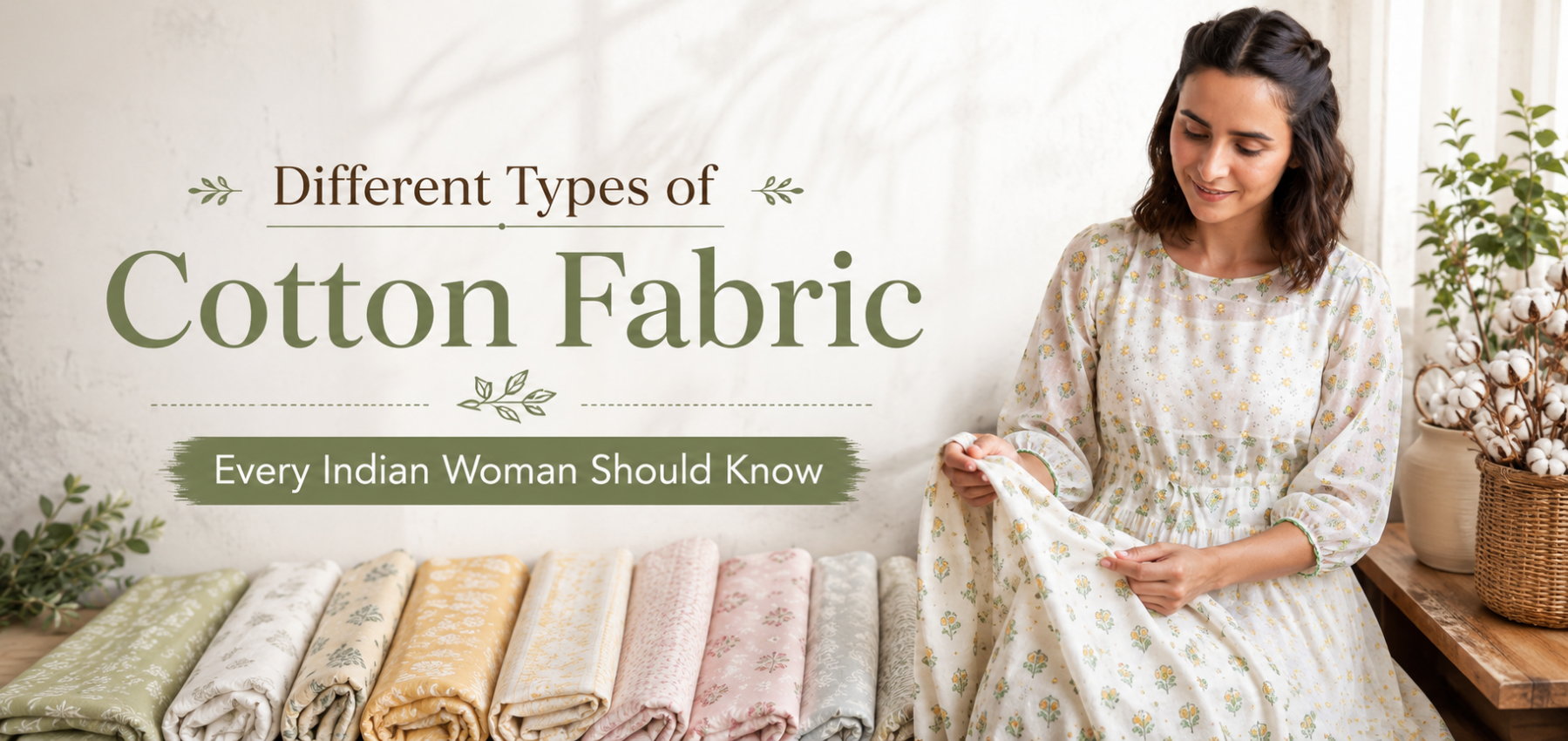
Different Types of Cotton Fabric Every Indian Woman Should Know
Cotton is the most widely worn fabric in Indian wardrobes, yet most women can name only two or three variants — mulmul and khadi being the usual suspects. Understanding the different types of cotton fabric available today makes it far easier to pick pieces that suit Jaipur's summer heat, a Delhi office day, or a Kerala monsoon evening. Each cotton variant differs in weave, weight, and finish, and that difference decides how a garment breathes, drapes, and ages over time.
What Is Cotton Fabric?
Cotton fabric is a natural textile woven from the fibres of the cotton plant (Gossypium), spun into yarn and then woven or knitted into cloth. It is prized for being breathable, absorbent, and soft against the skin, which is why it remains the dominant fibre for everyday Indian clothing across seasons and regions.
Cotton Fabric Types Common in Indian Clothing
India produces some of the widest ranges of cotton weaves in the world, each suited to a different climate, occasion, or craft tradition. Below is a breakdown of the cotton variants most commonly used in women's ethnic and everyday wear.
Mulmul (Muslin) Cotton
Mulmul, often called muslin, is a fine, sheer, plain-weave cotton historically woven in Bengal and Uttar Pradesh. Its low thread density makes it exceptionally lightweight and cool, which is why it is favoured for summer dresses, dupattas, and kurtas across North India.
Cotton Voile
Voile is a semi-sheer, plain-weave cotton with a slightly crisp yet soft hand-feel. It holds block prints particularly well, making it a common base for hand-printed dresses and blouses meant for daily wear.
Poplin Cotton
Poplin is a tightly woven cotton with a fine horizontal rib, giving it a smooth, slightly lustrous surface. It holds its shape well, which is why it is often used for structured tunics, shirts, and co-ord sets.
Cambric Cotton
Cambric is a lightweight, closely woven cotton with a smooth, almost paper-like finish. It is commonly used for linings and everyday dresses because it drapes cleanly without clinging.
Khadi Cotton
Khadi is hand-spun and hand-woven cotton with a slightly textured, uneven surface that comes from the manual spinning process. Each metre carries small irregularities that machine-made fabric cannot replicate, which is part of its appeal for conscious, heritage-driven wardrobes.
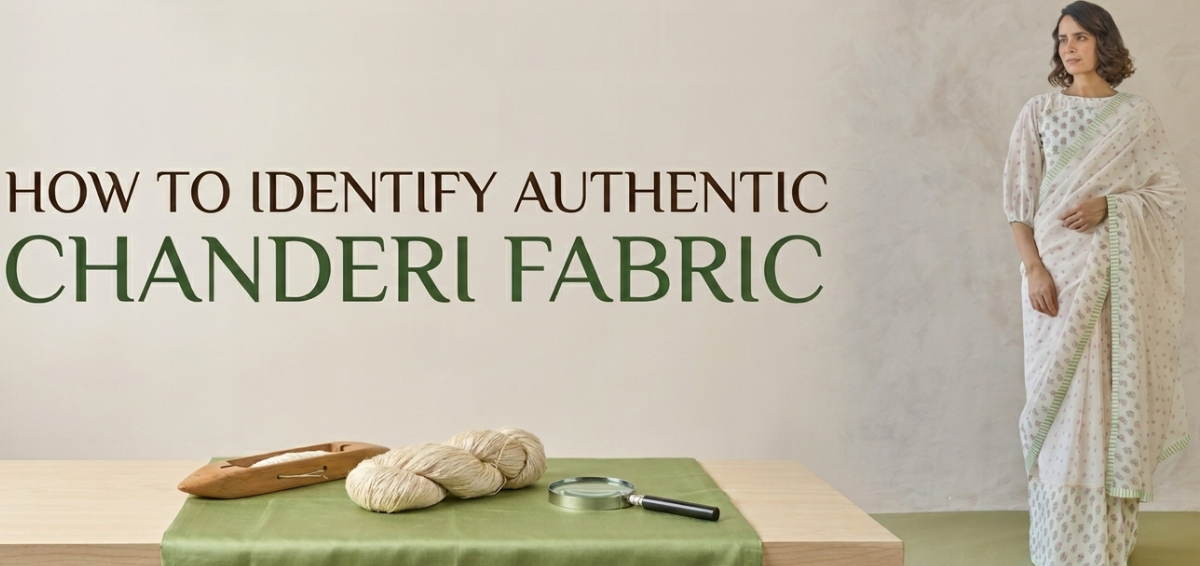
Chanderi Cotton
Chanderi cotton, woven in Madhya Pradesh, blends cotton yarn with a fine sheen finish, often achieved by mixing in silk or zari threads. It is lightweight enough for daily wear yet carries a subtle glow that suits festive and semi-formal occasions.
Organic Cotton
Organic cotton is grown without synthetic pesticides or fertilisers and processed using low-impact dyeing methods. It tends to be slightly softer over repeated washes and is increasingly preferred by shoppers choosing sustainable, skin-friendly fabric.
Cotton Silk Blend
This blend combines cotton's breathability with silk's natural sheen, resulting in fabric that drapes with a soft fall while staying cooler than pure silk. It is a popular choice for sarees and occasion dresses that need to look festive without feeling heavy.
Cotton Twill
Twill weave cotton has a diagonal rib pattern that makes the fabric more durable and slightly heavier than plain weaves. It is often chosen for jackets and shrugs that need structure and a longer wear life.
Cotton Lawn
Lawn is an ultra-lightweight, fine cotton weave with a slight crispness, originally developed for warm-climate clothing. It is well suited to layered summer dresses where breathability matters more than structure.
Rubia Cotton
Rubia cotton has a slightly stiffer, thicker hand-feel compared to voile or mulmul, giving it more body and less transparency. It is often chosen for kurtas and dresses that need to hold their shape through a full day of wear rather than draping loosely.
Dobby Cotton
Dobby cotton is woven on a dobby loom, which creates small geometric patterns directly in the weave rather than through printing. This textured surface adds visual interest to plain garments and is frequently used for tops and shirts that pair well with solid-coloured bottoms.
Cotton Fabric Comparison at a Glance
Comparing weight, breathability, and best use side by side makes it easier to match a cotton type to a specific garment or season.
- Mulmul: Very lightweight, highly breathable — best for summer kurtas and dupattas.
- Voile: Lightweight, semi-sheer — best for block-printed dresses and blouses.
- Poplin: Medium weight, structured — best for co-ord sets and tunics.
- Cambric: Lightweight, smooth finish — best for linings and everyday dresses.
- Khadi: Medium-heavy, textured — best for heritage-style, conscious wardrobes.
- Chanderi cotton: Lightweight with sheen — best for festive and semi-formal wear.
- Cotton silk blend: Medium weight, glossy drape — best for sarees and occasion dresses.
- Twill: Heavier, durable — best for shrugs and jackets.
How to Identify Good Quality Cotton Fabric
Quality cotton can be judged through a few consistent checks before buying, whether shopping in-store or online.
- Check the weave density. Hold the fabric up to light — a tighter, more even weave lets through less light and generally means better durability.
- Feel the texture. Genuine cotton feels soft yet slightly matte, never plastic-smooth or overly shiny.
- Look at the crease. Scrunch a small section in your palm; pure cotton creases naturally and the wrinkles soften out over a few seconds rather than springing back instantly.
- Check the print penetration. On block-printed cotton, the dye should be visible through to the reverse side of the fabric, indicating natural dyeing rather than a surface print.
- Smell test for synthetic blends. A faint chemical smell often signals a cotton-polyester blend rather than pure cotton.
Cotton Fabric Across Everyday Indian Wardrobes
Different cotton weaves naturally lend themselves to different garment styles, which is why brands pick specific fabric types for specific silhouettes rather than using one cotton for everything.
For daily office and travel wear, breathable cotton voile and poplin are commonly used in women's cotton dresses, since both fabrics stay cool through long hours while holding hand-block prints crisply.
For coordinated, ready-to-wear looks that need minimal styling effort, poplin and cambric cotton are frequently chosen for women's cotton co-ord sets, as these weaves keep their shape through a full day of wear without feeling stiff.
Hand block printing works best on fabrics with a slightly textured, absorbent surface, which is why voile and mulmul remain the go-to base for a block print dress — the natural fibre lets the wooden block transfer dye evenly across the weave.
Caring for Cotton Garments
Cotton lasts longest when washed in cool water and dried away from direct, harsh sunlight, which prevents block-printed colours from fading quickly. Hand-washing hand block printed pieces separately for the first two to three washes helps set the natural dye and reduces colour bleed. Ironing on a medium setting while the fabric is still slightly damp keeps the weave smooth without scorching the surface.
Heavier weaves like khadi and twill benefit from being turned inside out before washing, since this reduces surface friction against zips, buttons, or other garments in the same load. Mild detergents work better than harsh ones for cotton silk blends, as strong chemicals can dull the natural sheen over repeated washes. Air-drying flat, rather than on a hanger, also helps sheer fabrics like mulmul and voile keep their original shape instead of stretching at the shoulders.
Choosing the Right Cotton Fabric for the Occasion
Lightweight weaves such as mulmul, voile, and lawn suit daily wear and warm-climate travel, since they prioritise breathability over structure. Poplin, cambric, and twill work better for office wear and layered pieces like shrugs, where a cleaner shape matters. For festive or semi-formal occasions, cotton silk blends and Chanderi cotton offer a subtle sheen that reads as dressier without the weight of pure silk or heavier ethnic fabrics.
Regional climate also plays a role in this choice. Coastal and northern plains cities with high humidity, such as Chennai or Jaipur in peak summer, tend to suit the most breathable weaves — mulmul, voile, and lawn — over heavier alternatives. Hill stations and cooler months, on the other hand, allow more room for khadi, twill, and cotton silk blends, which carry slightly more warmth and structure without sacrificing the comfort cotton is known for.
Frequently Asked Questions
What is the softest type of cotton fabric?
Mulmul is generally considered the softest cotton fabric due to its extremely fine, low-density weave. It softens further with each wash, which is why it is a long-standing choice for summer kurtas, dupattas, and infant wear across India.
Which cotton fabric is best for hot and humid weather?
Mulmul, voile, and lawn are the best choices for hot, humid climates because their open, lightweight weaves allow maximum airflow. These fabrics absorb moisture quickly and dry fast, keeping the body noticeably cooler than denser cotton weaves.
What is the difference between khadi and regular cotton?
Khadi is hand-spun and hand-woven, giving it a slightly textured, uneven surface, while regular cotton is machine-spun and machine-woven for a more uniform finish. Khadi also tends to be slightly heavier and more breathable due to the irregular spacing created by hand-spinning.
Is cotton silk blend fabric good for daily wear?
Cotton silk blend is better suited to semi-formal or festive wear rather than everyday use, since the added sheen and finish are typically reserved for dressier occasions. For daily wear, pure cotton weaves like poplin or voile offer better breathability and easier upkeep.
How can I tell if a cotton fabric is pure or blended with polyester?
Pure cotton has a soft, matte texture and creases naturally when scrunched, while polyester blends feel smoother and spring back quickly without holding a crease. A quick burn test on a loose thread is also reliable — pure cotton burns and leaves ash, while polyester melts.
In short: Cotton is not a single fabric but a family of weaves — mulmul, voile, poplin, khadi, and cotton silk blends among them — each suited to a different climate, silhouette, and occasion. Choosing the right weave, rather than simply choosing "cotton," is what determines how a garment breathes, drapes, and holds up over repeated wear. For most Indian climates, lightweight weaves like mulmul and voile remain the most versatile everyday choice, while cotton silk blends and Chanderi cotton bridge the gap into festive dressing.
-
 August 26th, 2026
 -
Natural vs Synthetic Fabrics: What Should You Know Before Buying?
August 24th, 2026 -
 August 24th, 2026
 -
 August 13th, 2026