
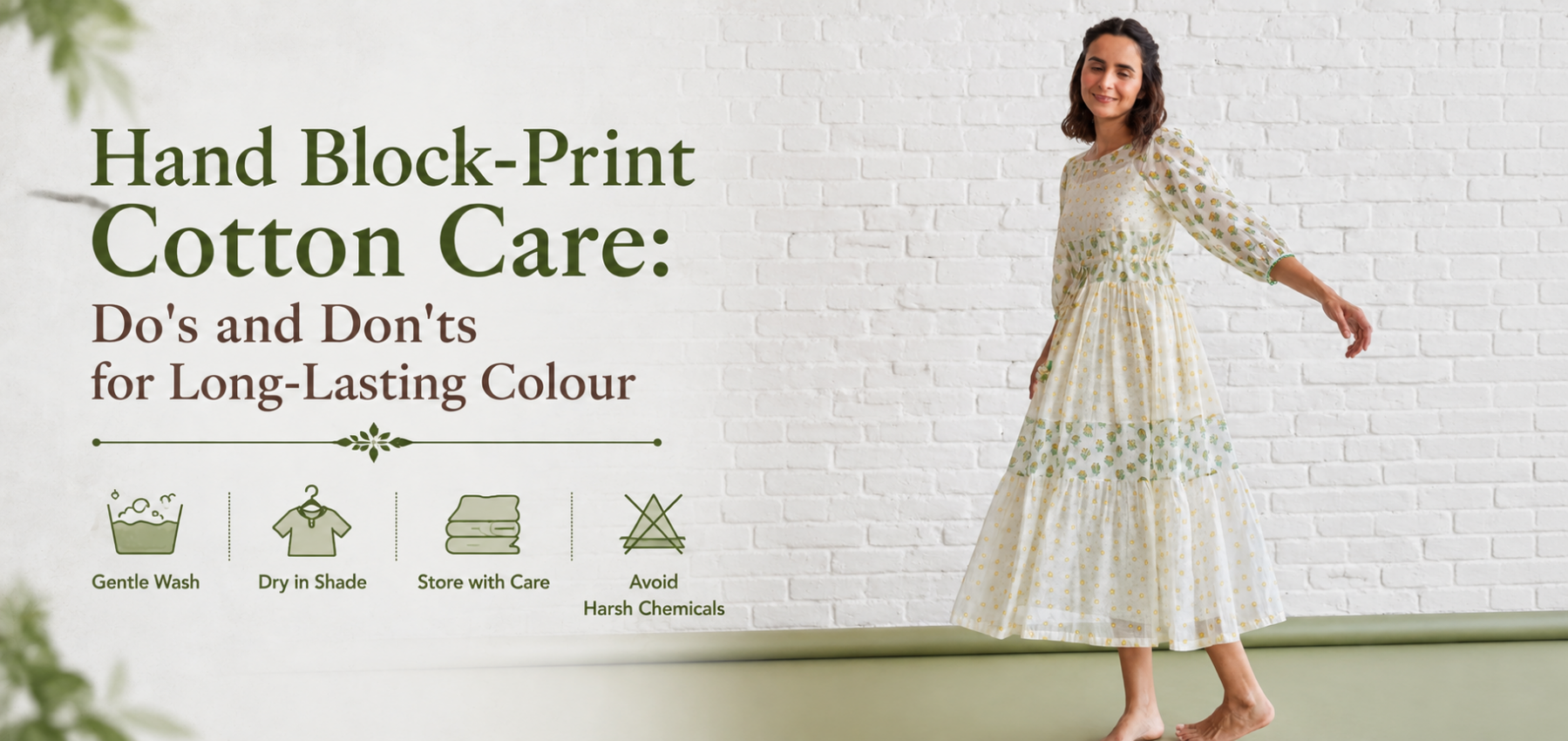
Hand Block-Print Cotton Care: Do's and Don'ts for Long-Lasting Colour
Hand block-printed cotton is one of India's oldest textile crafts, and it behaves differently in the wash than machine-printed fabric. Good cotton fabric care is what decides whether a block-print piece keeps its depth of colour for five years or fades within five washes. This guide walks through the washing, drying and storage habits that protect naturally dyed cotton, along with the mistakes that quietly strip colour out of a favourite piece.
What Is Hand Block Printing?
Hand block printing is a textile technique where hand-carved wooden blocks are dipped in dye and stamped onto fabric, one motif at a time, by a craftsperson. Each block is carved from teak or sheesham wood, and a single design can require several blocks for different colours and outlines. Because the dye sits on the fabric surface through this manual process rather than being fused industrially, it responds to heat, friction and harsh detergents far more than printed cotton — which is exactly why a block print dress needs a gentler wash routine than an ordinary cotton dress.
Why Block-Printed Cotton Needs Different Handling
Block-printed cotton is usually coloured with natural or low-impact dyes — indigo, madder root, iron-rust black, or alizarin — applied in a process called direct printing or resist printing (dabu and bagru techniques common in Rajasthan). These dyes bond to the cotton fibre through soaking, steaming and sun-fixing rather than synthetic bonding agents. That means the colour is technically more breathable and skin-friendly, but also more reactive to alkaline soaps, chlorine, and prolonged UV exposure.
A block-print artisan in Jaipur typically sun-dries dyed fabric for two to three days before it's considered colourfast enough to stitch. That slower, traditional fixing process is exactly why home washing needs to be gentler than what synthetic prints tolerate — a distinction that matters most for lighter-toned women cotton dresses, where even minor dye bleed shows up quickly against a pale base.
The Do's and Don'ts of Cotton Fabric Care for Block Prints
The single biggest factor in preserving block-print colour is water temperature and detergent choice. Everything else — drying, ironing, storage — matters, but gets very little chance to help if the first few washes are done wrong.
Do's
- Wash in cold water (below 30°C). Cold water keeps natural dye molecules bonded to the cotton fibre; warm or hot water opens the fibre and lets dye particles bleed out.
- Use a pH-neutral or mild detergent. Regular detergents with brighteners and bleach react with natural dyes and dull the print within a few washes.
- Turn the garment inside out before washing. This reduces direct friction on the printed surface, which is where colour loss is most visible first.
- Wash separately for the first three washes. Unfixed dye particles are most likely to bleed in the earliest washes, before the colour fully settles.
- Add a tablespoon of white vinegar to the first wash. Vinegar's mild acidity helps set natural dyes and is a traditional fixing method still used by many block-print units.
- Dry in shade, not direct sun. UV rays break down dye pigment over time, even though the fabric itself was originally sun-fixed during production.
Don'ts
- Don't use a washing machine on a regular or spin-heavy cycle. Mechanical agitation wears down surface-printed colour faster than hand-washing.
- Don't soak for more than 10–15 minutes. Extended soaking, especially in warm water, pulls unfixed dye out of the fibre.
- Don't use bleach or optical brighteners. These chemically react with natural dyes and cause patchy fading rather than even lightening.
- Don't wring the fabric. Twisting stresses the printed surface and can crack dried dye pigment at the fold lines.
- Don't iron directly on the print. Iron on the reverse side, or place a thin cotton cloth over the print, to avoid pigment transfer onto the iron plate.
How to Wash Block-Printed Cotton, Step by Step
Following a consistent sequence matters more than any single product. This is the process most artisan cotton labels in Jaipur recommend for the first several washes of a new block-print garment.
- Fill a basin with cold water and add a capful of mild, pH-neutral detergent.
- Turn the garment inside out and submerge it fully.
- Gently agitate by hand for 2–3 minutes; avoid scrubbing the printed areas.
- Rinse in cold water until the water runs clear, adding a splash of vinegar in the final rinse.
- Press out excess water by rolling the garment in a dry towel — never wring.
- Lay flat or hang in shade, away from direct sunlight, until fully dry.
Flowier styles such as cotton wrap dresses hold more water in the folds of the fabric, so give the tie or wrap sections a slightly longer roll in the towel before hanging them to dry.
Storage Habits That Protect Colour Between Wears
Cotton fabric care doesn't end once the garment is dry. How a block-print piece is folded, stored and exposed to light between wears affects colour retention just as much as washing.
Store block-print cotton folded rather than on a hanger for long periods, since hanging can stretch the fabric weave and distort the print alignment over time. This matters especially for a floor-length printed maxi dress, where the extra fabric weight pulls hardest at the shoulder seams when hung. Keep pieces away from direct sunlight in the wardrobe, and avoid plastic covers that trap humidity — cotton needs to breathe, and trapped moisture encourages both mildew and colour bleed. A breathable cotton or muslin garment bag works better than a sealed plastic one.
Caring for Layered and Occasion Block-Print Pieces
Layered pieces need lighter, less frequent washing than everyday cotton, since they usually sit over another garment rather than against the skin. A golden shrug for women should be spot-cleaned where possible and dried away from direct heat, since metallic threads and block-printed trims react to warmth differently from plain cotton and can lose their sheen if washed too often.
Common Mistakes That Fade Block-Print Colour Faster
Most premature fading traces back to a small set of repeated habits rather than one big error.
- Washing in hot water "to get it really clean" — this is the single fastest way to strip natural dye.
- Using regular laundry detergent formulated for whites, which often contains bleach-based brighteners.
- Drying on a balcony railing in direct afternoon sun, rather than in a shaded, ventilated spot.
- Machine-washing on a mixed load with heavier fabrics like denim, which causes abrasion against the print.
- Ironing directly on the printed side at high heat, which can scorch or transfer pigment.
- Washing a coordinated dress with jacket set as one load — the jacket lining and dress fabric often hold dye differently, and washing them together can cause uneven fading on one piece before the other.
Frequently Asked Questions
Can hand block-printed cotton be machine washed?
It's best avoided, especially in the first few washes. Machine agitation and spin cycles cause more surface friction than hand-washing, which speeds up colour fading on block-printed cotton. If a machine must be used, choose a gentle or hand-wash cycle in cold water with the garment in a mesh laundry bag.
Why does my block-print dress lose colour after the first wash?
Some colour loss in the first wash is normal, since natural dyes always release a small amount of unfixed pigment. This is why the first few washes should be done separately in cold water with a mild detergent, ideally with a splash of vinegar to help set the remaining dye.
Is it safe to dry block-print cotton in direct sunlight?
Direct, prolonged sunlight is not recommended for drying, even though the fabric was originally sun-fixed during dyeing. UV exposure over repeated wears breaks down dye pigment gradually, so shaded, well-ventilated drying preserves colour better over the garment's lifetime.
What detergent is best for natural dye cotton fabric care?
A mild, pH-neutral detergent without bleach or optical brighteners works best. Baby detergents or detergents labelled for delicate or coloured fabrics are usually formulated closer to this requirement than regular laundry powders.
How should I store block-print cotton clothing to prevent fading?
Fold garments rather than hanging them for extended periods, and keep them away from direct sunlight and sealed plastic covers. A breathable fabric garment bag allows air circulation, which reduces both moisture-related mildew and light-related fading.
In Summary
Hand block-print cotton holds its colour longest when washed in cold water with a mild detergent, dried away from direct sun, and stored folded in a breathable space. The natural dyeing process that makes these textiles distinctive also makes them more sensitive to heat, harsh chemicals and prolonged UV exposure than machine-printed fabric. Consistent, gentle cotton fabric care in the first several washes has the biggest impact on how vivid a block-print piece stays over years of wear.
-
 August 26th, 2026
 -

Natural vs Synthetic Fabrics: What Should You Know Before Buying?
August 24th, 2026 -
 August 24th, 2026
 -
 August 13th, 2026
