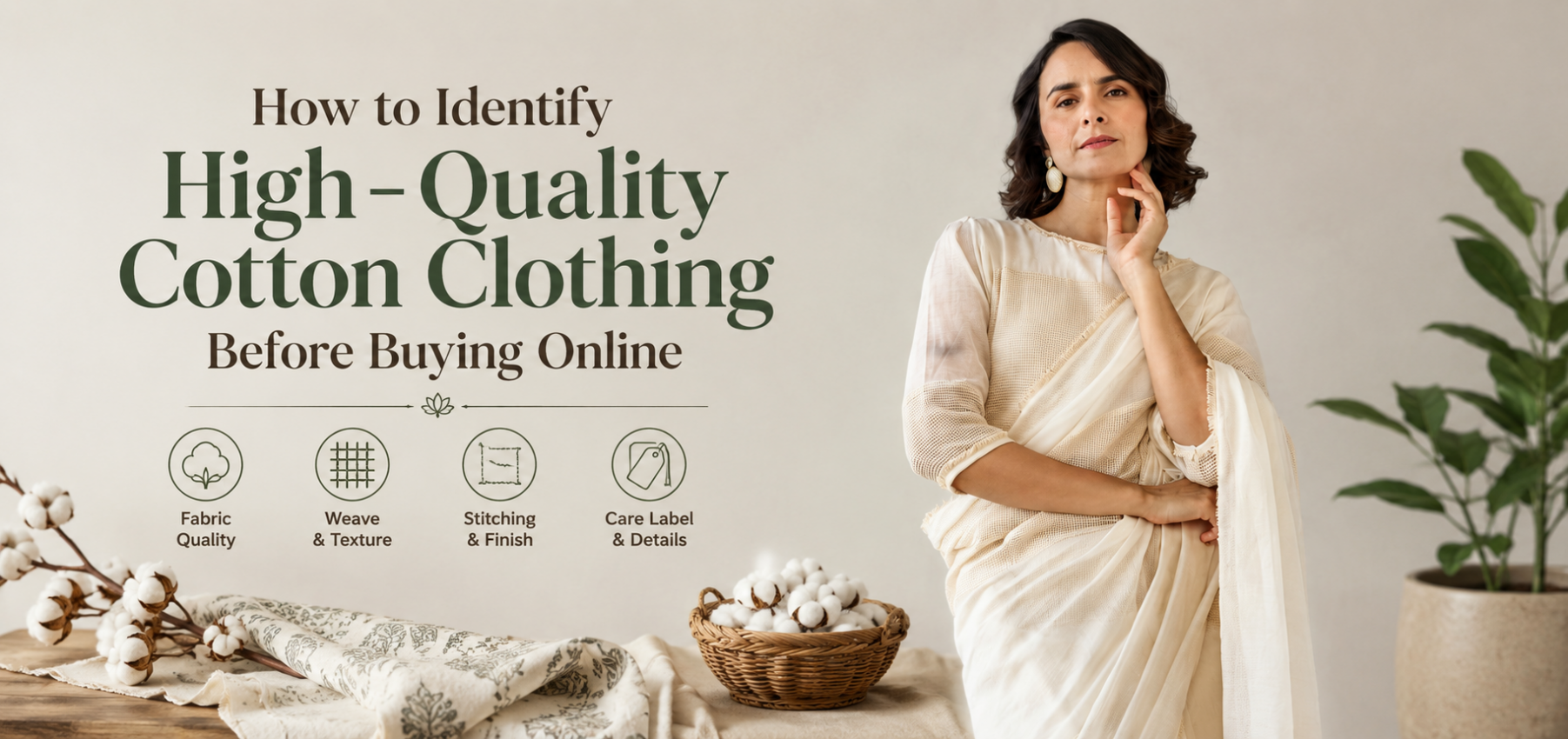
How to Identify High-Quality Cotton Clothing Before Buying Online
What Is High-Quality Cotton Clothing?
This standard of cotton is garment fabric woven from long-staple fibres, finished with even dyeing, minimal chemical processing, and stitching dense enough to hold shape after repeated washes. It typically has a soft hand-feel, breathes well in heat, and does not pill or thin out within the first few wears. This is the baseline worth checking against before any purchase.
Start With the Weave, Not the Price Tag
Price is a weak indicator of cotton quality on its own. A garment's weave tells you far more: a tight, even weave holds its shape wash after wash, while a loose or uneven weave stretches, sags, and develops thin patches within a few months.
Hold a product photo up (zoom in, if the listing allows it) and look at how tightly the threads sit together. Muslin and voile weaves are deliberately loose and lightweight, ideal for peak summer dupattas or linings, but not the fabric you want for a structured dress meant to hold shape through a full workday.
Check the GSM — the Number That Tells You How Fabric Will Feel
GSM, or grams per square metre, measures fabric weight and is one of the most reliable specifications a listing can give you. Lightweight cottons in the 100-130 GSM range suit hot Indian summers and everyday kurtas. Mid-weight cottons around 150-180 GSM are what most structured dresses and co-ord sets use, since they hold a silhouette without feeling heavy. Anything above 200 GSM moves into denim-weight or heavier drill cotton, meant for jackets rather than daily wear.
If a listing does not mention GSM at all, that is worth noting. Brands confident in their fabric sourcing usually specify it, because GSM is a number that cannot be faked with clever photography.
How Hand Block Printing Signals Real Craftsmanship
Hand block printed fabric carries small, deliberate irregularities that machine printing cannot replicate: slight variations in motif spacing, faint colour depth changes between repeats, and a print that sits slightly raised on the fabric surface rather than perfectly flat. These are marks of a carved wooden block pressed by hand, not flaws.
A genuine block print dress will show this handcrafted irregularity most clearly along the border or hemline, where printers work more slowly to align the pattern. Machine-printed imitations, by contrast, repeat with mechanical precision and often sit flat against the cotton base with a slightly plasticky sheen.
Reading Cotton Blends: Pure Cotton vs. Cotton-Poly Mixes
A listing that simply says "cotton" without a percentage breakdown deserves a second look. Pure cotton (95-100%) breathes, wrinkles naturally, and softens with each wash. Cotton-polyester blends resist wrinkling and hold colour longer, but trap heat and can feel synthetic against skin during humid months, which matters considerably in most Indian climates.
Fabric composition is usually listed under "material" or "fabric details" on a product page. If it reads "cotton blend" without a ratio, it is reasonable to message the seller directly and ask for the exact percentage before purchasing, especially for pieces meant for daily or festive wear.
Why Handloom Fabric Ages Differently Than Power-Loom Cotton
Handloom cotton is woven on manual looms at a slower pace, which produces a fabric with slightly uneven yarn tension and a subtle texture that power-loom cotton, woven at industrial speed, does not have. This uneven tension is actually a strength: handloom fabric tends to soften gradually with wear rather than thinning out, and it drapes with a natural fall rather than a stiff, uniform finish.
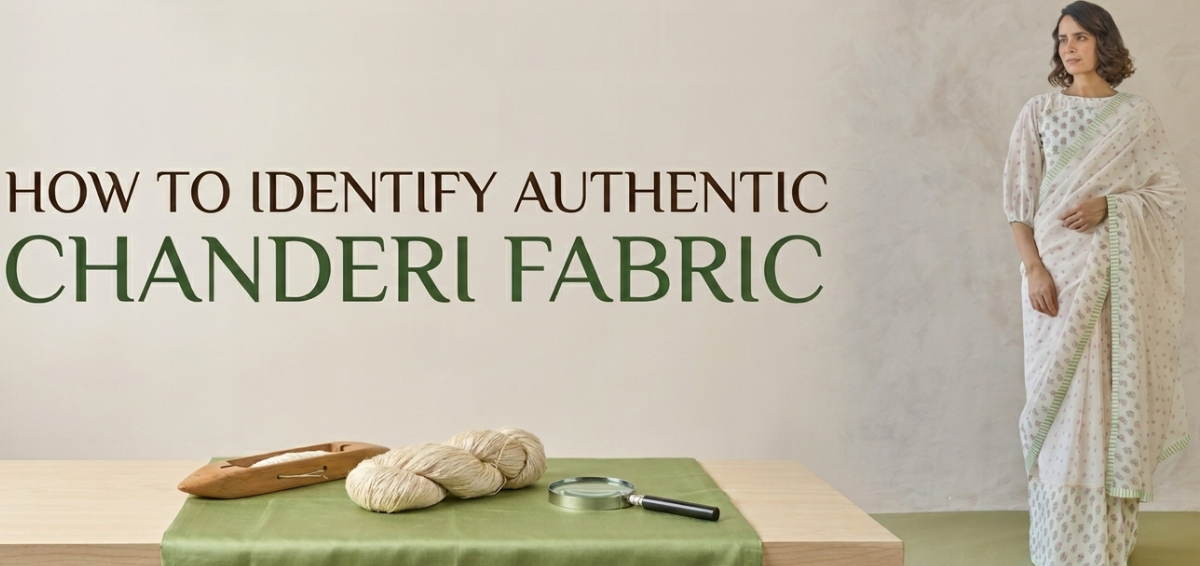
Chanderi is one of the clearest examples of this difference. A well-woven chanderi handloom saree carries a distinctive sheer sheen from the silk-cotton blend traditionally used in its weave, along with a lightness that makes it wearable for hours without added weight.
For festive shopping specifically, buyers searching chanderi sarees online should check whether the listing names the weaving cluster (Chanderi in Madhya Pradesh is the traditional origin) since sarees woven there typically carry documented GI-tag provenance that mass-produced imitations cannot claim.
A Five-Step Fabric Check Before You Buy Online
Since online shopping removes the option to touch fabric before purchase, a short verification routine makes the decision far more reliable:
- Read the GSM. Match it to the season and use case rather than assuming heavier always means better.
- Check the composition line. Look for a specific percentage, not just the word "cotton."
- Zoom into printed or woven detail. Slight irregularity usually indicates hand craftsmanship rather than a flaw.
- Read the care label description. Genuine cotton fabrics generally recommend cold wash and shade drying to preserve colour and weave.
- Check return and exchange terms. A seller confident in fabric quality typically offers a clear, unambiguous return window.
Building a Wardrobe Around Verified Cotton Pieces
Once the fabric-checking habit is in place, it becomes easier to shop across categories rather than sticking to one familiar style. Structured yet breathable pieces are usually the safest starting point for daily wear.
For workwear or travel, well-finished women cotton dresses in mid-weight GSM tend to hold shape through a full day without needing frequent ironing.
Coordinated separates simplify getting dressed without sacrificing the fabric-quality checks above. Well-tailored women cotton co ord sets pair a breathable top with a matching bottom, cutting down on the guesswork of mixing separate fabric weights.
Layering pieces are worth the same scrutiny as the base garment. A well-cut short shrug for ladies in lightweight cotton adds structure to a plain kurta or dress without adding warmth that becomes uncomfortable in Indian afternoons.
For occasions that call for something more festive, a golden shrug for women with metallic or zari detailing works as an easy layer over a simple dress, provided the base fabric underneath still meets the same weave and GSM standards discussed above.
Care Practices That Preserve Cotton Quality Over Time
Even well-sourced cotton loses its quality faster than expected when washed carelessly. Cold water washing, mild detergent, and shade drying (rather than direct sun) keep both colour and weave intact for significantly longer. Hand block printed fabrics in particular fade faster under direct sunlight and harsh detergents, since natural dyes are more reactive to heat and chemical exposure than synthetic ones.
Ironing on the reverse side of a printed garment also protects the print's surface texture, and starching lightly-woven cotton pieces occasionally helps them hold structure between washes.
Certifications and Labels Worth Checking
A handful of labels on a product page can confirm fabric claims that photos alone cannot. GOTS (Global Organic Textile Standard) certification indicates the cotton was grown without synthetic pesticides and processed with restricted chemical inputs. OEKO-TEX Standard 100 confirms the finished fabric was tested for harmful substances, which matters for garments worn directly against skin for long stretches, such as blouses and everyday dresses.
For handloom and hand block printed pieces specifically, a GI (Geographical Indication) tag or a named weaving cluster in the product description adds a layer of traceability that generic "handmade" claims do not. Chanderi, Bagru, and Sanganer are examples of documented textile clusters in India whose techniques are passed down through generations of artisan families, and listings that name the cluster are generally more transparent about sourcing.
None of these labels are mandatory for a garment to be well made, but their presence is a useful shortcut when a buyer cannot inspect fabric by hand. Their absence is not automatically a red flag either, since many small ateliers producing genuinely excellent cotton simply do not pursue formal certification, but it does mean the other checks in this guide (GSM, composition, weave) carry more weight.
Common Mistakes Buyers Make While Shopping for Cotton Online
Three mistakes account for most disappointing cotton purchases: assuming a low price signals a good deal rather than thinner fabric, skipping the composition and GSM details entirely, and ignoring seller return policies before ordering a fabric they have not physically touched. Each of these is avoidable by spending an extra two minutes reading the full product description rather than relying on photos alone.
A less obvious mistake is judging colour purely from a product photo taken under studio lighting. Natural dyes used in hand block printing can shift slightly under different light sources, so it helps to check whether a listing includes photos in natural daylight alongside styled shots, and to read customer reviews for consistent feedback on true-to-photo colour accuracy.
Frequently Asked Questions
How do I know if cotton fabric is good quality just from a photo?
Zoom into the weave for evenness, check listed GSM against the intended use, and look for a stated fibre percentage rather than just the word "cotton." Genuine hand block prints also show slight irregularity in motif spacing that machine prints do not have.
What GSM is best for everyday cotton kurtas in India?
For most of the year, 120-160 GSM cotton offers the right balance of breathability and structure for daily kurtas and dresses. Heavier GSM, above 180, suits cooler months or more structured silhouettes like jackets.
Is handloom cotton better than machine-woven cotton?
Handloom cotton is woven more slowly and unevenly by hand, which gives it a softer drape and a texture that improves with wear rather than thinning quickly. Machine-woven cotton is more uniform and often cheaper, but tends to lose shape faster under regular use.
Why does my cotton dress feel scratchy even though it's labelled 100% cotton?
A scratchy feel usually points to heavy starching during finishing, a coarser low-staple cotton yarn, or minimal pre-wash treatment before packaging. This softens after the first two or three washes, but persistent roughness suggests a lower-grade cotton yarn was used.
How can I tell if a print is hand block printed or machine printed?
Hand block prints show minor spacing irregularities between repeated motifs and a print that sits with slight texture on the fabric surface. Machine prints repeat with exact, mechanical precision and generally look flatter against the cotton base.
In short: premium cotton fabric can be reliably identified online by cross-checking GSM, fibre composition percentage, weave evenness, and finishing details like stitching and print texture, rather than relying on price or photos alone. Hand block printed and handloom fabrics, such as Chanderi weaves, carry visible signs of manual craftsmanship that machine-made alternatives cannot replicate. Building this checking habit before every purchase is the single most effective way to shop cotton clothing online with confidence.
-
 August 26th, 2026
 -
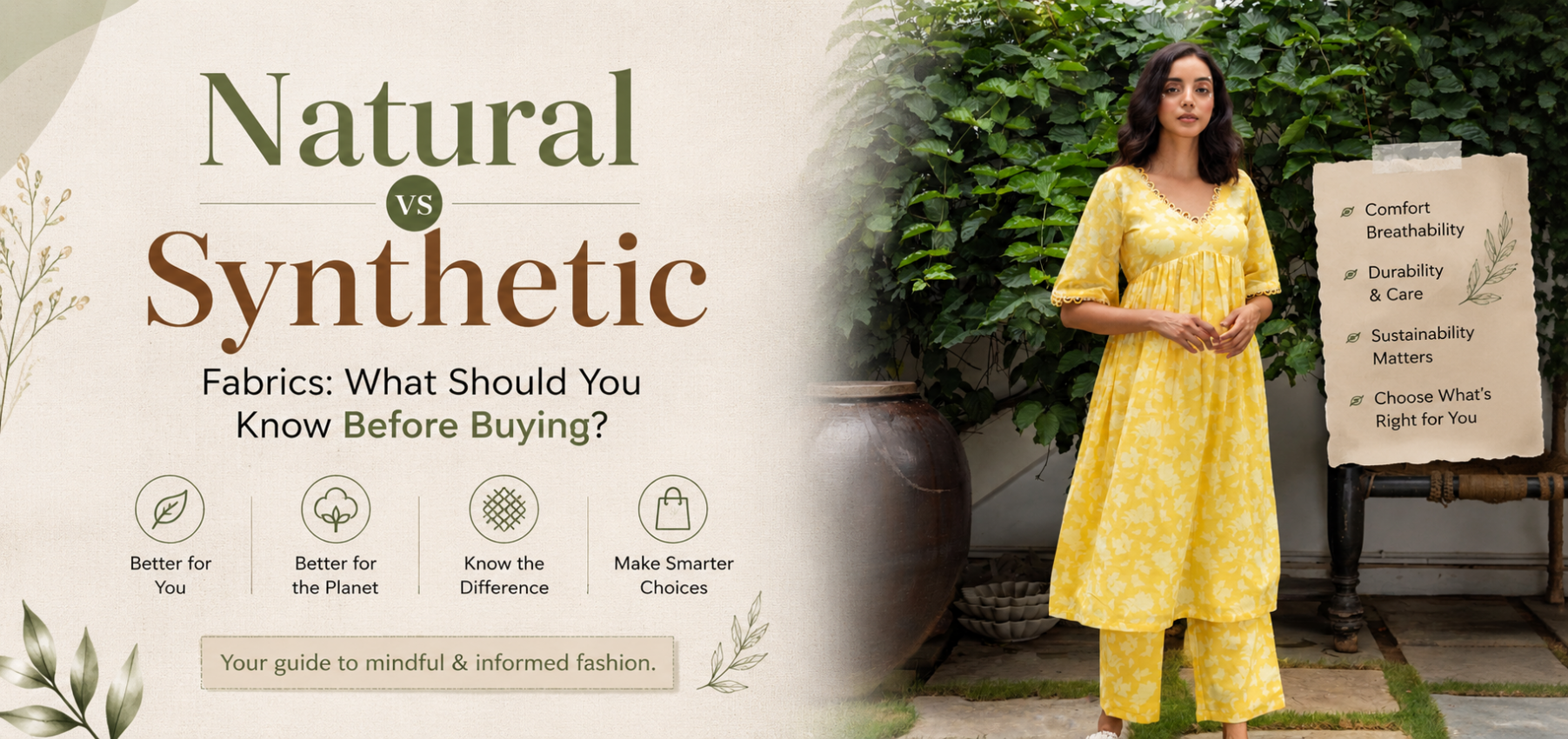
Natural vs Synthetic Fabrics: What Should You Know Before Buying?
August 24th, 2026 -
 August 24th, 2026
 -
 August 13th, 2026