
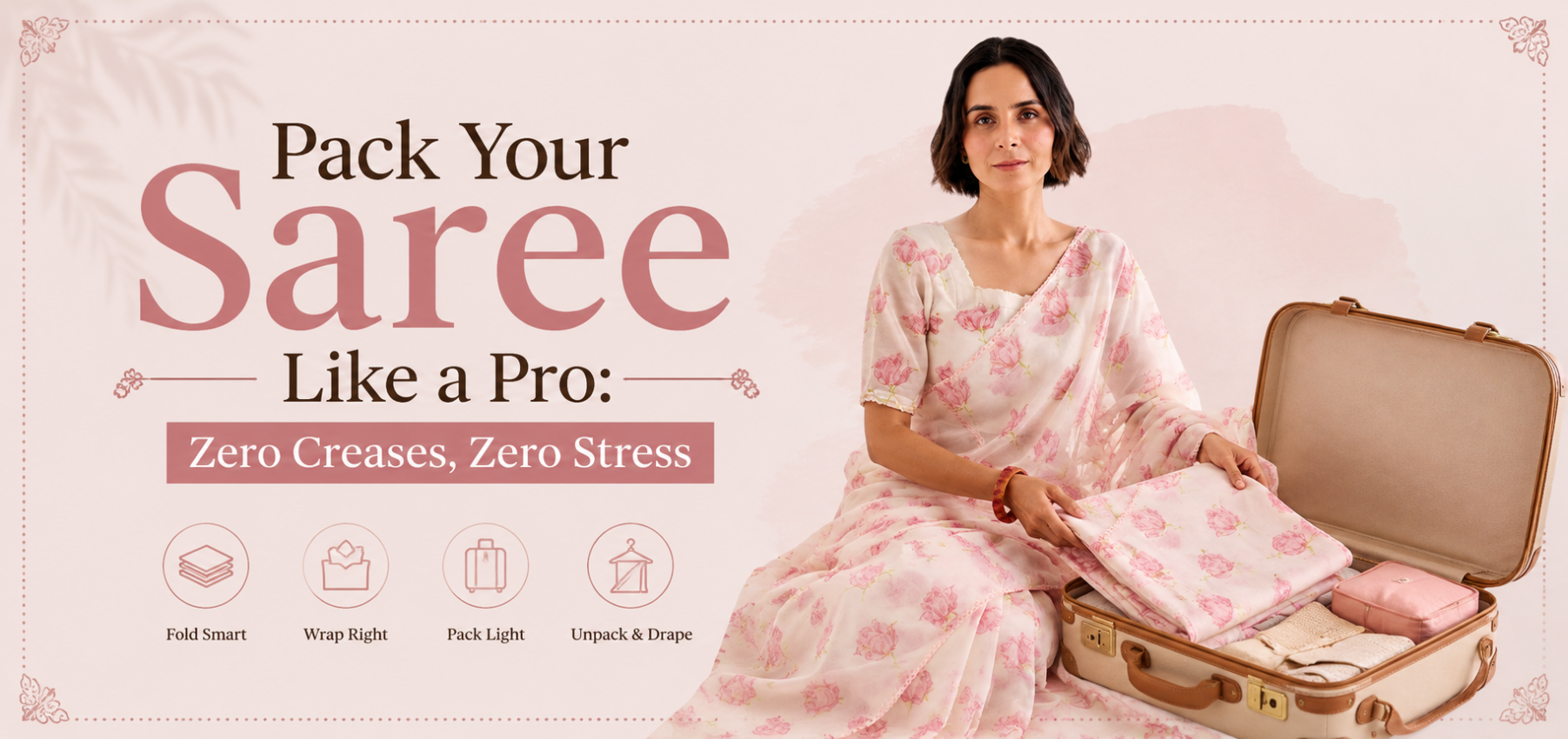
Pack Your Saree Like a Pro: Zero Creases, Zero Stress
A saree is one of the most forgiving garments to wear and one of the least forgiving to pack. Six to nine yards of fabric, folded the wrong way or squeezed under heavier luggage, can arrive at a wedding or office event looking like it survived a storm. The good news is that you can pack saree with zero creases using a handful of methods that professional stylists, frequent flyers, and boutique packers rely on every day.
This guide walks through fabric-specific folding techniques, the right packing order for a suitcase, and quick fixes for creases that show up despite your best efforts. Whether you are carrying a lightweight cotton saree for a day trip or a heavier silk saree for a festive function, the principles below apply.
What Causes Creases in a Packed Saree?
Creases form when fabric is folded along the same lines repeatedly, packed too tightly, or left under pressure from other items for an extended period. Natural fibres such as cotton, linen, and silk crease more easily than synthetic blends because their fibres hold a fold rather than springing back. Understanding this is the first step to prevent it.
How to Pack Saree with Zero Creases: The Core Method
The most reliable approach is to avoid straight, sharp folds altogether and use a roll-and-layer technique instead. This spreads tension across the fabric rather than concentrating it along fixed crease lines, and it works across cotton, silk, georgette, and handloom weaves.
Step 1: Lay the Saree Flat
Spread the saree on a clean, flat surface, ideally a bed or large table. Smooth out the fabric with your palms to remove any pre-existing wrinkles before you begin folding. Working on a wrinkled base only locks in more creases.
Step 2: Fold Lengthwise in Soft Panels
Fold the saree lengthwise into three or four wide panels rather than narrow strips. Wider panels mean fewer fold lines, and fewer fold lines mean fewer visible creases once you unpack. Keep the pallu (the decorative end) on top so it stays accessible and protected.
Step 3: Roll, Don't Fold, Along the Width
Once the saree is folded into a long panel, roll it loosely from one end to the other, similar to rolling a yoga mat. Rolling distributes pressure evenly across the fabric and avoids the hard horizontal crease lines that come from folding a saree in half repeatedly.
Step 4: Wrap in Muslin or Cotton Cloth
Wrap the rolled saree in a soft muslin or cotton cloth before placing it in the suitcase. This adds a cushioning layer, protects embroidery or zari work from friction against other clothes, and keeps the roll intact during transit.
Fabric-Specific Packing Tips
Not every saree behaves the same way in a suitcase. Fabric weight, weave, and finish all affect how well a saree holds its shape after packing.
Cotton and Handloom Sarees
Handloom fabrics have natural texture and slight irregularities in the weave, which actually help them resist deep creasing compared to smooth, densely woven fabric. A handloom chanderi saree in particular has a light, breathable weave with a natural sheen, so it responds well to the roll method and needs minimal ironing on arrival, usually just a light press with a cool iron on the reverse side.
Silk and Zari-Work Sarees
Silk sarees with zari borders should be rolled with the border facing outward and never folded directly along a zari line, since metallic threads crack under repeated pressure. Place a sheet of acid-free tissue paper between folds if the saree has heavy embellishment.
Printed and Block-Printed Sarees
A printed chanderi saree holds hand block prints on a relatively crisp fabric surface, so avoid packing it directly against zippers, buttons, or hooks that could snag or smudge the print during transit. Rolling it inside a cloth wrap protects both the print and the fabric finish.
Packing Order: What Goes Where in the Suitcase
How you arrange a suitcase matters as much as how you fold the saree itself. Poor placement undoes even a careful roll.
- Bottom layer: Heavier items like shoes and toiletry bags, placed along the suitcase's structured edges.
- Middle layer: Rolled sarees and other delicate garments, placed flat and centred so they are not touched by wheels, zippers, or hard corners.
- Top layer: Lightweight items such as scarves or soft pouches, which add gentle, even pressure without crushing the fabric underneath.
Avoid placing sarees at the very bottom of a suitcase, where the combined weight of everything else compresses the fabric for the entire duration of travel.
Quick Fixes for Creases After Unpacking
Even a well-packed saree can pick up a light crease during a long journey. A few quick fixes restore it before you wear it.
- Hang the saree in a steamy bathroom for 15–20 minutes; the humidity relaxes fibres without direct heat contact.
- Use a handheld garment steamer on a low setting, holding it a few inches away from the fabric rather than pressing it directly.
- Iron on the reverse side with a thin cotton cloth as a barrier, especially for prints, embroidery, or zari work.
- For a chanderi handloom saree, a cool, low-heat iron setting is enough since the fabric is naturally lightweight and does not need aggressive heat to smooth out.
Packing for Different Trip Types
The right packing approach also depends on why you are travelling and how many sarees you are carrying.
Single-Day Travel
For a one-day trip, a single saree can be rolled and placed inside a dedicated saree pouch or a soft garment bag, then laid flat on top of other luggage contents.
Multi-Day or Wedding Travel
When carrying several sarees for a multi-day event, separate each one in its own muslin wrap and stack them together in the middle of the suitcase, heaviest fabric at the bottom of the stack and lightest on top.
Everyday Commute or Office Bag
If you are simply carrying a change of saree to work, fold it into a compact roll and place it inside a structured tote so it retains its shape without a suitcase's shifting motion.
Common Saree Packing Mistakes to Avoid
Most creasing problems trace back to a handful of repeated habits. Recognising these mistakes is often more useful than learning a new folding technique.
- Folding along the same lines every time: Repeatedly folding a saree the exact same way weakens the fibres along that line, turning a soft crease into a permanent one. Vary the fold width slightly each time you pack.
- Overpacking the suitcase: A suitcase packed to capacity leaves no room for fabric to breathe, and the resulting pressure flattens even a well-rolled saree. Leave a little give in the middle layer where garments sit.
- Using plastic covers for storage during transit: Plastic traps moisture and heat, which can set creases more firmly and, over longer trips, encourage mildew on natural fibres. Cotton or muslin wraps allow the fabric to breathe.
- Placing the saree next to zippers, belts, or jewellery pouches: Hard edges and metal fastenings dig into fabric over the course of a journey, creating localised creases and occasional snags.
- Ignoring the pallu: The pallu carries the most embroidery, prints, or zari work on most sarees, yet travellers often let it bunch up at the edge of a fold. Keep it flat and on top of the roll so it takes the least pressure.
Packing Tools Worth Carrying
A few small additions to your travel kit make the difference between a saree that needs a full re-iron and one that is ready to wear straight out of the suitcase.
Saree Packing Pouches
Dedicated saree pouches, often made from soft quilted cotton, hold a rolled saree in place and prevent it from unrolling or shifting against other items during transit. Many travellers who carry sarees regularly for work or festive events keep two or three of these pouches on hand.
Acid-Free Tissue Paper
Acid-free tissue paper is commonly used by textile conservators and boutique packers to separate folds without leaving residue or discolouration on delicate fabric. It is particularly useful for zari borders, sequin work, or hand-embroidered sections.
A Compact Travel Steamer
A lightweight garment steamer is one of the most practical additions to a travel bag, since it resolves minor creases in minutes without the risk of scorching delicate prints the way a hot iron can. Look for a model with adjustable steam settings so it can be used safely on both cotton and silk.
Buying Sarees That Travel Well
Some fabrics are simply easier to travel with than others. Lightweight handloom weaves and breathable cottons tend to resist deep creasing far better than heavily starched or synthetic fabrics. If you travel often for festive occasions or work events, choosing chanderi sarees online with a naturally soft drape can save you both packing effort and ironing time at your destination.
Frequently Asked Questions
How do I pack a saree with zero creases for air travel?
Fold the saree into wide lengthwise panels, then roll it loosely rather than folding it flat. Wrap the roll in muslin or cotton cloth and place it in the middle layer of your suitcase, away from heavy items and hard edges, to prevent creasing during transit.
Is rolling or folding better for packing a saree?
Rolling is generally better because it spreads pressure evenly across the fabric instead of concentrating it along sharp fold lines. Folding is only advisable when the saree is layered with tissue paper between each fold to reduce friction and crease depth.
How many sarees can I pack in one suitcase without damaging them?
There is no fixed number, but each saree should be wrapped separately and stacked without being tightly compressed. As a general guide, four to six rolled sarees fit comfortably in a medium suitcase's middle layer without excess pressure.
What is the best fabric to wrap a saree in for travel?
Muslin or plain cotton cloth works best because it is breathable, soft against embellishments, and does not trap moisture the way plastic covers can. Acid-free tissue paper is a good addition for zari or embroidered borders.
How do I remove creases from a saree after a trip?
Hang it in a steamy bathroom for 15–20 minutes to let humidity relax the fibres, or use a garment steamer on a low setting. For prints or delicate work, iron on the reverse side with a thin cloth barrier rather than applying direct heat.
Packing a saree well comes down to three habits: fold in wide panels instead of narrow ones, roll rather than flat-fold to spread pressure evenly, and position the rolled saree in the suitcase's middle layer away from weight and hard edges. Fabric choice matters too, since naturally breathable handloom weaves resist creasing better than stiff or synthetic ones. Get these fundamentals right, and your saree will look as fresh at your destination as it did when you packed it.
-
 August 26th, 2026
 -

Natural vs Synthetic Fabrics: What Should You Know Before Buying?
August 24th, 2026 -
 August 24th, 2026
 -
 August 13th, 2026
