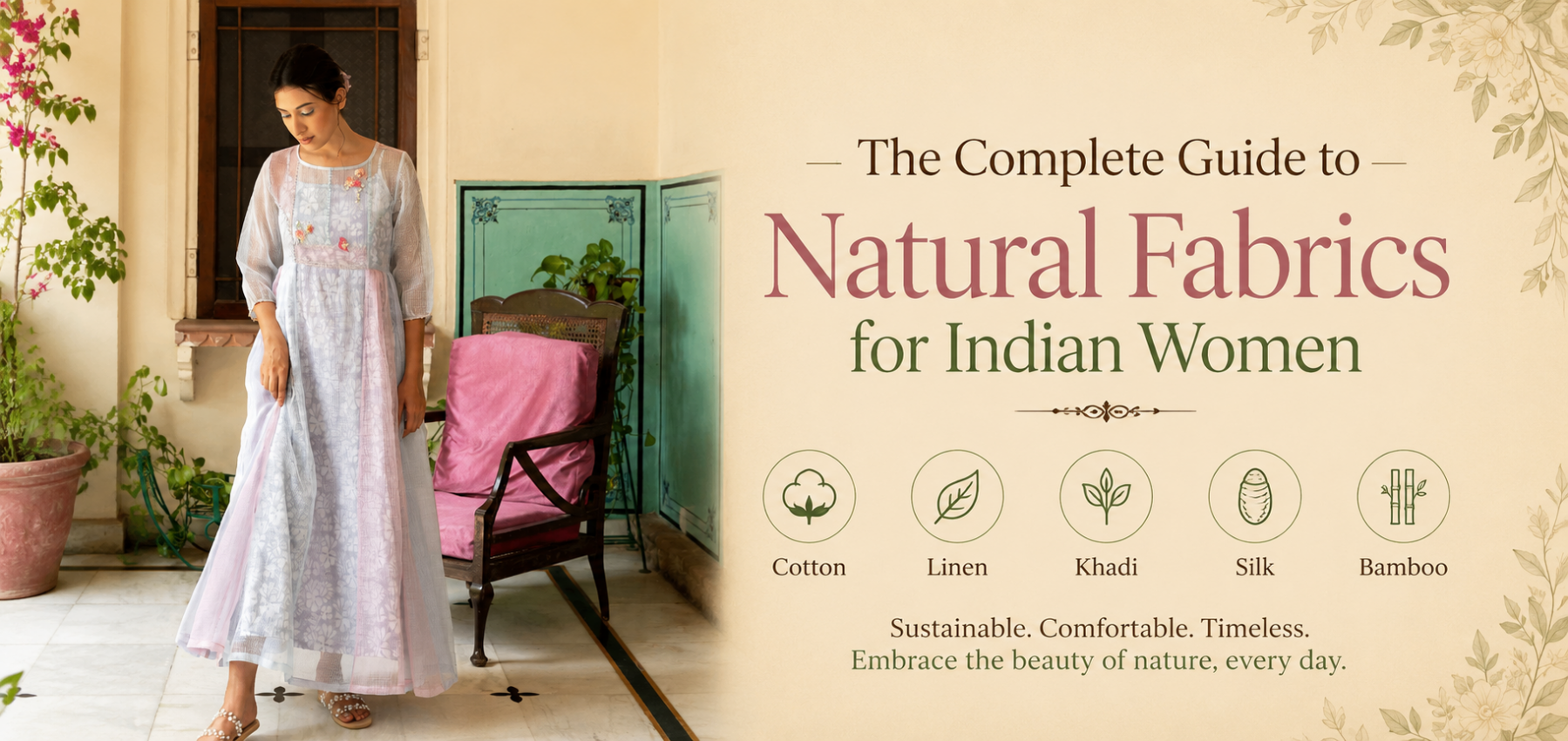
The Complete Guide to Natural Fabrics for Indian Women
Every Indian woman's wardrobe tells a story of fabric as much as fashion. Long before "sustainable style" became a buzzword, Indian households were already living it — cotton for the heat, silk for celebrations, and handwoven textiles passed down as heirlooms. This Natural Fabrics Guide is meant to help you rediscover that wisdom: what natural fabrics actually are, why they suit India's climate and culture so well, and how to choose, style, and care for them with confidence.
Whether you are building a work wardrobe, shopping for a wedding season, or simply trying to move away from synthetic blends, understanding fabric is the first step toward buying clothes that last longer, feel better, and look effortlessly elegant.
What Are Natural Fabrics and Why Do They Matter?
Natural fabrics are textiles made from fibres that occur in nature — plant-based fibres like cotton and linen, or protein-based fibres like silk and wool. Unlike synthetic materials such as polyester or nylon, which are derived from petrochemicals, natural fibres are biodegradable, breathable, and gentle on the skin.
For Indian women, this distinction is not just about eco-consciousness. India's climate — long, humid summers across most of the country — makes breathability a practical necessity, not a luxury. Natural fabrics allow air to circulate close to the skin, absorb moisture, and regulate body temperature far better than synthetic alternatives. This is why traditional Indian textiles have always leaned toward cotton, silk, linen, and handloom weaves rather than manufactured fibres.
There is also a cultural dimension. Fabrics like Chanderi, Maheshwari, and hand block-printed cotton are tied to specific regions, weaving communities, and centuries-old techniques. Choosing these fabrics supports artisans directly and keeps traditional crafts alive in an era dominated by fast fashion.
Cotton: The Everyday Fabric Every Indian Woman Relies On
Cotton remains the most widely used natural fabric in India, and for good reason. It is soft, breathable, hypoallergenic, and easy to maintain — qualities that make it ideal for daily wear, office dressing, and even festive occasions when woven or printed creatively.
Pure cotton absorbs sweat efficiently, which is why it is the preferred choice during Indian summers. It also takes dye and print exceptionally well, which explains the popularity of hand block-printed cotton dresses across the country. A well-made hand block printed dress combines this breathability with artisanal prints, making it a versatile choice for work, travel, and casual outings alike.
When shopping for cotton clothing, look for weave quality and finishing rather than just the fabric label. A tightly woven, well-finished cotton garment will drape better, resist pilling, and last through many washes without losing its shape.
Chanderi: Where Heritage Meets Modern Elegance
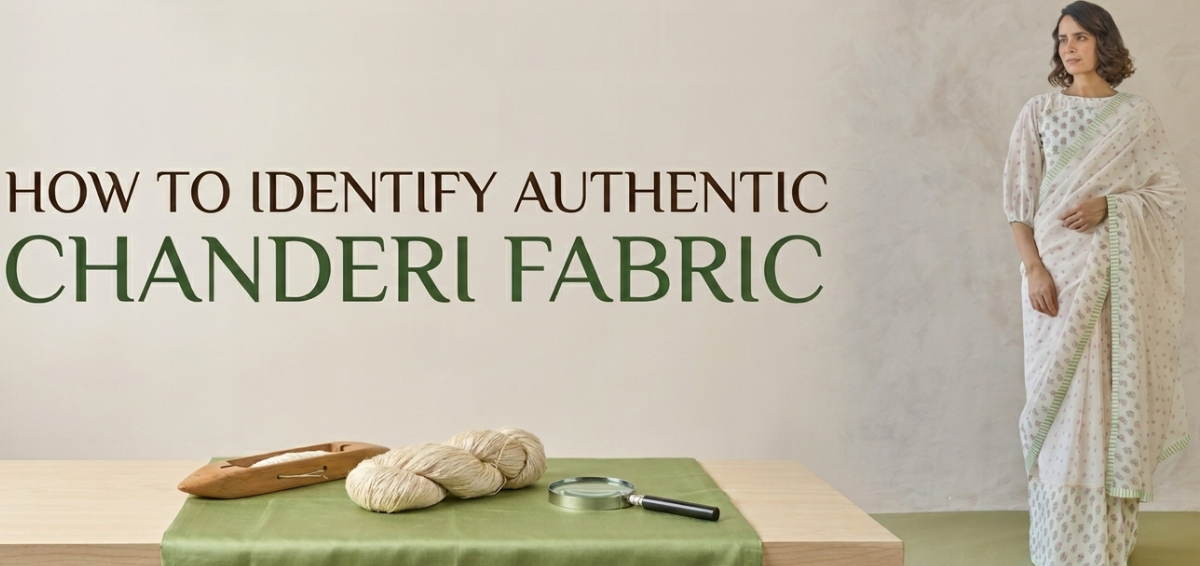
Named after the town of Chanderi in Madhya Pradesh, this fabric is known for its sheer texture, subtle sheen, and lightweight feel. Traditionally woven with a blend of silk and cotton (or sometimes silk and zari), Chanderi occupies a unique space between everyday wearability and festive sophistication.
What sets Chanderi apart is its transparency and shine, achieved through a specialised weaving technique that has been practised by artisan families for generations. This makes it especially popular for sarees meant for weddings, festive gatherings, and formal events, where you want elegance without the weight of heavier silks. A handloom chanderi saree drapes beautifully, breathes easily even during long ceremonies, and photographs exceptionally well thanks to its natural sheen.
Because handloom Chanderi is woven on traditional looms rather than power looms, no two pieces are ever entirely identical. Small variations in weave and border work are part of its charm, not a flaw — a hallmark of genuine handloom craftsmanship.
Block-Printed Fabrics: Wearable Art with a Story
Hand block printing is one of India's oldest textile art forms, practised extensively in Rajasthan, Gujarat, and parts of Madhya Pradesh. Each motif is carved onto a wooden block and stamped onto fabric by hand, often using natural or vegetable-based dyes.
The appeal of block-printed fabric lies in its imperfection. Because every stamp is applied manually, slight variations in alignment and colour saturation give each piece a distinct, artisanal character that machine printing simply cannot replicate. This craftsmanship also means that no two garments are ever truly identical, which many women find far more appealing than mass-produced prints.
Beyond aesthetics, block printing typically uses natural dyes and cotton or linen bases, making the final garment breathable as well as visually striking. It pairs particularly well with minimal silhouettes, letting the print take centre stage rather than competing with heavy embellishments.
Linen and Other Breathable Natural Fabrics Worth Knowing
While cotton and Chanderi dominate Indian wardrobes, linen deserves more attention than it typically receives. Made from the flax plant, linen is even more breathable than cotton and has natural moisture-wicking properties, making it ideal for peak summer months.
Linen does wrinkle easily, which is often mistaken for a drawback. In reality, this slightly crumpled texture has become part of its relaxed, effortless appeal in contemporary fashion. It works particularly well for structured silhouettes like tunics, shirts, and layered sets, where a slightly textured drape adds visual interest.
Other natural fabrics worth exploring include silk for occasion wear, khadi for its handspun texture and durability, and cotton-silk blends that combine the comfort of cotton with the subtle richness of silk. Each of these has a place depending on the occasion, season, and level of formality you are dressing for.
How to Style Natural Fabrics for Different Occasions
One of the biggest advantages of natural fabrics is their versatility across occasions, provided you choose the right silhouette and styling approach.
For everyday and office wear: Cotton dresses, tunics, and printed tops are ideal. A well-cut set of women printed tops paired with straight-fit pants offers a polished, comfortable look that transitions easily from desk to evening plans.
For festive and celebratory occasions: Layered outfits add drama without sacrificing comfort. A dress with jacket set works beautifully for weddings, sangeet functions, or festive brunches, as the jacket layer adds structure and visual richness while the base dress remains breathable.
For transitional weather or evening layering: A well-chosen shrug instantly elevates a simple outfit. Pairing a plain kurta or dress with a golden shrug for women adds festive shimmer while keeping the overall look light and easy to move in — perfect for evening gatherings or winter weddings.
For traditional and formal settings: Sarees remain unmatched in their ability to convey elegance. Depending on the occasion, you can choose between the sheer lightness of Chanderi or the richness of silk, both of which drape beautifully over natural-fibre blouses.
Natural Fabrics vs Synthetic Fabrics: Why the Difference Matters
It's worth understanding why the natural-versus-synthetic distinction is not just a marketing point. Synthetic fabrics like polyester, nylon, and rayon blends are typically cheaper to produce and more wrinkle-resistant, but they trap heat and moisture against the skin — a significant drawback in India's warm and humid climate.
Natural fabrics, by contrast, allow the skin to breathe, reduce the likelihood of skin irritation, and age more gracefully over time. They also tend to be biodegradable, which means they have a smaller environmental footprint compared to synthetic textiles that can take decades to decompose.
The trade-off is that natural fabrics generally require more careful maintenance and may involve a higher upfront cost, particularly for handloom and hand block-printed pieces. However, when you factor in longevity, comfort, and the support extended to traditional artisan communities, natural fabrics typically offer better long-term value.
How to Care for Natural Fabric Clothing
Proper care significantly extends the life of natural fabric garments. Here are some practical guidelines:
Washing: Hand wash or use a gentle machine cycle with cold water for cotton and linen. Delicate weaves like Chanderi should ideally be dry-cleaned or hand washed separately to preserve their sheen and structure.
Drying: Always dry natural fabrics in shade rather than direct sunlight, as prolonged UV exposure can fade colours, particularly with hand block-printed and naturally dyed fabrics.
Ironing: Use a medium heat setting for cotton and linen. For Chanderi and silk blends, iron on the reverse side or use a thin cloth barrier to protect the fabric's natural sheen.
Storage: Store sarees and delicate weaves by folding along different lines periodically to prevent permanent creasing, and keep them away from direct moisture to avoid fungal damage during monsoon months.
Choosing the Right Natural Fabric for Your Lifestyle
The best fabric choice ultimately depends on your daily routine, climate, and personal style preferences. Women with active daily schedules often gravitate toward cotton for its low-maintenance comfort, while those attending frequent festive events may prefer investing in Chanderi or silk pieces that offer more visual richness.
If you live in a coastal or particularly humid region, prioritising breathability becomes even more important, making linen and lightweight cotton better choices over heavier weaves. On the other hand, if you attend several weddings or festive functions through the year, a well-chosen chanderi handloom saree is a versatile investment that works across multiple occasions without feeling repetitive, thanks to the subtle variations in handloom weaving.
Ultimately, building a wardrobe around natural fabrics is less about following trends and more about understanding what genuinely works for your body, your climate, and your lifestyle.
Conclusion: Building a Wardrobe Rooted in Comfort and Craft
Natural fabrics offer something synthetic materials simply cannot replicate — a connection to craftsmanship, comfort suited to India's climate, and a quality that improves the way clothing feels over time. This Natural Fabrics Guide is really an invitation to slow down and choose fabric with the same care you bring to choosing colour or design. Whether it is the everyday ease of cotton, the artistry of hand block printing, or the timeless elegance of handloom Chanderi, natural fabrics reward you with clothing that looks good, feels good, and lasts.
Frequently Asked Questions
1. What are the most popular natural fabrics used in Indian clothing?
Cotton, silk, linen, khadi, and Chanderi are among the most widely used natural fabrics in Indian clothing, each offering different levels of breathability, texture, and formality suited to various occasions.
2. Is Chanderi fabric suitable for everyday wear?
Chanderi is lightweight and breathable, but its sheer texture and delicate weave make it better suited for festive, formal, or semi-formal occasions rather than daily wear, where sturdier cotton is usually more practical.
3. How can I tell if a fabric is genuinely natural and not a blend?
Natural fabrics typically feel breathable, wrinkle more easily than synthetics, and burn to ash rather than melt when tested carefully. Checking the fabric label and buying from brands transparent about sourcing is the most reliable approach.
4. Why are natural fabrics considered better for India's climate?
Natural fabrics allow better air circulation and moisture absorption, which helps regulate body temperature in India's predominantly warm and humid climate, unlike synthetic fabrics that tend to trap heat and moisture.
5. How do I care for hand block-printed or handloom clothing?
Hand wash or dry-clean these garments separately, avoid direct sunlight while drying to prevent fading, and iron on low to medium heat, ideally on the reverse side, to preserve the print and weave quality.
-
 August 26th, 2026
 -
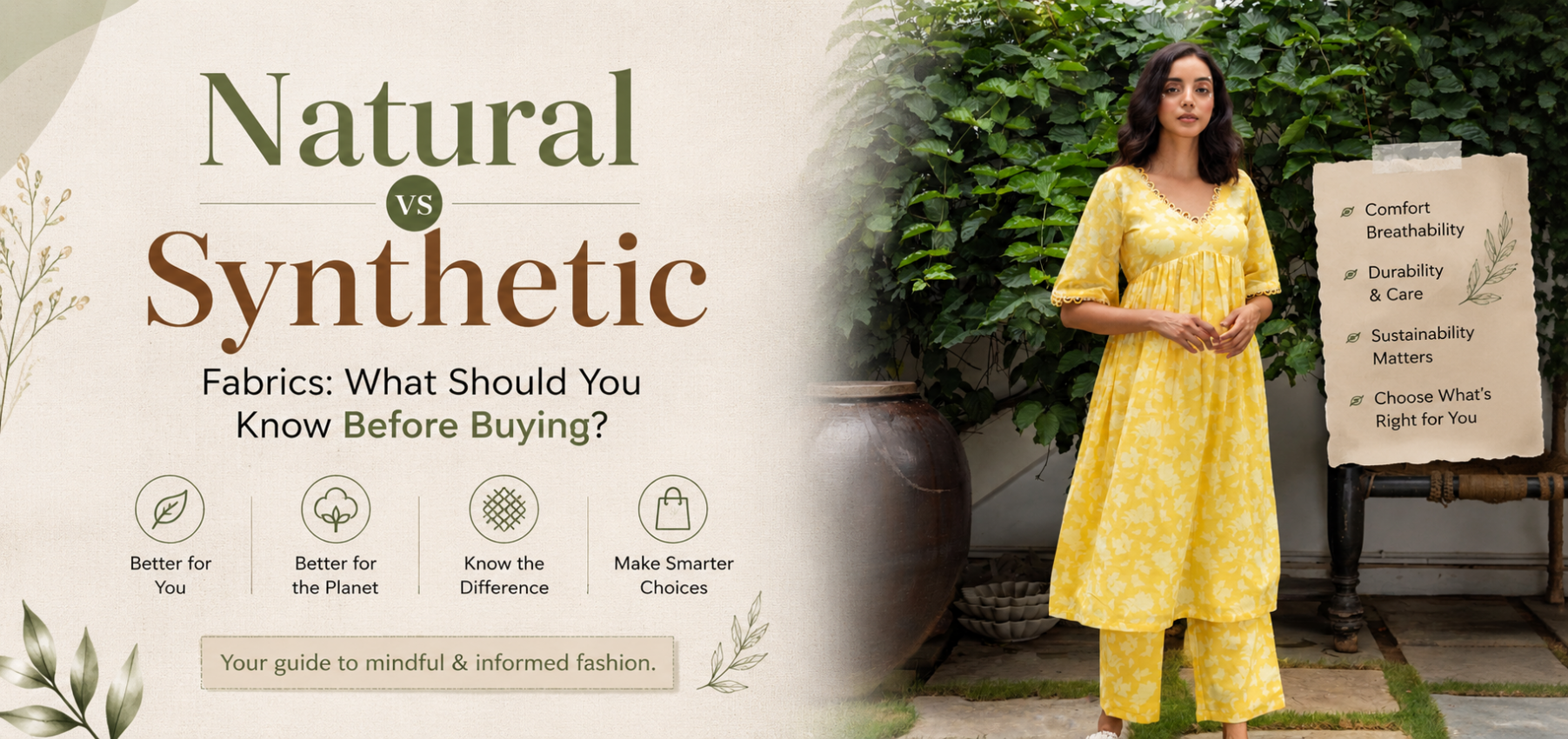
Natural vs Synthetic Fabrics: What Should You Know Before Buying?
August 24th, 2026 -
 August 24th, 2026
 -
 August 13th, 2026