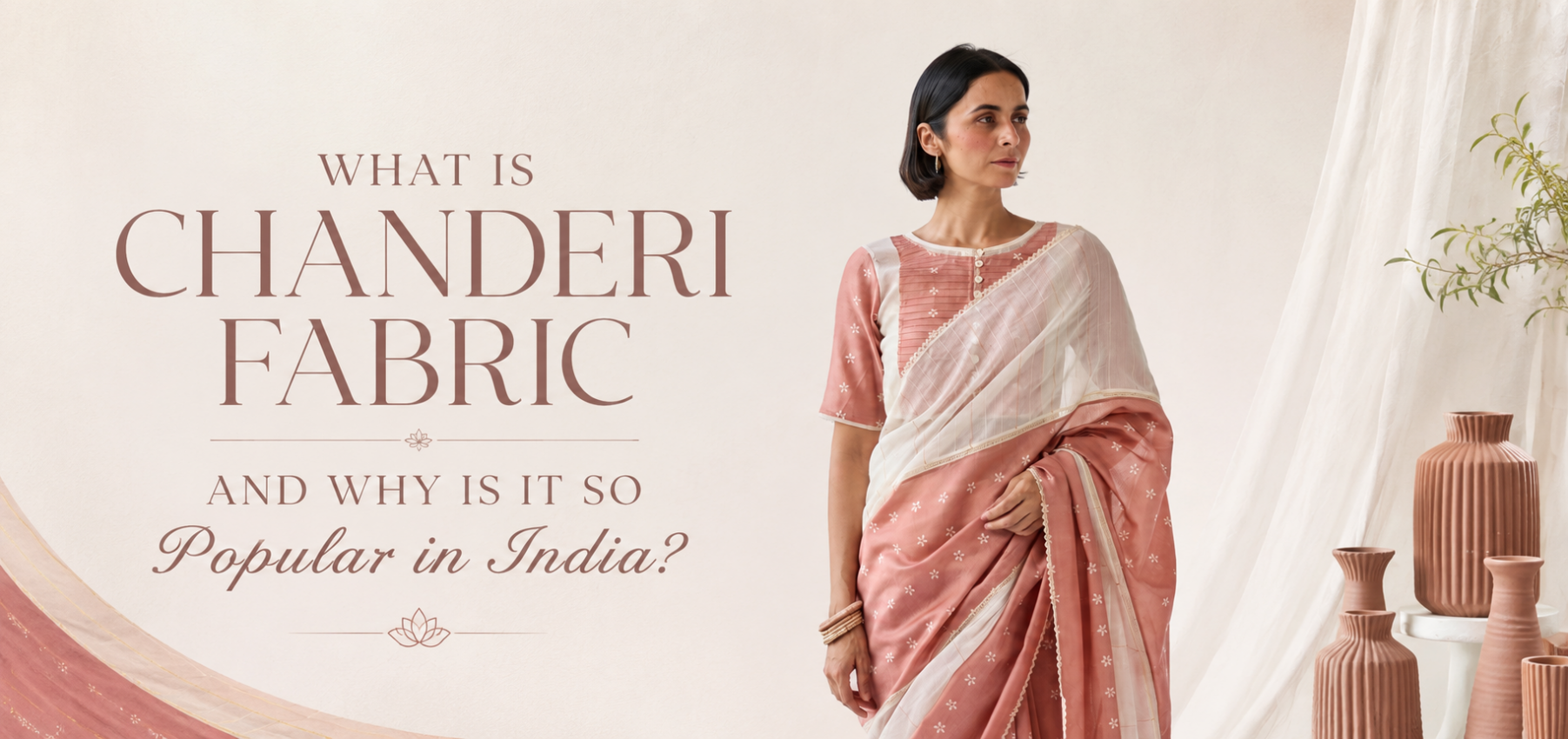
What Is Chanderi Fabric and Why Is It So Popular in India?
Open any Indian wardrobe built around ethnic wear, and you will almost certainly find one fabric that keeps returning across generations: Chanderi. It shows up in wedding trousseaus, in office-appropriate sarees, and increasingly in contemporary tops and dresses that have nothing to do with formal occasion wear at all. So what is Chanderi fabric, exactly, and what explains its steady, unshaken popularity in a market flooded with newer, faster fabrics? This guide answers both questions in detail, covering its origin, weaving process, defining characteristics, and the practical reasons it continues to be a first choice for Indian women today.
What Is Chanderi Fabric? A Quick Answer
In simple terms, what is Chanderi fabric comes down to this: it is a lightweight, handwoven textile originating from the town of Chanderi in Madhya Pradesh, traditionally made using a combination of silk and cotton (or pure silk) threads on a handloom. It is recognised by its sheer, almost translucent texture, a soft natural sheen, and fine zari or woven motifs that are worked directly into the cloth rather than printed on top of it. Chanderi has held a Geographical Indication (GI) tag since 2005, which legally protects the name and ties it to authentic handloom production within the Chanderi region.
The Origin Story of Chanderi Fabric
The story of Chanderi begins far earlier than most people expect. Weaving in the region is believed to date back to somewhere between the 2nd and 7th century, with the town of Chanderi sitting at the meeting point of two culturally rich regions of Madhya Pradesh, Malwa and Bundelkhand. This location made it a natural stop along old trade routes connecting Gujarat, Mewar, and the Deccan, and that constant exchange of ideas and materials shaped the fabric's evolution over centuries.
Chanderi truly rose to prominence during the Mughal era, when royal workshops began commissioning it for its fine, gauze-like quality and its ability to carry intricate motifs without looking heavy. Later, in the 1930s, weavers began experimenting with imported silk yarns for the warp, which is what gave rise to the silk-cotton Chanderi that dominates the market today. Despite periods of decline during colonial rule, the craft survived because weaving families in Chanderi passed the skill down through generations, and it remains one of the relatively few handloom traditions in India that has kept its techniques largely intact.
How Chanderi Fabric Is Made
Understanding how the fabric is produced explains a lot about why it looks and feels the way it does. Chanderi is woven on a pit loom or a frame loom, a process that is entirely manual and considerably slower than mechanised weaving. A single saree length can take anywhere from a few days to over a week to complete, depending on the complexity of the motifs.
The warp, or the lengthwise threads, is typically made from fine, un-degummed silk, while the weft, or the crosswise threads, is usually cotton. This combination is deliberate: the silk warp gives the fabric its lustre and structure, while the cotton weft keeps it breathable and light. Traditional butis, or small coin-like and floral motifs, are woven in by hand using a technique called the jala, which allows weavers to create intricate, repeating patterns without relying on any mechanical assistance. Zari threads, once made of real gold or silver and now more commonly finished in polished metallic tones, are added during this same process to create the fabric's characteristic shimmer.
What Makes Chanderi Fabric Special
A few defining qualities set genuine Chanderi apart from ordinary cotton-silk blends, and they are worth understanding before you shop for it.
The Signature Sheer Texture
Hold a piece of Chanderi up against the light and it should be noticeably translucent, almost like fine mist rather than solid cloth. This sheerness is not a flaw; it is the direct result of the fine yarn count and the loosely set weave that has defined the fabric for centuries.
Silk, Cotton, and the Silk-Cotton Blend
Chanderi is generally available in three base variations: pure cotton, pure silk, and the widely favoured silk-cotton blend. The blend is the most popular because it balances silk's natural lustre with cotton's breathability, making it wearable across a range of temperatures and occasions without feeling either too heavy or too plain.
Zari Work and Traditional Motifs
Small woven butis, floral jaal patterns, and structured zari borders are hallmarks of an authentic piece. These motifs are worked into the weave itself, which is one of the easiest ways to distinguish handloom Chanderi from a printed or power-loom imitation.
Types of Chanderi Fabric
When shopping, you will typically come across three categories. Pure cotton Chanderi is the most breathable and the most affordable, ideal for everyday festive wear and warmer months. Silk-cotton Chanderi, the most commonly produced variety, offers a middle ground of sheen and durability, and is what most sarees, tops, and dresses on the market are made from. Pure silk Chanderi sits at the premium end, with a richer drape and a more pronounced shine, generally reserved for weddings and formal celebrations. Knowing which variation you are buying helps set the right expectations for weight, price, and occasion.
Why Is Chanderi Fabric So Popular in India Today?
Chanderi's popularity is not simply a matter of heritage appeal. There are practical reasons it continues to outperform many other fabrics in Indian wardrobes.
Versatility Across Occasions
Few fabrics move as easily between settings as Chanderi does. A block-printed piece works for a casual daytime outing, while a heavier zari-worked version fits comfortably into a wedding function. This range is part of why the fabric shows up not only in sarees but in everyday tops, dresses, and even layered occasion wear.
Comfort Suited to Indian Weather
Because the weave is light and breathable, Chanderi holds up well through long, warm Indian summers and humid festive seasons, unlike heavier silks that can feel restrictive over the course of a full day.
A More Conscious Wardrobe Choice
As more shoppers move toward mindful, artisan-made fashion over fast fashion, Chanderi fits naturally into that shift. Choosing handloom pieces supports weaving communities directly and brings a sense of craftsmanship into everyday dressing, rather than treating ethnic wear as a once-a-year purchase.
How to Identify Authentic Chanderi Fabric
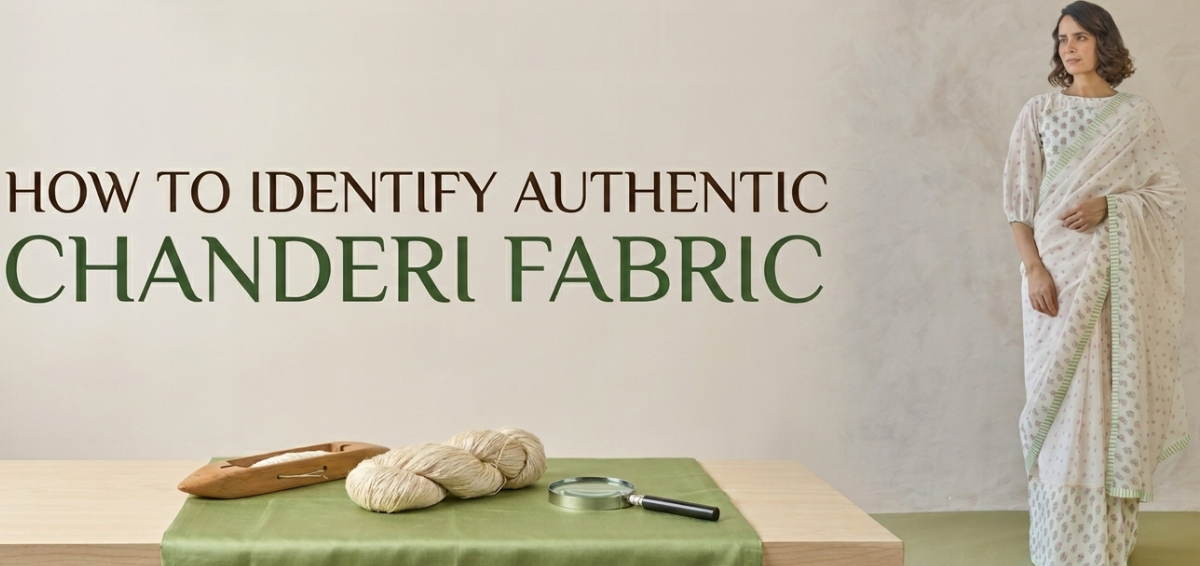
Given how widely the name is used, it helps to know what genuine Chanderi looks and feels like before buying. Real Chanderi is lightweight and shows a soft transparency when held against light, with a subtle, not overly shiny, sheen. Handwoven pieces often carry minor, natural irregularities in the weave, which is actually a sign of authenticity rather than a flaw. Genuine zari feels soft to the touch rather than stiff or overly bright, and reputable sellers should be able to speak to the fabric composition, the weaving technique used, and, where applicable, GI certification. If a listing cannot clearly state whether a piece is handloom or power-loom, or pure silk versus silk-cotton, that is worth asking about before purchase.
How to Style Chanderi — Sarees, Tops, and Dresses
Chanderi's adaptability is best seen in how differently it can be styled across occasions. For a traditional festive look, a handloom Chanderi saree pairs beautifully with a structured blouse in raw silk or thicker cotton, which balances the sheerness of the drape and works well for both formal and celebratory settings.
If you prefer something with a contemporary edge, a printed Chanderi saree is more forgiving to style, since the print itself does most of the visual work, leaving room for minimal jewellery and simple footwear.
Beyond sarees, the same fabric translates well into everyday silhouettes. Chanderi tops offer the breathability of the weave in a more casual, easy-to-wear format, ideal for office days or daytime outings.
For occasions that call for something more elevated, Chanderi silk dresses bring the fabric's natural sheen into a modern cut, making them a practical alternative to heavier ethnic wear for brunches, gatherings, and evening celebrations.
Whichever silhouette you lean toward, look for sellers who clearly describe the weave, composition, and craft behind each piece before you shop chanderi sarees online.
Caring for Your Chanderi Pieces
Because Chanderi is fine and lightweight, it needs gentler handling than everyday cotton. Hand-washing in cold water is generally preferred, and the fabric should never be wrung or twisted, as this can distort the weave. Drying flat in shade, away from direct sunlight, helps preserve both the colour and the natural sheen. For pieces with heavier zari work or embellishment, dry cleaning is usually the safer option, particularly for special-occasion sarees and dresses that you intend to keep for years.
Final Thoughts
Chanderi endures not because it is simply old, but because it continues to solve a real problem: how to look elegant without sacrificing comfort. From its centuries-old roots in Madhya Pradesh to its place in modern Indian wardrobes, the fabric has adapted without losing what made it special in the first place. Whether you are drawn to a traditional chanderi handloom saree or a lighter, everyday piece, understanding the weave, the weavers, and the craft behind it makes the choice a more meaningful one.
Frequently Asked Questions
1. What is Chanderi fabric made of?
Chanderi fabric is traditionally woven using a silk warp and cotton weft, though it is also available in pure cotton and pure silk variations, each offering a different weight and sheen.
2. Is Chanderi fabric suitable for everyday wear?
Yes, particularly the cotton and silk-cotton varieties, which are breathable and light enough for daily use, including tops, kurtas, and casual sarees.
3. How can I tell if a Chanderi piece is handloom and not machine-made?
Genuine handloom Chanderi shows slight, natural irregularities in the weave, a soft rather than glossy sheen, and motifs woven into the fabric rather than printed on it. Sellers should also be able to confirm the weaving technique used.
4. Does Chanderi fabric have a GI tag?
Yes, Chanderi fabric received Geographical Indication status in 2005, which legally ties the name to authentic handloom production within the Chanderi region of Madhya Pradesh.
5. What is the best way to care for Chanderi sarees and dresses?
Hand-wash in cold water without wringing, dry flat in shade, and opt for dry cleaning for heavier zari or embellished pieces to preserve the weave and finish over time.
-
 August 26th, 2026
 -
Natural vs Synthetic Fabrics: What Should You Know Before Buying?
August 24th, 2026 -
 August 24th, 2026
 -
 August 13th, 2026