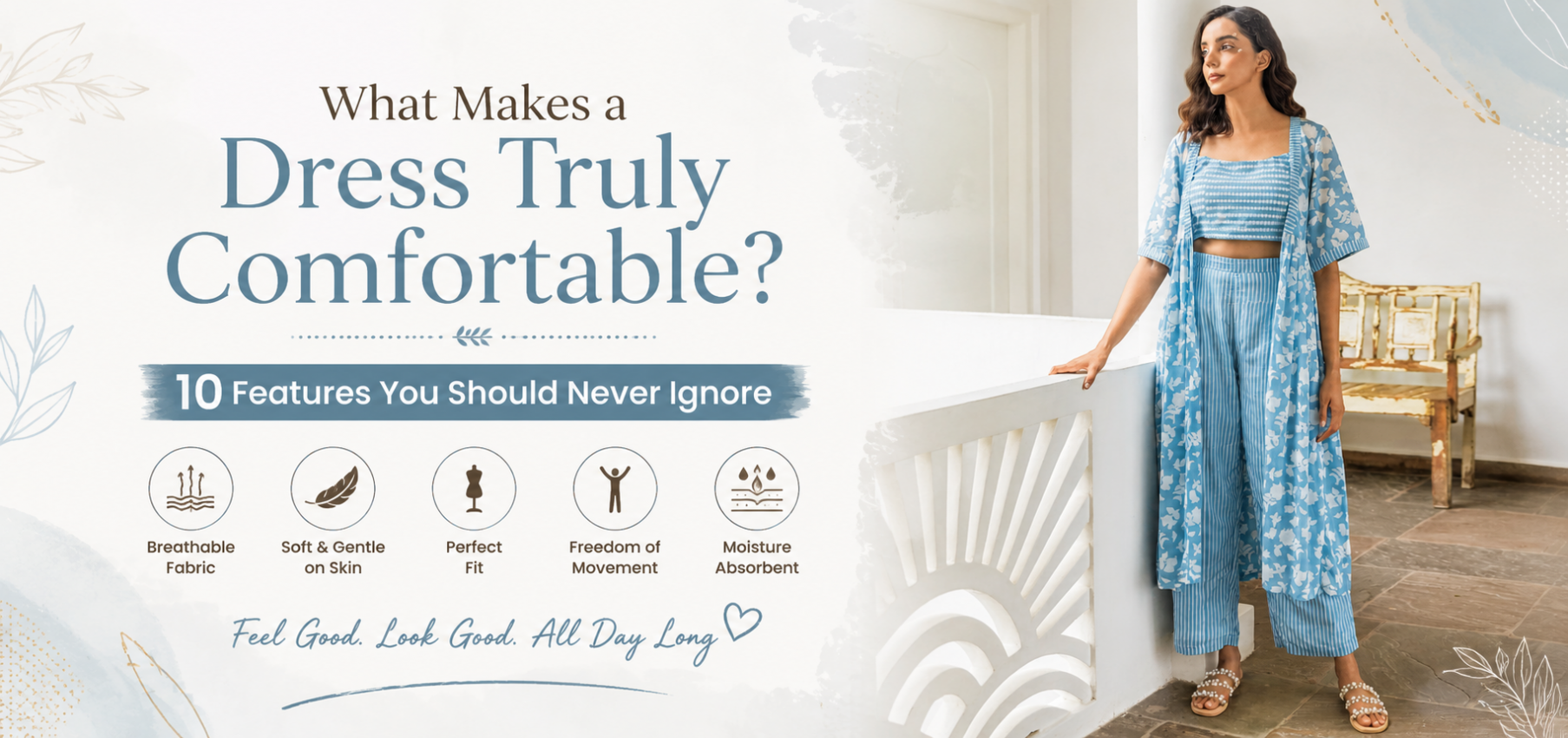
What Makes a Dress Truly Comfortable? 10 Features You Should Never Ignore
A dress can look flawless in a photograph and still feel wrong the moment you sit down, walk fast, or spend six hours in it. Comfort is not one feature. It is a combination of fabric, cut, weight, and finishing that either work with your body or fight it. For women shopping for Comfortable Dresses for Women, understanding these details in advance saves money, saves returns, and saves the discomfort of realising too late that a dress looks good only in stills.
Most comfort complaints trace back to the same three culprits: fabric that does not breathe, a silhouette that fights natural movement, and finishing that was never designed for hours of continuous wear. None of these show up clearly in a product photograph, which is why so many online dress purchases end in disappointment. Reading a garment the way a tailor would, rather than the way a scroll-through shopper does, changes the outcome considerably.
What Makes a Dress Comfortable?
A comfortable dress allows natural movement, breathes with body heat, and holds its shape without pinching, riding up, or clinging. It typically uses natural or breathable fabric, has a relaxed or well-placed fit, and avoids stiff seams or restrictive cuts. Comfort is measurable in how a dress performs after hours of wear, not just how it looks on a hanger.
1. Breathable, Natural Fabric
Fabric is the single biggest factor in how a dress feels against skin, especially in Indian summers. Cotton, cotton modal, and Chanderi cotton blends allow air circulation and absorb moisture, which keeps the body cooler through the day. Synthetic blends may hold shape longer but trap heat and cause discomfort within a few hours of wear.
Handloom and hand block printed cotton fabrics, in particular, are woven and finished to allow better airflow than tightly woven synthetic material. This is why breathable cotton remains the preferred base fabric across most everyday and festive dress categories in India.
In hand block printing, wooden blocks are hand-carved and stamped onto cotton cloth one impression at a time, a process that leaves the weave slightly more open than machine-printed fabric finished under high heat and pressure. This is a small technical detail, but it is part of why hand block printed cotton tends to feel cooler against the skin through a full day of wear.
2. A Relaxed, Body-Skimming Silhouette
A dress that skims the body rather than clinging to it moves better and irritates the skin less. Silhouettes with slight flare, A-line cuts, or gentle gathering at the waist allow the fabric to move independently of the body during walking or sitting.
A printed maxi dress is a good example of this principle in practice, since its floor-length, flowing cut avoids tight contact points at the hips and thighs. This kind of silhouette also hides minor fit inconsistencies, which matters when buying online without a trial.
3. Lightweight Construction
Weight affects comfort more than most buyers expect. A heavier dress, even in breathable fabric, pulls on the shoulders and waistline over several hours and can leave marks or soreness. Lightweight construction, achieved through finer yarns and minimal layering, keeps a dress wearable from morning meetings to evening errands.
This is particularly relevant for daily-wear dresses, where the same garment may be worn through a commute, a full workday, and a post-work outing without a change of clothes.
4. Well-Placed, Adjustable Waistlines
A waistline positioned incorrectly for individual body proportions is one of the most common comfort complaints. Elasticated or tie-waist designs adjust to natural movement, unlike fixed, structured waistbands that can dig in after sitting for long periods.
A women pleated dress often solves this problem well, since the pleats allow the waist and hip area to expand slightly with movement while still holding a defined shape. This makes pleated designs practical for both desk-based workdays and more active days out.
5. Soft, Skin-Friendly Seams and Finishing
Finishing details are easy to overlook but directly affect how a dress feels against skin for hours at a stretch. Rough seams, stiff interfacing, or scratchy embellishment backing near the neckline and underarms are common causes of irritation, particularly in humid weather.
Hand embroidered dresses, when finished with proper lining and flat-felled seams, avoid this issue entirely, since the embroidery sits on the surface rather than against the skin. Checking product descriptions for lining details before purchase is a simple way to avoid this problem.
6. Ease of Movement Through Length and Cut
The length of a dress affects how freely a person can walk, sit, climb stairs, or get in and out of a car. Midi and maxi lengths with side slits or a slight flare allow for a longer stride without restriction, while overly fitted hemlines limit movement regardless of fabric quality.
This is one reason flowing silhouettes remain popular for daily wear in India, where dresses are often worn through varied activities across a single day, from commuting to household tasks to social visits.
7. Prints and Colours Suited to the Climate
Colour and print choice affect comfort indirectly through heat absorption and visual practicality. Lighter shades and busy prints reflect more heat and hide creasing or minor stains better than plain, dark fabrics, which matters over a full day of wear in warm weather.
Women floral dresses in cotton fabric combine both benefits, offering a cooler visual palette alongside prints that stay presentable through a long day without requiring mid-day touch-ups. This makes them a practical choice for daytime festive and casual occasions alike.
8. Layering-Friendly Design
A comfortable dress should work across temperature changes, particularly in India's transitional seasons and air-conditioned indoor spaces. Simple, uncluttered dress designs allow layering with a jacket or shrug without adding bulk or altering the fit.
A golden shrug for women, for instance, layers easily over a plain or lightly printed dress for festive settings, adding warmth and visual richness without compromising the base garment's comfort. This flexibility extends a single dress across more occasions and seasons.
9. Easy-Care Fabric
Comfort extends beyond wear time into maintenance. A dress that creases heavily, requires ironing after every wash, or loses shape after a few washes becomes impractical for regular use, regardless of how it felt on the first wear.
Cotton and cotton-blend fabrics generally hold up well to gentle machine washing and resist deep creasing better than silk or heavily embellished materials, making them a lower-maintenance choice for daily and semi-formal wear.
10. Versatility Across Occasions
A genuinely comfortable dress earns its place in a wardrobe by working across more than one setting. Coordinated separates offer this flexibility particularly well, since individual pieces can be restyled rather than worn as a single fixed outfit.
Women cotton co ord sets illustrate this well, as the top and bottom can be worn together for a polished look or separated and paired with other pieces for a different occasion entirely. This adaptability reduces the need for a large wardrobe while keeping every piece genuinely wearable.
Quick Comparison: Fabric Types and Comfort Level
Not all fabrics marketed as "comfortable" perform the same way over a full day. The comparison below breaks down how common dress fabrics behave across breathability, maintenance, and best use case, so the choice can be matched to the occasion rather than made on appearance alone.
- Pure Cotton: High breathability, moderate crease resistance, best for daily wear and summer.
- Cotton Modal: High breathability, better drape than pure cotton, suitable for both daily and semi-formal wear.
- Chanderi Cotton: Moderate breathability, lightweight sheen, best for festive and semi-formal occasions.
- Polyester Blends: Low breathability, high crease resistance, better suited to structured occasion wear than all-day comfort.
- Silk Blends: Low to moderate breathability, requires careful maintenance, best reserved for special occasions rather than daily wear.
How to Check Dress Comfort Before Buying Online
Since comfort cannot be tried on before an online purchase, it has to be assessed through the details a listing provides. The steps below cover what to look for, in the order most buyers tend to overlook them.
- Read the fabric composition listed in the product description and confirm it includes cotton, cotton modal, or a breathable blend.
- Check the silhouette description for terms like relaxed fit, A-line, or flowy, which indicate room for movement.
- Look at the lining and seam details mentioned in the product specifications, especially for embroidered or block printed styles.
- Confirm the size chart against actual body measurements rather than standard size labels, since fit varies across brands.
- Consider the occasion and season the dress will primarily be worn for, and match fabric weight accordingly.
Following even three or four of these steps consistently reduces the chance of a mismatched purchase far more than relying on styling photographs alone, since fit and fabric behaviour are rarely visible in a single image.
Comfortable Dresses for Women are ultimately defined by how the fabric, fit, and finishing work together across real hours of wear rather than how a garment appears in a single photograph. Breathable natural fabrics, relaxed silhouettes, adjustable waistlines, and thoughtful finishing consistently outperform trend-led designs when comfort is the priority. Checking these ten features before purchase helps build a wardrobe of dresses that stay wearable through long days, varied occasions, and India's changing seasons alike.
FAQs
What fabric is most comfortable for dresses in Indian weather?
Cotton and cotton modal fabrics are generally the most comfortable for Indian weather, since they allow air circulation and absorb moisture effectively. Chanderi cotton blends offer a lighter alternative for festive wear while still remaining breathable compared to synthetic fabrics.
Are maxi dresses more comfortable than fitted dresses?
Maxi dresses are often more comfortable for extended wear because their flowing silhouette allows unrestricted movement at the hips and legs. Fitted dresses can look polished but may restrict movement and cause discomfort over several hours, depending on the fabric's stretch.
How can I tell if a dress will be comfortable before buying it online?
Check the fabric composition, silhouette description, and lining details listed in the product description. Terms like relaxed fit, breathable cotton, and A-line indicate a higher likelihood of all-day comfort compared to structured or heavily lined designs.
Do embroidered dresses feel less comfortable than plain ones?
Not necessarily, as long as the embroidery is properly lined and the seams are finished to sit away from the skin. Well-constructed embroidered dresses can be just as comfortable as plain cotton dresses while offering more detailing for festive occasions.
What is the most versatile comfortable dress style for daily wear?
Coordinated co-ord sets and A-line cotton dresses are among the most versatile options, since they can be restyled across occasions and layered easily with a shrug or jacket. Their breathable fabric and relaxed fit also make them practical for long working days.
-
 August 26th, 2026
 -
Natural vs Synthetic Fabrics: What Should You Know Before Buying?
August 24th, 2026 -
 August 24th, 2026
 -
 August 13th, 2026