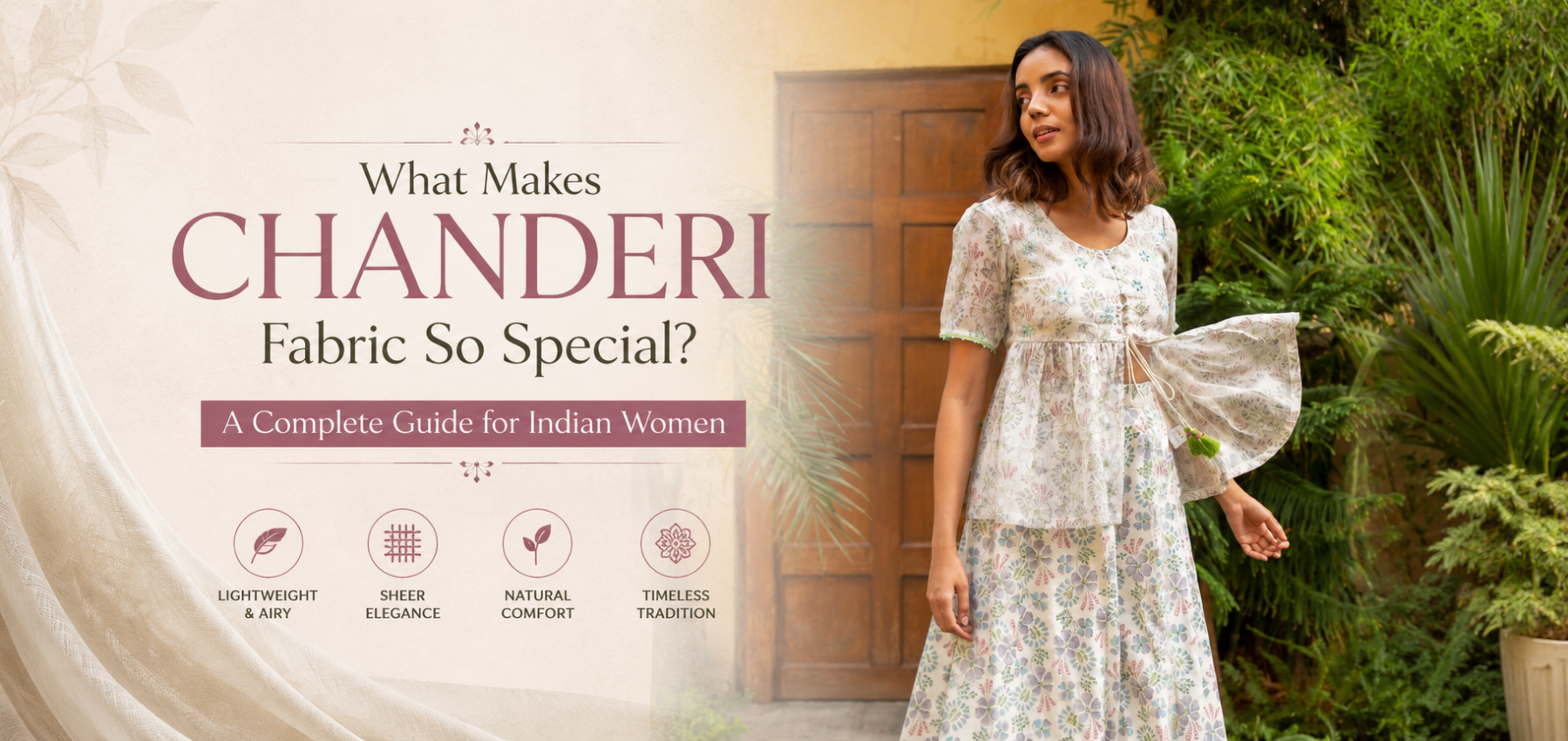
What Makes Chanderi Fabric So Special? A Complete Guide for Indian Women
Walk through any handloom exhibition or scroll through an ethnic wear collection online, and Chanderi tends to stand out even among other fine Indian textiles. It isn't the loudest fabric on the rack, yet it consistently ends up in the shopping bag. That pull comes down to a combination of craftsmanship, comfort, and character that few other weaves manage together. This guide breaks down exactly what sets a genuine, pure Chanderi fabric apart from everything else in your wardrobe, how it compares to other handloom favourites, and why it continues to earn a place in the closets of Indian women across generations.
The Human Craft Behind Every Piece
Before getting into texture and technique, it helps to understand who actually makes this fabric. Chanderi is still largely produced by weaver families in Madhya Pradesh, working on pit and frame looms that have changed very little over the decades. A single saree length can take several days of continuous, skilled labour, from setting up the warp to weaving in the fine zari motifs by hand using a technique called the jala, which allows repeating patterns to be built without any mechanical assistance. This is not a fabric that comes off an assembly line; every irregularity in the weave is a small signature of the person who made it.
This craftsmanship is also legally protected. Chanderi has held Geographical Indication status since 2005, meaning the name can only be used for fabric woven within the designated Chanderi region using recognised traditional methods. For shoppers, this protection is a useful reference point: it exists precisely because the market has long been flooded with imitations, and it gives genuine weavers a way to be identified and credited for their work. Choosing authentic, handwoven Chanderi means directly supporting these artisan communities rather than a factory process.
Why Chanderi Feels Different From Any Other Fabric You Own
Put a Chanderi piece next to an ordinary cotton or silk garment, and the difference is immediate, both visually and to the touch.
The Sheer, Almost-There Texture
Chanderi is famous for a transparency that few other fabrics achieve without looking flimsy. This comes from extremely fine yarn counts and a deliberately open weave, which is why the fabric appears to glow slightly when held up to light rather than sitting flat and opaque.
A Natural Sheen That Isn't Overpowering
Unlike glossy synthetic fabrics, Chanderi's shine comes from its silk content and sits at a subtle, understated level. It reads as polished rather than flashy, which is part of why it works equally well for a boardroom meeting and a wedding function.
Lightweight Comfort for Long Wear
Because the fabric is so fine, garments made from it rarely feel heavy, even when worn through a full day of festivities. This lightness, combined with the breathability of the cotton weft, is a major reason Chanderi remains a practical choice through India's warmer months.
Pure Chanderi Fabric vs Blended and Machine-Made Versions
One detail that often gets lost in casual shopping is the difference between authentic, handwoven Chanderi and the mass-produced cotton-silk fabric sold under the same name. A genuine pure Chanderi fabric is woven on a handloom using traditional techniques, carries slight natural irregularities as a mark of handwork, and typically comes with a Geographical Indication tag confirming it was made in the Chanderi region of Madhya Pradesh. Power-loom imitations, by contrast, are woven faster, look almost too uniform, and lack the soft, slightly crisp hand-feel of the real fabric. Neither is inherently "bad," but knowing which one you are buying affects how you should think about price, care, and longevity.
How Chanderi Compares to Other Indian Handloom Fabrics
Chanderi is often mentioned in the same breath as Kota Doria, Banarasi silk, and Maheshwari, but each has a distinct personality. Kota Doria, woven in Rajasthan, is known for its checkered "khat" pattern and is generally more affordable and slightly crisper in feel, making it a strong everyday alternative. Banarasi silk, from Varanasi, is considerably heavier, built around dense brocade and zari work, and is better suited to bridal wear than daily use. Maheshwari, another Madhya Pradesh weave, leans toward structured simplicity with reversible borders, prioritising practicality over the sheer drape Chanderi is known for. Among these, Chanderi generally strikes the best balance between formality and comfort for women who want an elegant look without the weight of a heavier silk.
Why Indian Women Keep Choosing Chanderi, Season After Season
It Flatters a Range of Body Types
Because the drape is fluid rather than stiff, Chanderi tends to skim the body instead of adding visual bulk, which is part of why it is frequently recommended for women looking for a graceful, non-restrictive silhouette in both sarees and fitted kurta sets.
It Works Across Nearly Every Indian Season
Cotton and silk-cotton Chanderi handle heat and humidity comfortably, while richer silk variations with heavier zari work suit cooler months and evening functions. Few fabrics offer that kind of year-round flexibility without needing a completely different wardrobe.
It Supports a More Conscious Wardrobe
As more shoppers move away from disposable fast fashion, handloom fabrics like Chanderi offer a meaningful alternative: fewer pieces, made well, that last for years and carry a genuine craft story rather than a trend cycle.
Chanderi Across Occasions — A Quick Guide
One of the more practical reasons Chanderi has stayed popular is that it doesn't demand a single styling formula. How it's worn changes noticeably depending on the setting, and that flexibility is worth understanding before you shop.
Workwear and Everyday Outings
Lighter cotton or silk-cotton Chanderi in solid tones or subtle prints works well for office days, client meetings, and daytime errands. Pair it with minimal jewellery and comfortable footwear, and it reads as polished without looking like you tried too hard.
Festive and Semi-Formal Gatherings
For pujas, family functions, and daytime celebrations, a Chanderi piece with a woven border or light zari detailing strikes the right balance. It feels dressed up without the weight or formality of heavier bridal silks, which makes it comfortable for events that run several hours.
Weddings and Evening Celebrations
Richer silk Chanderi with denser zari work and traditional motifs suits evening wedding functions and receptions. It won't have the same heft as Banarasi brocade, but the sheen and craftsmanship still feel appropriately celebratory for the occasion.
Building a Chanderi Wardrobe — Where to Start
If you're new to the fabric, sarees are usually the most natural entry point. A handloom chanderi saree gives you the fullest expression of the fabric's drape and sheen, and works well for weddings, festivals, and formal gatherings.
For something more relaxed, a printed Chanderi saree softens the formality slightly, letting you wear the fabric to daytime events without it feeling overly dressed up.
Once you're comfortable with the fabric, it's worth exploring beyond sarees. Chanderi tops bring the same breathability into a wardrobe staple you can reach for on ordinary workdays.
For occasions that need a little more polish, Chanderi silk dresses translate the fabric's sheen into a contemporary silhouette, ideal for brunches and evening celebrations alike.
And if you'd rather compare options before deciding, it's worth browsing a few collections of chanderi sarees online to see the range of weights, prints, and price points available before you commit to a piece.
If you're building toward one investment piece rather than several smaller ones, a well-chosen chanderi handloom saree tends to offer the best long-term value, since it can be styled differently across several occasions simply by changing the blouse and accessories.
Simple Ways to Check Authenticity Before You Buy
A few quick checks can save you from an expensive mistake. Hold the fabric up to natural light; genuine Chanderi should show a soft, even translucency rather than staying completely opaque. Run your fingers across the surface; real zari feels soft rather than stiff or plasticky. Look closely at the weave for tiny, natural irregularities, which are a sign of handloom production rather than a flaw. Finally, ask the seller directly about the composition and weaving origin. A seller who can confidently explain whether a piece is silk-cotton or pure silk, and where it was woven, is generally a more trustworthy source than one who cannot.
Keeping Your Chanderi Pieces Looking New
Beyond regular washing, how you store Chanderi matters just as much for longevity. Fold pieces loosely rather than tightly, and reverse the fold every few months to prevent permanent creasing along the same lines, especially on zari borders. Store in a breathable cotton cover rather than plastic, which can trap moisture and dull the fabric's natural sheen over time. Keeping silver or gold-toned zari away from direct contact with other metallic embellishments also helps prevent tarnishing during storage. These small habits are often the difference between a Chanderi piece that lasts a couple of seasons and one that stays wearable for years.
Final Thoughts
What makes Chanderi special isn't a single feature, it's the combination of centuries-old craftsmanship, a genuinely comfortable drape, and a versatility that few handloom fabrics can match. Whether you're drawn to its sheer texture, its subtle sheen, or the story of the weavers behind it, understanding what separates a true pure Chanderi fabric from an imitation makes every purchase a little more informed, and a little more meaningful.
Frequently Asked Questions
1. What makes Chanderi fabric different from regular cotton-silk fabric?
Chanderi is handwoven using fine yarn counts on a pit or frame loom, giving it a sheer, translucent texture and a subtle sheen that mass-produced cotton-silk fabric typically lacks.
2. Is pure Chanderi fabric expensive?
Pure, handwoven Chanderi tends to be priced higher than power-loom imitations because of the labour-intensive weaving process, but it also lasts considerably longer with proper care.
3. How is Chanderi different from Kota Doria?
Kota Doria has a distinctive checkered "khat" pattern and a crisper feel, while Chanderi has a smoother, even sheerness with zari motifs woven directly into the fabric.
4. Can Chanderi be worn in all seasons?
Yes. Lighter cotton and silk-cotton Chanderi suit warm, humid months, while richer silk variations with more zari work are better suited to cooler weather and evening occasions.
5. How do I know if a Chanderi piece is genuinely handwoven?
Look for slight irregularities in the weave, a soft rather than glossy zari finish, gentle translucency against light, and, where available, a Geographical Indication tag or weaver cooperative mark.
-
 August 26th, 2026
 -
Natural vs Synthetic Fabrics: What Should You Know Before Buying?
August 24th, 2026 -
 August 24th, 2026
 -
 August 13th, 2026