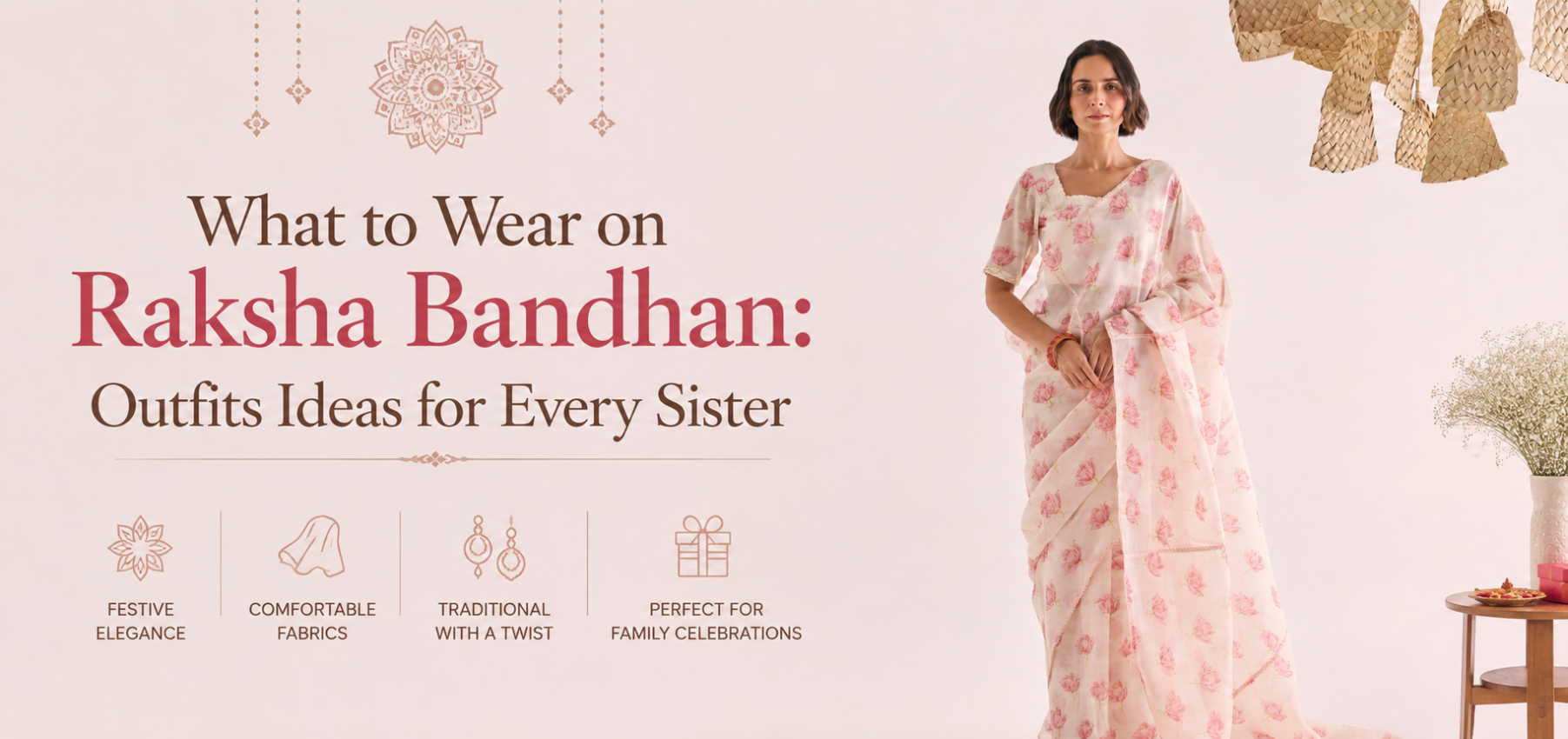
What to Wear on Raksha Bandhan: Outfits Ideas for Every Sister
Raksha Bandhan falls in the last week of August, which in most of India still means heat, humidity, and a day packed with rituals, photographs, and family lunches back to back. Good Raksha Bandhan outfits ideas start from that reality, not from a mood board. This guide is built around what actually works for a full festive day: breathable fabrics, comfortable silhouettes, and pieces that photograph well without needing three hours of styling.
Raksha Bandhan outfit ideas refer to festive-yet-wearable clothing choices — typically cotton, chanderi, or block-printed ethnic wear — that balance tradition with comfort for the tying-of-the-rakhi ceremony, family gatherings, and the meals that follow. The best picks are lightweight, easy to move in, and suited to daytime festivities rather than evening glamour.
Why Comfort Should Lead Your Raksha Bandhan Outfit Choice
Most Raksha Bandhan mornings involve sitting on the floor for the puja, standing for photographs, and eating a full meal soon after — all in weather that is usually warm and humid across North and Central India. An outfit that looks festive but restricts movement or traps heat works against the day, not for it.
This is where fabric choice matters more than embellishment. Cotton, chanderi, and handloom weaves breathe better than silk or synthetic blends, so they stay comfortable from a 9 a.m. puja through a 2 p.m. lunch. Block prints and hand embroidery add festive character without the weight of heavy zari or sequin work, which is a practical reason they have stayed popular in Indian festive wardrobes for generations, well beyond seasonal trends.
Raksha Bandhan Outfits Ideas by Occasion Setting
Not every Raksha Bandhan celebration looks the same, and the right outfit depends on where and how the day unfolds. Sisters typically fall into one of three settings — a home puja, a larger family gathering, or a working day that includes a short celebration before or after office hours.
Home Puja and Immediate Family
For a rakhi ceremony at home, ease of movement matters most. A hand block printed cotton dress or a co-ord set works well here — comfortable enough to sit cross-legged for the puja, yet festive enough for photographs immediately after.
Larger Family Gatherings
When the celebration extends to extended family or an outdoor lunch, a saree or a tiered occasion-wear set adds a bit more presence. A handloom Chanderi saree is a strong choice here — it carries the visual weight of a traditional drape while staying light enough to wear for several hours without discomfort.
Office-to-Celebration Days
Many working women celebrate Raksha Bandhan around office hours, especially in metro cities. A tunic set or a structured blouse paired with a skirt transitions easily from a desk to a short family celebration, without needing a full outfit change.
Saree Ideas: Traditional Elegance Without the Weight
A saree remains one of the most requested Raksha Bandhan outfits ideas, largely because it photographs beautifully and carries cultural meaning. The concern most sisters raise is heaviness and heat — both solvable with the right weave.
A printed Chanderi saree offers a middle ground between a plain cotton drape and a heavily worked silk saree. Chanderi's natural sheen comes from a traditional blend of cotton and silk yarns woven on handlooms in Madhya Pradesh, giving it a soft glow without added weight. Pair it with minimal jewellery — jhumkas and a single statement bangle set are enough — and the outfit carries itself.
Dresses and Co-ord Sets: The Low-Effort, High-Impact Route
For sisters who want festive dressing without the styling effort a saree or lehenga demands, dresses and co-ord sets have become the practical default.
- Block print dress: A single-piece block print dress needs no draping, no pinning, and pairs easily with jhumkas or a statement neckpiece for an instant festive look.
- Cotton co-ord sets: A matching top and bottom is arguably the most underrated Raksha Bandhan outfit — structured enough to look put-together, relaxed enough to sit and eat comfortably. Women cotton co-ord sets in prints or block-printed motifs work particularly well for daytime family functions.
- Everyday festive dresses: For sisters who prefer simplicity over statement pieces, women cotton dresses in lighter prints strike a balance between "dressed up" and "actually comfortable."
Occasion Wear for Sisters Who Want to Dress Up
Some sisters do want to make more of an occasion of Raksha Bandhan — particularly if the celebration includes a larger gathering, a restaurant lunch, or a full family reunion. For this, layered pieces work better than heavy embellishment.
A three-piece jacket-and-dress set, or a tiered occasion-wear dress, offers a festive silhouette while staying in breathable fabrics. Hand embroidered dresses in cotton or artisanal blends give the richness typically associated with silk, minus the heat retention — a genuine alternative for sisters who want to stand out in family photographs without switching to synthetic fabrics.
Skirts, Blouses, and Layering Pieces for a Mix-and-Match Look
Not every sister wants a single fixed outfit — separates offer more flexibility, especially for sisters attending more than one celebration across a weekend.
- Start with a printed or solid-colour skirt as the base, chosen in a breathable cotton or handloom weave.
- Pair it with a hand-crafted blouse for a fusion look that works for both the puja and a later outing.
- Add a shrug or jacket for early-morning or air-conditioned settings, and remove it once the day warms up.
- Finish with minimal jewellery and a fabric potli bag rather than a heavy clutch, which keeps the overall look light rather than styled-for-a-wedding.
This layered approach is particularly useful for sisters travelling to their brother's city for the celebration, since separates pack more easily than a single structured outfit.
Colour and Print Choices That Work for a Daytime Festival
Raksha Bandhan is typically a daytime celebration, and colour choices should reflect that. Bright, sunlit shades photograph better in daylight than deep jewel tones, which read best under evening lighting.
Marigold yellow, rani pink, mint, and sunny florals are consistently popular for this reason — they suit natural light, sit well against Indian skin tones, and pair easily with gold or oxidised jewellery. Hand block prints, in particular, offer this brightness through natural dyes and motifs rooted in regional textile traditions, rather than relying on sequins or metallic thread for festive impact.
A Practical Styling Checklist for the Day
Before finalising your outfit, run it against how the actual day will unfold rather than how it looks on a hanger.
- Can you sit on the floor comfortably for the puja without adjusting the outfit repeatedly?
- Is the fabric breathable enough for a warm morning that stretches into an afternoon meal?
- Does it need external styling help — pins, a draping expert — or can you wear it independently?
- Does it photograph well in natural daylight, since most Raksha Bandhan photos are taken indoors near a window or outdoors?
- Can accessories be kept minimal, letting the craftsmanship of the fabric do the work?
An Expert Note on Choosing Handcrafted Fabrics
Hand block printing is a slow process — each motif is stamped by hand using carved wooden blocks, layer by layer, which means no two lengths of fabric are ever perfectly identical. This is part of why hand block printed cotton has stayed a staple of Indian festive wardrobes: the slight variation in every print gives the garment a character that machine printing cannot replicate. When choosing a Raksha Bandhan outfit, checking for this handcrafted detail — uneven print edges, natural dye variation, a slightly irregular repeat — is a reliable way to identify genuine craftsmanship over a mass-produced imitation.
Frequently Asked Questions
What should sisters wear for Raksha Bandhan in hot weather?
Cotton, chanderi, or handloom fabrics are the most practical choices for Raksha Bandhan in warm weather. They allow airflow through a long day of rituals and gatherings, unlike silk or synthetic blends, which trap heat and can feel heavy by afternoon.
Is a saree or a dress better for Raksha Bandhan?
Both work well, and the choice depends on the setting. A saree suits larger family gatherings where more traditional dressing is expected, while a dress or co-ord set is better for a home puja or an office-to-celebration day, since it needs no draping or styling help.
What colours are considered auspicious or festive for Raksha Bandhan?
Bright daytime shades like yellow, pink, mint, and orange are traditionally favoured for Raksha Bandhan, since the celebration happens during daylight hours. These colours also pair naturally with gold and oxidised jewellery commonly worn for the occasion.
Can I wear a co-ord set instead of traditional ethnic wear for Raksha Bandhan?
Yes. Cotton co-ord sets have become a common Raksha Bandhan choice because they combine a festive, put-together appearance with day-long comfort, and they need minimal styling compared to a saree or lehenga.
How do I keep my Raksha Bandhan outfit comfortable through the whole day?
Choose breathable fabrics like cotton or chanderi, keep accessories minimal, and pick a silhouette that allows you to sit for the puja and move freely afterward. Layering with a lightweight jacket or shrug also helps you adjust as the day's temperature changes.
In summary: the most reliable Raksha Bandhan outfits ideas are built on breathable, handcrafted fabrics — cotton, chanderi, and hand block prints — chosen to suit the specific setting of the day, whether that's a home puja, a family lunch, or an office celebration. Comfort and craftsmanship, not embellishment, are what make an outfit work from the morning ritual through the evening photographs.
-
 August 26th, 2026
 -
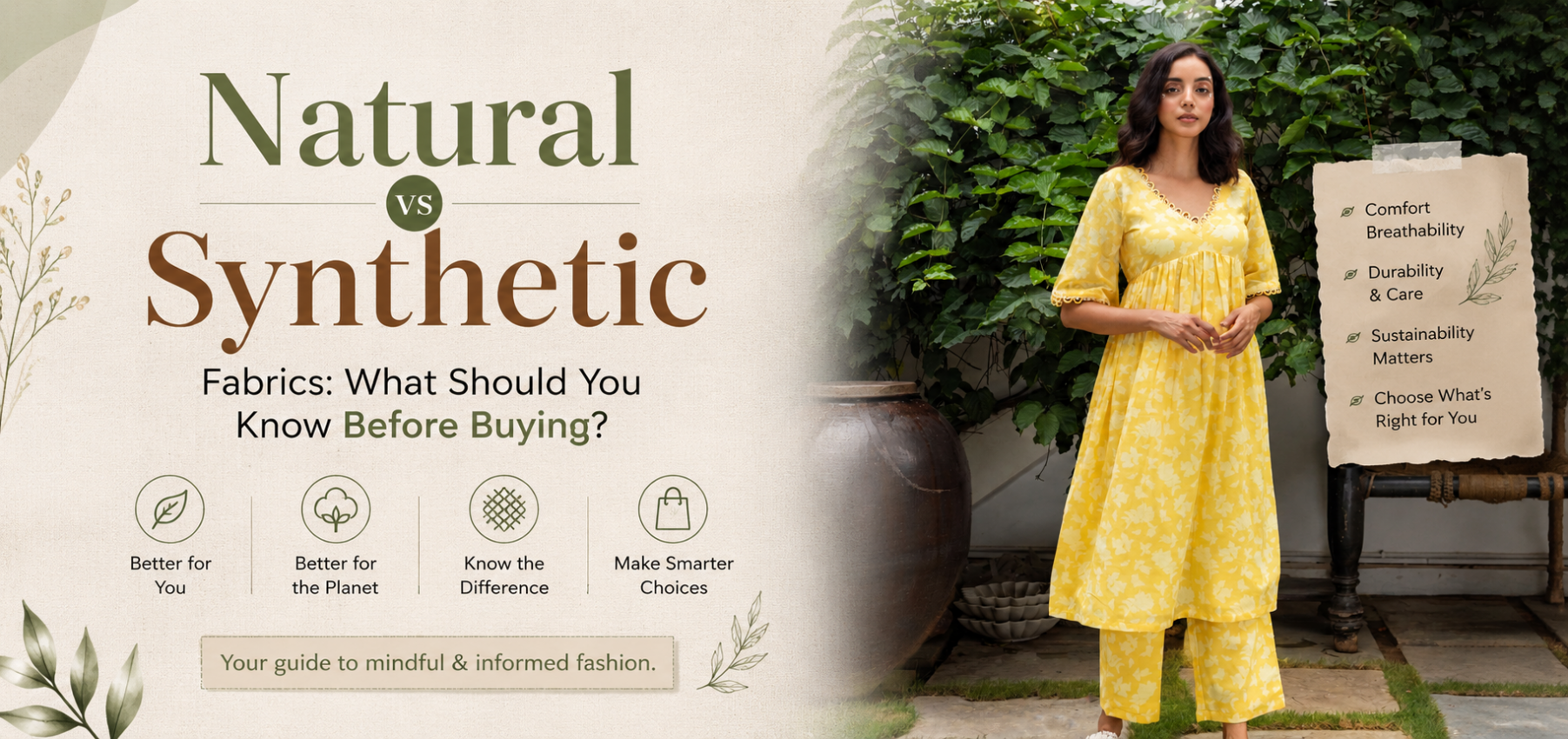
Natural vs Synthetic Fabrics: What Should You Know Before Buying?
August 24th, 2026 -
 August 24th, 2026
 -
 August 13th, 2026
